
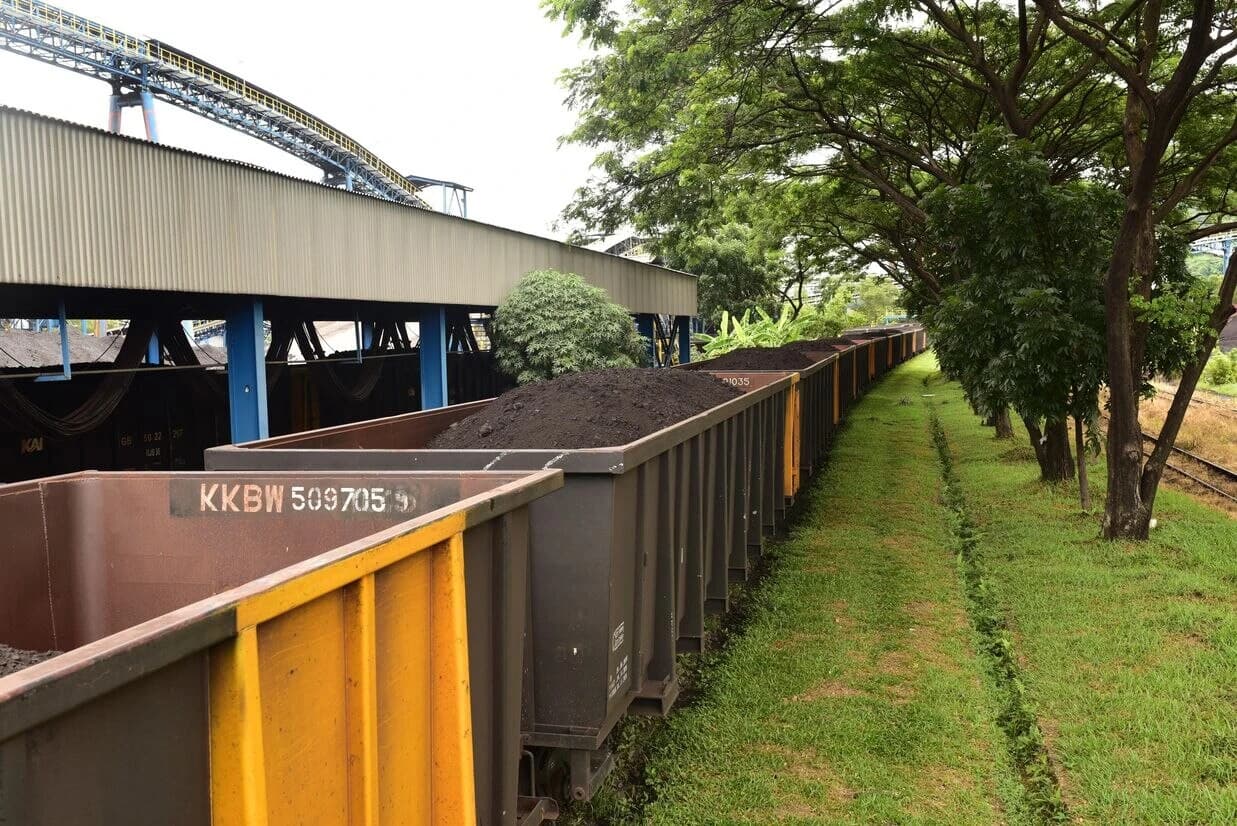
From Ombilin to Babaranjang, KAI Transports 47.13 Million Tons of Coal from January to October 2026
Long before electricity powered various public activities, railways had already become an important part of Indonesia’s energy distribution journey. Its history began in the late 19th century with the transportation of coal from the Ombilin mines in Sawahlunto, West Sumatra, to Teluk Bayur Port in Padang.
The discovery of coal reserves by Willem Hendrik de Greve in 1868 prompted the development of a railway network connecting mining areas with coastal regions. The railway line to Sawahlunto began operating in 1894 and became an important part of transporting mining products. As mining activities declined, the historic railway line subsequently developed into railway heritage and tourist services.
The development of coal transportation later continued in South Sumatra. Railway network construction in the Palembang and Lampung areas began in 1911, followed by the development of Tanjung Enim coal mining in 1919. A new chapter began on October 1, 1986, with the operation of the Long Train Formation Coal Train (Babaranjang), which transports coal from Tanjung Enim to Tarahan Port in Lampung.
More than a century since the first mining railway line began operating, coal transportation continues to be an important part of PT Kereta Api Indonesia (Persero), or KAI, logistics services. From January to October 2026, KAI transported 47,130,706 tons of coal.
KAI Vice President of Corporate Communication Anne Purba said that this journey reflects the close relationship between railway development, mining activities, and public energy needs.
“From Ombilin in West Sumatra to Babaranjang in South Sumatra, railways have played a long-standing role in supporting coal transportation. This role continues to evolve in line with changing times, including supporting energy distribution and industrial activities,” Anne said.
Coal transported by rail is used for various purposes, including as fuel for steam power plants (PLTUs) and industrial facilities. In the electricity generation process, heat from coal combustion is used to produce steam that drives turbines and generators. The electricity generated is then distributed to meet the needs of households, public facilities, and industrial activities.
According to KAI’s performance report as of October 31, 2026, coal transportation accounted for approximately 86.24 percent of KAI’s total freight volume, which reached 54,648,288 tons.
Anne explained that transporting large volumes of coal requires the readiness of facilities and infrastructure, journey arrangements, and coordination with customers to ensure smooth distribution.
“KAI continues to maintain the operational reliability of freight transportation through the readiness of facilities, infrastructure, and journey arrangements. We hope these services will continue to support smooth coal distribution to meet energy and industrial needs,” Anne concluded.
VP Corporate Communication KAI