
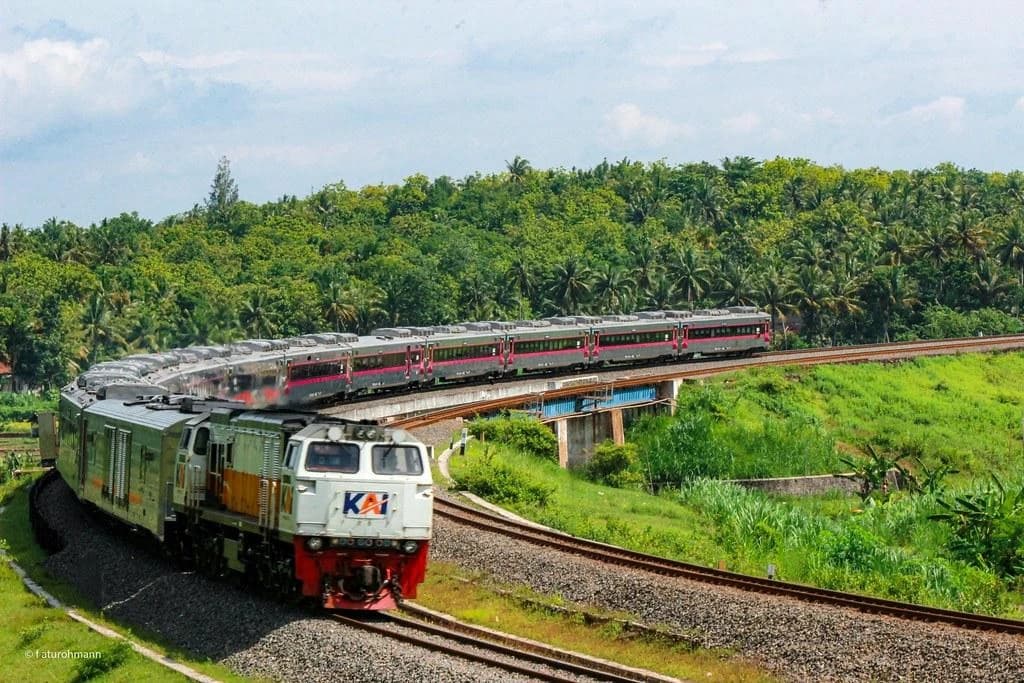
From Railways to Indonesia’s Mobility Ecosystem, KAI Prepares for Transformation by 2030
Railways continue to evolve in line with the changing needs of the Indonesian people. Their role is expanding, from supporting people’s journeys to workplaces, educational institutions, and various activities, facilitating the distribution of goods, to strengthening connectivity between regions.
Through the 2026–2030 Corporate Long-Term Plan (RJPP), PT Kereta Api Indonesia (Persero) is preparing for a transformation toward becoming a World-Class Railway Operator and Ecosystem Orchestrator. This direction reflects KAI’s efforts to build a railway ecosystem that connects passenger services, logistics, technology, assets, and sustainability within one integrated network.
KAI Vice President of Corporate Communication Anne Purba said that KAI’s transformation is being carried out to respond to changes in people’s mobility patterns and the evolving needs of Indonesia’s economy.
“Railways have an increasingly close role in people’s daily lives. Every day, millions of people use KAI services to work, study, meet their families, conduct business, and travel for leisure. KAI’s transformation is directed toward expanding the benefits of railways so that they can be increasingly felt by the community,” said Anne.
The scale of KAI’s services is reflected in the growth in the number of customers. From January to July 2026, KAI Group served 307,860,743 customers, an increase of 8.32 percent compared to the same period in 2025, which recorded 284,202,884 customers.
This growth came from various services. KAI Commuter recorded 242,932,764 customers, an increase of 6.65 percent; KAI’s Long-Distance and Local Train services reached 35,257,646 customers, growing by 7.63 percent; while LRT Jabodebek served 19,079,347 customers, with growth of 20.96 percent.
Anne stated that KAI’s transformation also includes strengthening the role of railways in supporting national economic activities through freight transportation services. In the first half of 2026, KAI recorded a freight transportation volume of 32.50 million tons, consisting of 26.53 million tons of coal and 5.96 million tons of non-coal commodities.
“Railways help connect production centers with various distribution areas. Freight transportation is an important part of supporting the national supply chain, from the energy and industrial sectors to the needs of the community,” said Anne.
Changing community needs are also encouraging KAI to strengthen its digital services. As of 2026, the Access by KAI application has 29.87 million users, with Monthly Active Users reaching 8.92 million. In the first half of 2026, transactions through digital channels reached 76.49 percent, demonstrating the growing utilization of digital services in customers’ journeys.
In terms of sustainability, KAI continues to develop more efficient operations. In 2025, KAI’s energy consumption was recorded at 10,107,302 Gigajoules (GJ), or approximately 10.1 million GJ, a decrease of 15.39 percent compared to the previous year. KAI has also operated 113 Solar Power Plant (PLTS) units across 92 locations, with a total capacity of 4,430.65 kWp.
Anne said that the journey toward 2030 is part of KAI’s efforts to provide rail transportation that is increasingly relevant to future needs.
“KAI’s transformation includes developing a mobility system that connects people, the economy, technology, and the environment. KAI will continue to strengthen its services so that railways can increasingly become an important part of Indonesia’s journey,” Anne concluded.
VP Corporate Communication KAI