
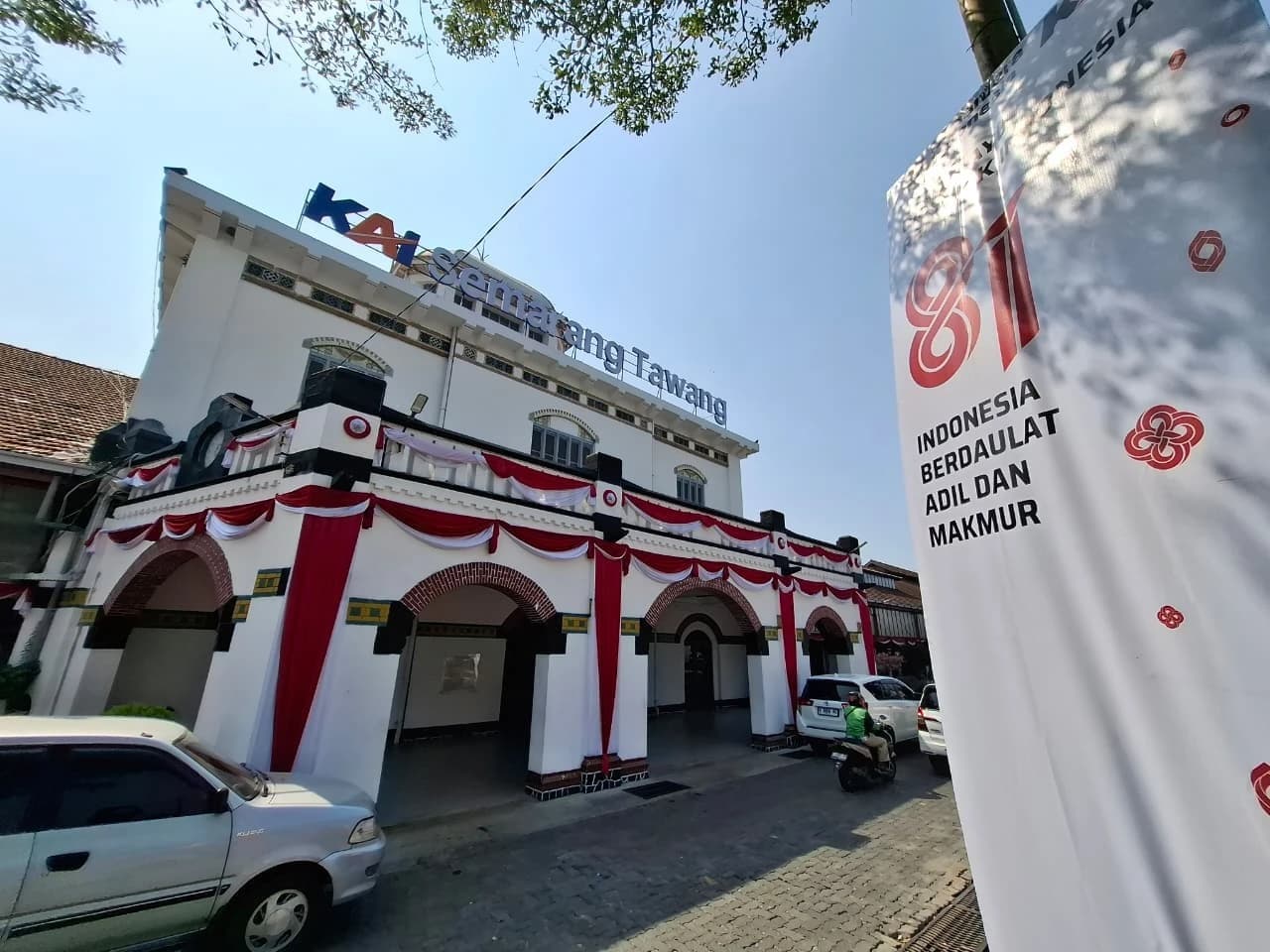
From the First Semarang–Tanggung Railway Line, KAI Now Serves Nearly 50 Million Customers Through October 2026
Train travel in Indonesia began with the Semarang–Tanggung railway line, which commenced operations on August 10, 1867. Spanning approximately 25 kilometers, the line marked a new chapter in rail-based land transportation, which later expanded to connect various cities. After 159 years, the railway network continues to serve public mobility, offering an increasingly extensive range of travel connections.
Construction of the first railway line was carried out by Nederlandsch-Indische Spoorweg Maatschappij (NISM), beginning in the Kemijen area of Semarang in 1864. The network subsequently expanded toward Kedungjati, Solo, and Yogyakarta. In its early years of operation, trains served both passenger journeys and the transportation of commodities that supported interregional trade.
Historical records show that in 1870, NISM sold 844 first-class tickets, 10,206 second-class tickets, and 153,809 third-class tickets for services on the Semarang–Solo route. At the time, the presence of railways began to provide travel options for people from various backgrounds while opening up connections between cities that had previously relied on road travel.
KAI Vice President of Corporate Communication Anne Purba said this history illustrates how public mobility needs have continued to evolve alongside urban growth and economic activities. What initially operated on a limited network has now become one of the transportation options people use to commute, pursue education, run businesses, visit family, and travel for leisure.
“Since the first journey from Semarang to Tanggung in 1867, trains have been part of people's daily activities. The development of railway networks and services over more than a century and a half shows how rail-based transportation continues to adapt to intercity and interregional travel needs,” said Anne.
According to KAI’s passenger transportation performance report, a total of 49,932,764 customers used KAI’s Long-Distance Train and Local Train services from January to October 2026. This represents an increase of 8.99% compared with 45,814,275 customers during the same period in 2025, or an additional 4,118,489 customers. This growth reflects the increasing use of the railway network across KAI’s operational areas.
In Daop 4 Semarang, which is closely connected to the early history of Indonesia’s railways, the number of customers from January to October 2026 reached 6,055,468. This was an increase of 9.66% compared with 5,522,150 customers during the same period in 2025, representing an additional 533,318 customers.
Public travel demand in Central Java is also reflected in the Solo Balapan–Semarang Tawang route, which served 181,920 customers, and the return direction, Semarang Tawang–Solo Balapan, which served 173,573 customers from January to October 2026. These two Local Train routes recorded a combined total of 355,493 customers, reflecting intercity travel activity in an area with a long history of railway development.
“Customer growth shows that train services continue to support people's various activities. In Central Java, historic railway lines connecting several cities still play a role in everyday mobility. KAI continues to improve service quality, comfort, and ease of access to provide customers with an increasingly better travel experience,” Anne explained.
Amid modern transportation developments, historic railway heritage is also being preserved. Tanggung and Kedungjati stations, along with various other historic buildings and railway rolling stock, hold stories of the long development of railway technology and services. These heritage assets give the public an opportunity to learn about the origins of a transportation network that continues to play a role in people's lives today.
“Railway history is part of Indonesia’s journey in building connectivity between regions. Through service development and the preservation of historic assets, KAI aims to ensure that every generation can learn about the past while enjoying train services that are safe, comfortable, and increasingly relevant to public needs,” Anne concluded.
VP Corporate Communication KAI