
From Koningsplein Bus Stop to the Capital's Modern Gate, Gambir Station Served 2.60 Million Customers in January–May 2026
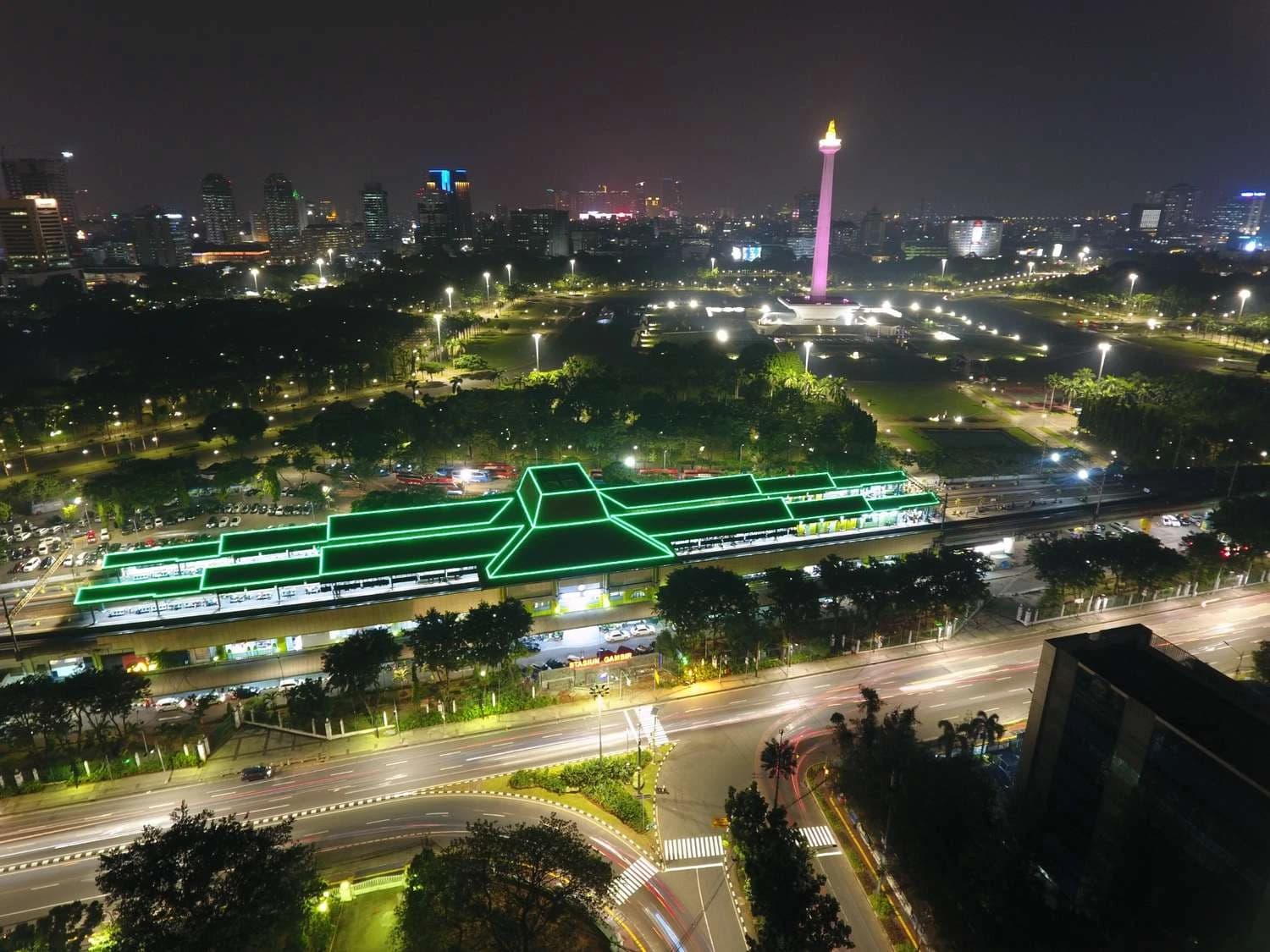
Gambir Station is a key face of Indonesian rail travel. Located in the heart of the capital, strategically located in Central Jakarta and adjacent to the National Monument, this station chronicles the long journey from the colonial era to the era of Indonesian Railways' digital services.
Gambir's development can be read as a major story of urban transformation. From a small bus stop, the station has grown into an intercity mobility hub serving customers traveling to major cities across Java. It is here that history, architecture, technology, service, and public mobility converge in a single travel space.
According to data, the total number of passengers boarding and alighting at Gambir Station from January to May 2026 reached 2,603,087. This number grew 11.95 percent compared to the same period in 2025, which saw 2,325,271 passengers.
In detail, 1,342,160 passengers departed from Gambir Station in January–May 2026, an 11.86 percent increase compared to 1,199,828 passengers in January–May 2025. Meanwhile, 1,260,927 passengers arrived at Gambir Station, a 12.04 percent increase compared to 1,125,443 passengers in the same period the previous year.
Throughout 2025, the total number of passengers boarding and disembarking at Gambir Station was recorded at 5,990,911. These figures demonstrate Gambir's role as a gateway for people traveling to and from central Jakarta, for business, government, education, tourism, and even family visits.
KAI Vice President of Corporate Communications Anne Purba stated that Gambir Station holds special value because it has grown alongside the changes in Jakarta and the development of national rail services.
"Gambir Station is a journey space that holds many layers of history. From a small stop in the Koningsplein area, it developed into a large station, then transformed into a modern elevated station that remains one of the main gateways for long-distance train travel to this day."
Gambir's history began in 1871 as the Koningsplein stop. At that time, the train stop in the Weltevreden area was simple and part of the early development of the Batavia railway network. As the city grew, the stop evolved into the more established Weltevreden Station in 1884.
Entering the 1930s, the station's appearance changed again. Weltevreden Station was renovated and became known as Batavia Koningsplein with Art Deco architectural style. During that time, the area around Gambir was also closely associated with public activity, government, urban space, and community celebrations, which later became part of the collective memory of Jakarta residents.
After Indonesia's independence, the name Gambir became increasingly recognized as the identity of a station in the center of the capital. This station continues to serve commuters and is a part of Jakarta's ever-evolving life. Gambir has become a departure point, a return point, and a meeting point for many travel stories.
The next major milestone occurred in the late 1980s and early 1990s with the construction of the Manggarai-Jakarta Kota elevated line. On June 5, 1992, the new Gambir Station building was inaugurated as an elevated station with a joglo-style roof design and distinctive green color. This transformation ushered in an era of modern service, with the railway line located above street level, thus streamlining train travel and city traffic.
"Gambir's transformation demonstrates that stations are not only places for passengers to board and disembark, but also part of how cities organize mobility. As services become more convenient, travel becomes more efficient, economic activity is boosted, and the city center becomes more connected to various regions."
Over its development, Gambir Station has also undergone changes in its service patterns. After serving urban rail, Gambir is now focused on serving as a departure and arrival station for long-distance trains. This position makes Gambir a showcase for KAI's intercity services, especially for customers traveling from central Jakarta to West Java, Central Java, the Special Region of Yogyakarta, and East Java.
In terms of facilities, Gambir's image has also continued to adapt to customer needs. Initially, the station served as a simple stopover. Over time, Gambir has expanded to include a waiting room, platform, commercial area, information center, customer service, restrooms, prayer rooms, parking areas, drop-off areas, connecting transportation access, and increasingly comprehensive travel support facilities.
In the digital era, customers can book tickets through Access by KAI and official KAI channels, perform self-check-in, access travel schedule information, and obtain service information more conveniently. The customer journey has been streamlined from the planning stage, arrival at the station, boarding, and entry to the platform.
Gambir Station also features supporting facilities such as showers and lockers, a Rail Transit Suite, premium waiting room services, food and beverage outlets, and a commercial area. These facilities assist customers arriving early, transiting, waiting for their departure time, cleaning up after activities, storing belongings, or taking a short break before continuing their journey.
Anne explained that the strengthening of these facilities is part of KAI's efforts to create an increasingly customer-friendly station. She believes that every detail of the station's services contributes to a customer's sense of comfort before boarding the train.
"For some, Gambir is the start of their work journey. For others, Gambir is the way home to their families. Others come for tourism, to attend important events, or to pick up loved ones. Therefore, KAI continues to ensure that the customer experience at Gambir Station is safe, orderly, clean, easy to understand, and comfortable."
KAI urges customers to plan their trips well, ensure their personal information matches their tickets, check departure schedules, arrive early at the station, and follow the instructions of staff. Customers can also use Access by KAI to book tickets, manage their trips, check service information, and conveniently prepare for their travel needs.
"Gambir has been through many eras, but its role remains the same: connecting customers with their destinations, families, jobs, and hopes. KAI will continue to preserve its historical value, strengthen its services, and maintain Gambir as a proud travel gateway for Indonesia,"
KAI VP Corporate Communication