
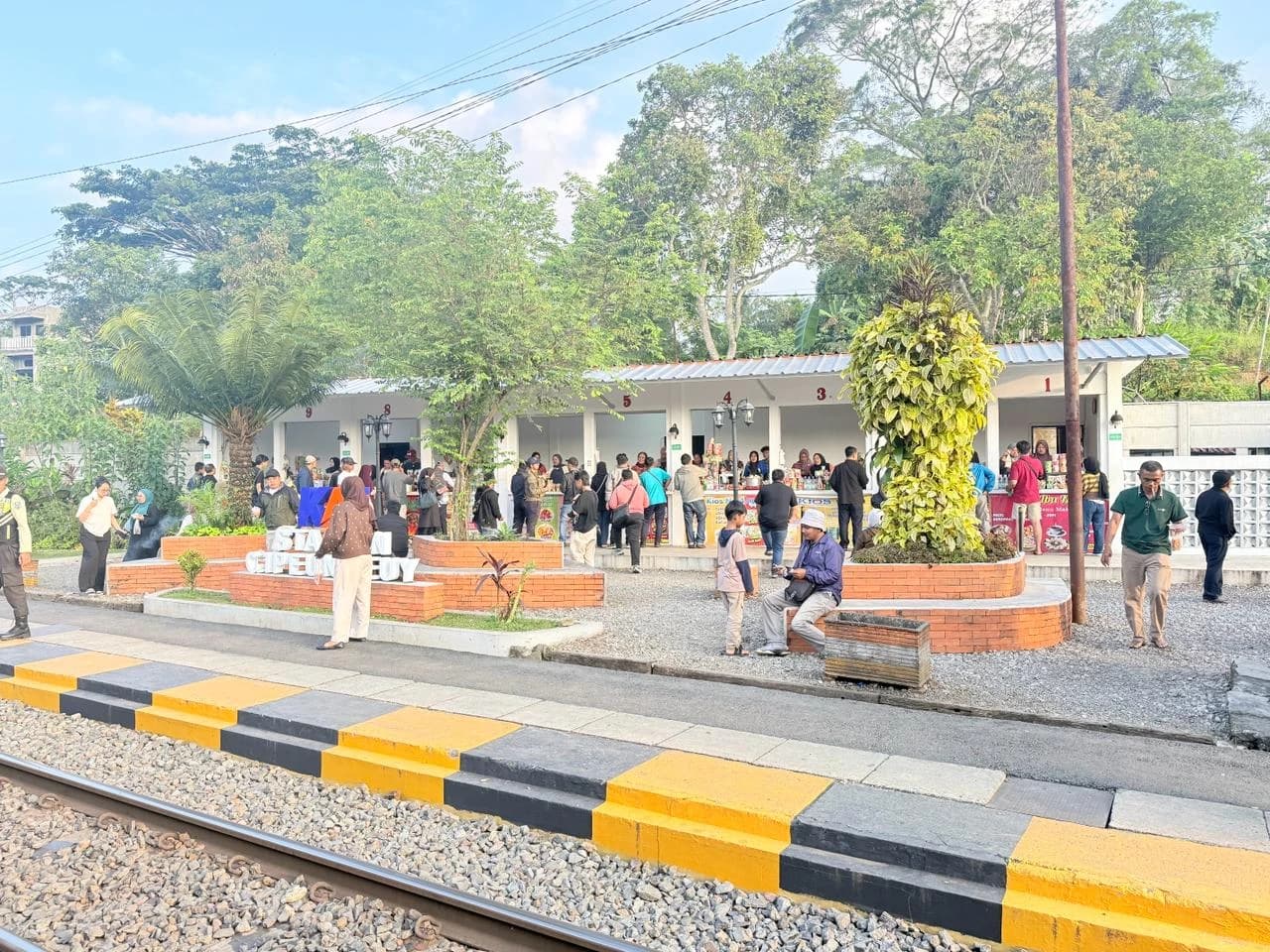
From Onboard Snacks to Souvenirs: Weekend Train Journeys Breathe Life into Small Traders
There are voices that often fade into the bustling noise of train travel—the soft click of a small stove lit in a simple home, the rustle of plastic wrap being tidied one by one, and the quiet prayer of a vendor hoping for a customer to stop by.
For passengers, a station is merely a point of departure and arrival. For small vendors nearby, it is a place to anchor their hopes. Every train that pulls in brings fresh possibilities: a packed meal sold, a cup of hot coffee served, snacks sold out before noon, a local transport driver securing a passenger, and homemade delicacies finally carried away to another city.
Weekend travel by train often looks simple. A passenger purchases a ticket, carries a bag, and sits down to wait for departure. Yet beyond the train windows, numerous families depend on the lively mobility of these passengers. There is a mother who wakes up early to prepare travel snacks, a father who sets up a modest stall near the station, and micro-and-small entrepreneurs (MSMEs) hoping their products will gain wider recognition through the hands of passing travelers.
Therefore, when a station resumes passenger services, what appears is not merely a figure in a corporate report. It represents a breath of fresh air for the surrounding community. Spots that were once quiet begin to familiarize themselves with the footsteps of commuters. Stalls that were once hesitant to open are now boldly arranging their merchandise. Residents who used to only watch trains pass by now see opportunities arriving right on their doorsteps.
PT aKereta Api Indonesia (Persero) noted that from January to May 2026, KAI Group served 214,045,803 passengers, a 7.2 percent increase compared to the same period in 2025, which recorded 199,663,907 passengers. This total consists of:
- KAI Long-Distance & Local Trains: 24,372,733 passengers
- KAI Commuter: 169,047,494 passengers
- KAI Bandara (Airport Trains): 2,905,389 passengers
- LRT Jabodebek: 13,211,856 passengers
- LRT Sumsel: 1,815,017 passengers
- Whoosh (High-Speed Rail): 2,415,736 passengers
- Makassar–Parepare Train: 145,735 passengers
KAI Wisata: 131,843 passengers
KAI Vice President of Corporate Communications Anne Purba stated that the mobility of train passengers carries a meaning deeply intertwined with public livelihoods. Every passenger arriving at a station is a potential buyer, a guest, a service user, or a patron for local products.
“Behind a single train ticket, there are many small hands that share the benefits. There are snack vendors, coffee sellers, breakfast stalls, feeder transport drivers, local snack makers, and MSME souvenir creators. When passengers arrive at a station, it revives not just travel, but also the hopes of many families,”
For KAI's Long-Distance and Local Train services, the 24,372,733 passengers recorded from January to May 2026 represent a 9.9 percent growth compared to the 22,168,570 passengers during the same period in 2025. In May 2026 alone, passenger volume reached 5,154,293, up 15.6 percent compared to May 2025's 4,458,901 passengers. This growth indicates that trains are increasingly becoming the public’s choice for daily commutes, family trips, education, employment, tourism, and weekend getaways.
However, the most heartwarming stories emerge from small stations. Based on passenger traffic data per station, there are 9 stations that recorded zero passenger activity throughout 2025 but began registering passenger movements between January and May 2026. At these locations, empty columns on a spreadsheet have transformed into vibrant livelihood.
From January to May 2026, these 9 stations recorded a cumulative total of 184,136 passengers, consisting of 91,850 boarding passengers and 92,286 alighting passengers. The stations are:
- Wonogiri: 63,667 passengers
- Kayutanam: 52,475 passengers
- Sicincin: 41,681 passengers
- Sukoharjo: 8,424 passengers
- Solo Kota: 8,107 passengers
- Comal: 6,135 passengers
- Pasarnguter: 3,007 passengers
- Plabuan: 398 passengers
Rajapolah: 242 passengers
In corporate ledgers, these numbers are mere statistics. For residents living around the stations, they represent the first buyer after opening a stall, merchandise selling out faster, a local driver securing a fare, a small eatery confidently restocking, or a mother returning home with enough money for the next day's groceries.
A striking example is seen at Comal Station under Daop 4 Semarang. Throughout 2025, this station recorded zero passenger traffic. In January, February, and March 2026, the figure remained at 0. However, in April 2026, it began recording 512 passengers, which then surged to 5,623 passengers in May 2026. The total for January–May 2026 reached 6,135 passengers, consisting of 3,027 boarding and 3,108 alighting passengers.
“For small traders, shifting from 0 to thousands of passengers is no ordinary number. It can mean a transformation in daily fortunes. Around the station, arriving passengers bring opportunities for packed meals, coffee, fried snacks, traditional delicacies, local transport, and signature regional souvenirs,”
Similar transformations are visible in Plabuan and Rajapolah. Both stations logged zero passenger activity throughout 2025 and from January to March 2026. In April and May 2026, Plabuan began registering a total of 398 passengers, while Rajapolah recorded 242 passengers. Though the figures are still modest, every single passenger matters immensely to the small economies around these stations.
In another region, Wonogiri serves as an example of how station services open up new mobility corridors. After serving no passengers in 2025, Wonogiri handled 63,667 passengers from January to May 2026, consisting of 30,703 boarding and 32,964 alighting passengers. In May 2026 alone, Wonogiri recorded 14,407 passengers.
In West Sumatra, Kayutanam and Sicincin also recorded significant milestones. In 2025, neither served any passengers. From January to May 2026, Kayutanam served 52,475 passengers, while Sicincin handled 41,681 passengers. Combined, these two stations served 94,156 passengers within the first five months of 2026.
According to Anne, small stations hold a close social role within the community. A station is a node where passengers depart and arrive, and where public economics intersect with the flow of travel. When passengers step off a train, they might seek breakfast, purchase water, book a local ride, ask for directions, or buy local specialties to bring home.
“Small stations often harbor big stories. For passengers, a station is where a journey begins. For small vendors, it is where they await their sustenance. When passenger services return, it alters not just traffic volume, but the entire atmosphere of the village, local markets, eateries, and family lives nearby,”
KAI also strengthens its support for small business owners through its Corporate Social and Environmental Responsibility (TJSL) programs. In the first quarter of 2026, KAI prepared several Priority Programs in the field of MSME Development: KAI Certified targeting 25 MSMEs, KAI Next Class targeting 80 MSMEs, and KAI Creative Space targeting 10 MSMEs. All three programs are scheduled for realization in the second quarter of 2026.
Additionally, through the KAI Exhibition program, KAI aims to involve 50 MSMEs. In the first quarter of 2026, this initiative successfully supported 8 MSMEs to participate in the 26th Jakarta International Handicraft Trade Fair (INACRAFT 2026). This participation expanded market exposure and access for KAI's fostered partners, reinforced product branding, boosted entrepreneur confidence, and unlocked partnership opportunities with buyers and other stakeholders.
Anne noted that passenger mobility and MSME empowerment must complement one another. Railways deliver accessibility, while small vendors and MSMEs offer regional flavors, crafts, and identities. When they meet, the customer's journey becomes more meaningful, and the local economy gains room to flourish.
“A weekend train trip can be a simple way to help small traders. Purchase snacks from stalls around the station, enjoy local culinary delights at your destination, and bring home souvenirs from regional MSMEs. Small acts like these make journeys feel warmer and extend benefits to many households,”
KAI invites the public to make weekend getaways a form of support for local economies. Passengers can plan their trips via Access by KAI, the official website kai.id, station ticket counters, and other official sales channels. KAI also advises passengers to arrive early, manage their baggage, maintain cleanliness, and respect the small business owners who form an integral part of the railway travel ecosystem.
“Every passenger boarding and alighting at a station carries a story. Some are returning to family, some are vacationing, some are working, and others are chasing opportunities. Along that entire journey, there are small traders praying that the station remains vibrant. Because for them, the sound of an approaching train is often the sound of hope,”
VP Corporate Communications KAI