
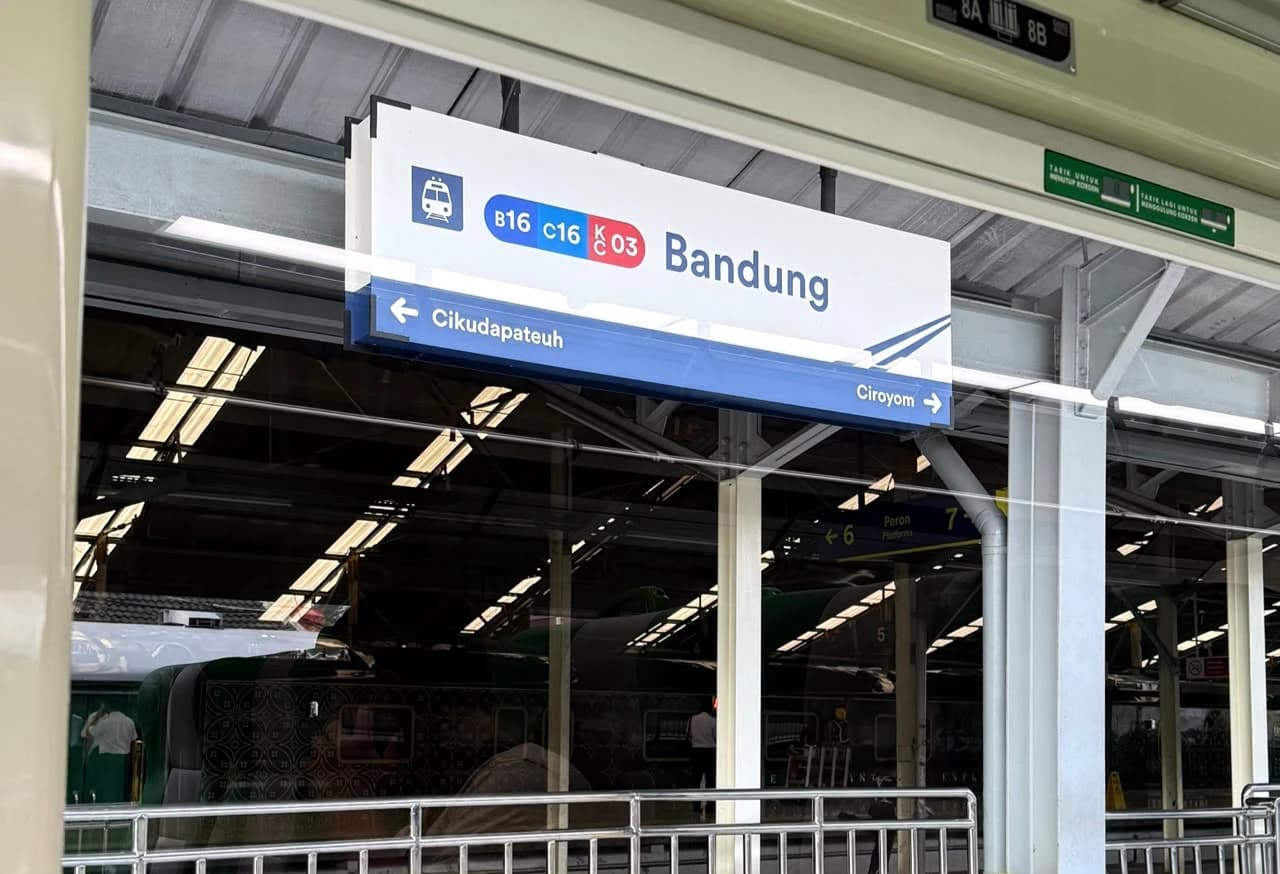
Connecting Bandung to Surabaya via the Northern Route, KA Harina Serves 567.772 Passengers
KA Harina features a unique travel route. Departing from Bandung along Java's southern corridor, the train travels toward Surabaya Pasarturi by first heading toward Cikampek before entering the northern mainline via Cirebon, Tegal, Pekalongan, Semarang, Cepu, Bojonegoro, and ultimately Surabaya.
From January to September 2026, KA Harina served 567,772 passengers, representing a 19.37 percent increase compared to 475,637 passengers served during the same period in 2025. Over this nine-month period, passenger volume grew by 92,135 individuals.
This distinctive route enables KA Harina to seamlessly connect Bandung with various cities along Java's northern corridor in a single trip. Passengers from West Java gain direct access to multiple cities in Central and East Java, while residents along the northern line enjoy direct rail connectivity to Bandung.
KAI Vice President of Corporate Communication, Anne Purba, stated that KA Harina's route demonstrates how the rail network provides diverse travel options tailored to public mobility needs.
“KA Harina operates on a distinctive route. Departing from Bandung, the journey heads toward Cikampek first before traversing the northern line all the way to Surabaya. In a single trip, it connects numerous cities,” said Anne.
Throughout 2026, KA Harina recorded monthly passenger volumes of 56,483 in January; 46,566 in February; 73,568 in March; 57,726 in April; 61,348 in May; 73,819 in June; 70,840 in July; 67,366 in August; and 60,056 in September.
Along its route, KA Harina serves key stations including Cimahi, Purwakarta, Cikampek, Cirebon, Tegal, Pekalongan, Semarang Tawang, Ngrombo, Cepu, Bojonegoro, Babat, Lamongan, and Surabaya Pasarturi, with stopping patterns adjusted to operational scheduling.
This corridor supports a wide range of public mobility needs, encompassing business, education, commerce, family visits, and tourism. Offering travel options at different times provides passengers with the flexibility to align departures with their respective schedules.
“The more cities we connect, the broader the opportunities for the public to conduct their activities. This is the kind of connectivity we continually maintain through safe, comfortable, and reliable services,” Anne concluded.
VP Corporate Communication KAI