
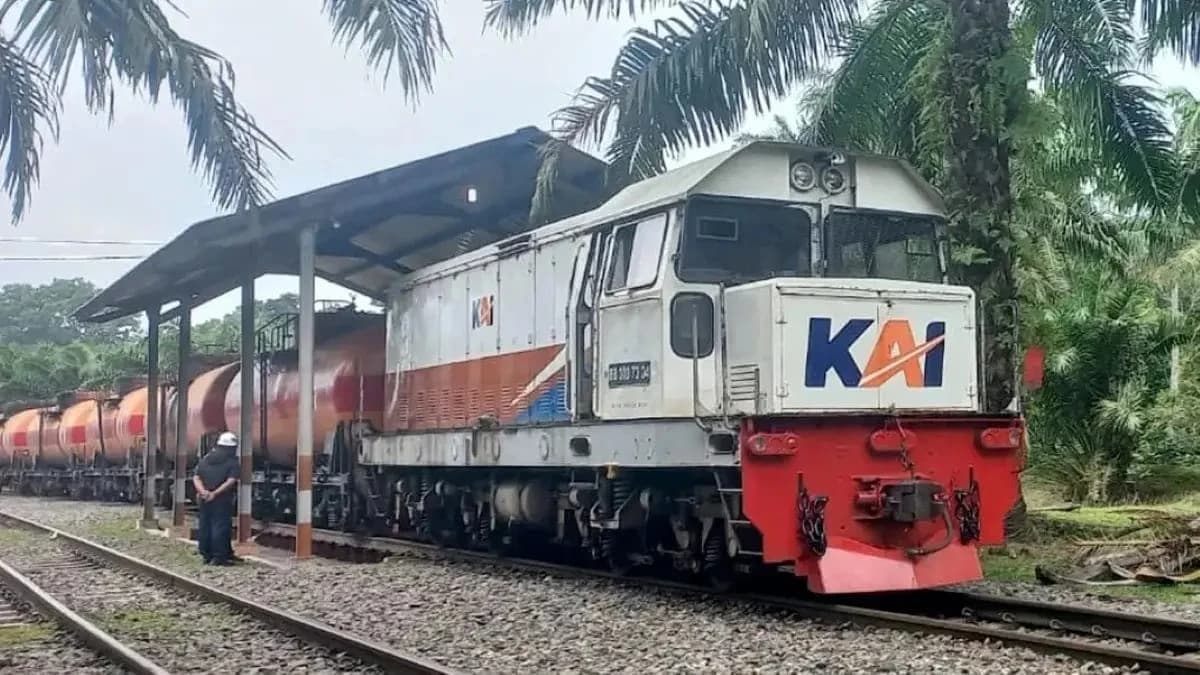
From 9,039 Tons of Sugar in 1870, KAI Continues to Transport Plantation Commodities, Reaching 525 Thousand Tons in 2026
The history of Indonesia's railways has long been connected to the development of trade and plantation commodities. In 1870, the Semarang–Surakarta railway network transported 9,039 tons of sugar, 3,248 tons of coffee, 273 tons of tobacco, and 83 tons of indigo to the Semarang trading area. More than a century and a half later, the role of railways in distributing plantation commodities continues. PT Kereta Api Indonesia (Persero) recorded plantation commodity transportation reaching 525,348 tons throughout January–October 2026, an increase of 12.09 percent compared to 468,704 tons in the same period in 2025.
This journey began when the Nederlandsch-Indische Spoorweg Maatschappij (NIS) built the first railway line in Kemijen, Semarang, on June 17, 1864. The approximately 25-kilometer Semarang–Tanggung line began operating on August 10, 1867, before expanding to Kedungjati on July 19, 1868, and Surakarta on February 10, 1870. The presence of this railway line opened up transportation options for plantation products from the inland areas of Java to Semarang Port, which was one of the trading centers at the time.
KAI Vice President of Corporate Communication Anne Purba said that this historical journey illustrates the close relationship between railway development and the economic activities of the community.
"Since 1870, trains have helped connect plantation products with trading centers. This role has continued to develop in line with Indonesia's distribution and industrial needs," Anne said.
In the early days of railways, sugar and coffee were important parts of freight transportation activities. The development of sugarcane plantations in Surakarta and its surrounding areas drove the need for transportation capable of carrying production output to the port. Railways then provided a distribution option with greater carrying capacity than the carts and animals that had previously been widely used for transportation.
Entering the modern era, the characteristics of plantation commodities transported by rail have also changed. While sugar, coffee, and tobacco were among the main traded commodities in the 19th century, KAI's plantation freight services today mainly transport crude palm oil (CPO) and palm oil derivative products. These commodities are closely linked to the processing industry, raw material requirements, trade, and the development of bio-based energy.
Based on KAI's performance report, plantation commodity transportation throughout January–October 2026 reached 525,348 tons. This figure increased by approximately 56,644 tons compared to 468,704 tons in the same period in 2025. This 12.09 percent growth indicates an increase in the volume of plantation commodity distribution through the railway network, in line with the demand for large-volume freight shipments and scheduled journeys.
Overall, KAI transported 54,648,288 tons of goods throughout January–October 2026, consisting of 47,130,706 tons of coal and 7,517,582 tons of non-coal commodities. Plantation freight is one part of the non-coal portfolio, alongside containers, fuel, cement and clinker, fertilizer, and retail freight. The diversity of these commodities reflects the utilization of the railway network to support various national distribution needs.
Anne explained that plantation freight has different operational requirements from passenger transportation because it is directly related to production patterns and industrial activities.
"For industrial customers, delivery certainty is a primary requirement. KAI continues to manage capacity, schedules, and transportation reliability so that commodity distribution can run according to their needs," she said.
These developments also illustrate how the economic role of railways has changed over time. While in the 19th century the railway network helped connect plantation areas in inland Java with trade through ports, plantation freight today supports the movement of raw materials within more diverse industrial supply chains. Developments in rolling stock technology, transportation facilities, and operational systems have also influenced how commodities are distributed.
Through the development of freight services, KAI continues to adjust its capacity and service patterns to meet the needs of industrial customers. Indonesia's long railway history dating back to 1867 is part of the national transportation journey, which continues to evolve to support production, distribution, and trade activities.
"Railway lines that once transported sugar and coffee now also serve the needs of modern industries. KAI aims to maintain the continuity of the railway's role in supporting the movement of Indonesia's economy," Anne concluded.
VP Corporate Communication KAI