
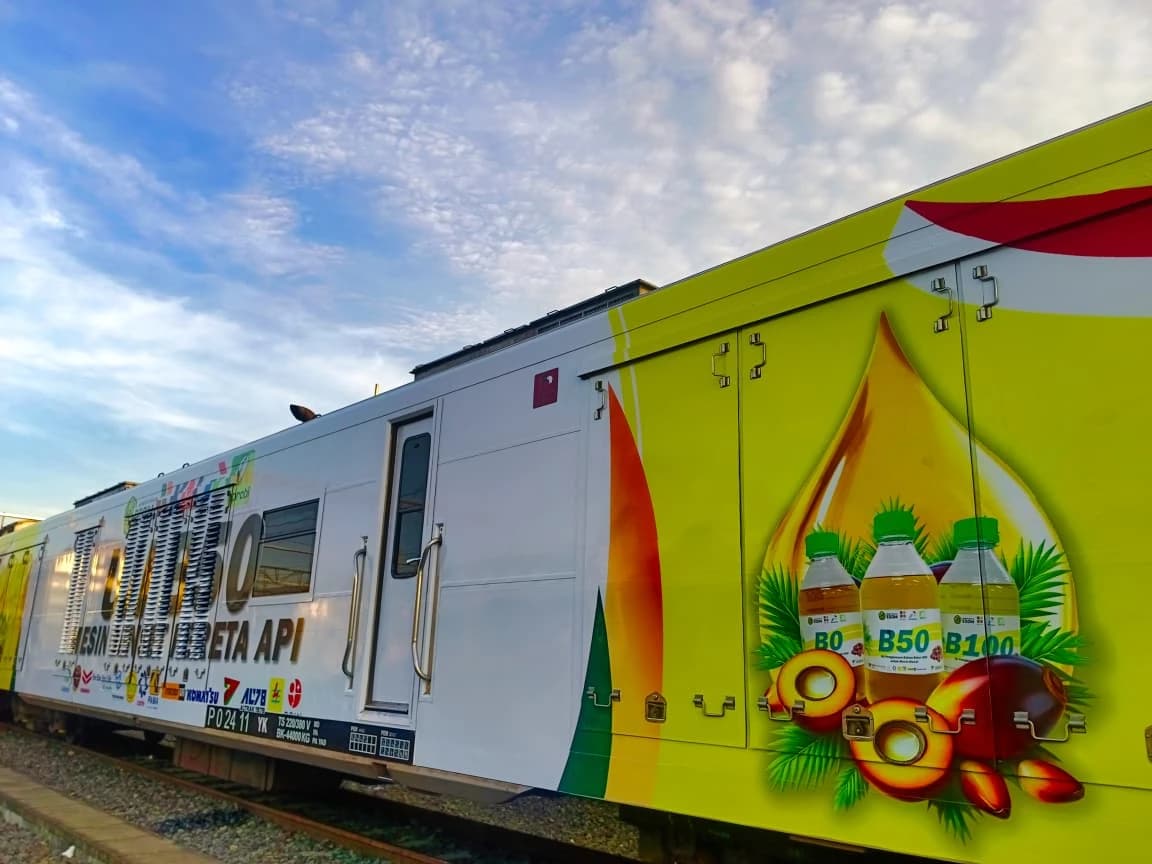
B50 Becomes KAI’s Largest Decarbonization Program, Targeting a Reduction of 133,676 Tons of CO₂e
PT Kereta Api Indonesia (Persero) has positioned the use of B50 biodiesel as a key program in its corporate decarbonization roadmap. Of the total emissions reduction target of 166,873 tons of CO₂e, the fuel transition from B35 to B50 is expected to contribute a reduction of approximately 133,676 tons of CO₂e, accounting for around 80% of KAI’s overall target across its three decarbonization programs.
B50 implementation began gradually on July 1, 2026, across KAI’s diesel rolling stock. B50 is a fuel blend containing 50% plant-based biodiesel and 50% diesel, used as part of the energy transition policy and efforts to reduce fossil fuel consumption.
KAI Vice President of Corporate Communication Anne Purba said that the use of B50 represents one of the most significant steps in KAI’s emissions reduction agenda, as fuel is a key component of diesel rolling stock operations.
“B50 is the decarbonization program with the largest contribution in KAI’s roadmap, with a targeted reduction of 133,676 tons of CO₂e. Given its significant share, we are implementing it gradually while taking into account rolling stock readiness, fuel quality, safety, and operational reliability,” said Anne.
The use of B50 is particularly relevant because train operations still require fuel for locomotives and diesel rolling stock on several routes. KAI’s internal data as of August 24, 2026, recorded subsidized fuel consumption for passenger train services at approximately 129.64 million liters, while fuel is also used for other freight services, including parcels, containers, clinker, and cement.
According to Anne, KAI’s focus is not merely on changing fuel types, but also on ensuring that the transition can be implemented effectively in day-to-day operations. Evaluations cover engine performance, combustion quality, filtration systems, maintenance procedures, and the operational stability of rolling stock.
“The energy transition in the transportation sector must go hand in hand with service reliability. Therefore, every change in fuel must undergo technical testing and evaluation to ensure that its environmental benefits remain aligned with safety and operational readiness,” said Anne.
The B50 program is also part of KAI’s broader sustainability strategy. In its fourth-quarter 2026 communications agenda, sustainability is positioned alongside energy efficiency, emissions reduction, and resource-use optimization as one of the company’s key priorities toward the end of the year.
KAI sees the use of biodiesel as strategically important because it can reduce dependence on fossil fuels while supporting the utilization of domestic energy resources. Its implementation across the railway network can have a substantial impact given the scale of operations, as fuel is regularly used for passenger and freight services across various regions.
“KAI’s decarbonization approach focuses on reducing emissions from the sources that contribute most significantly to our operations. This is why B50 is one of our key programs, with its emissions impact, technical readiness, and operational effectiveness continuously measured,” Anne concluded.
VP Corporate Communication KAI