
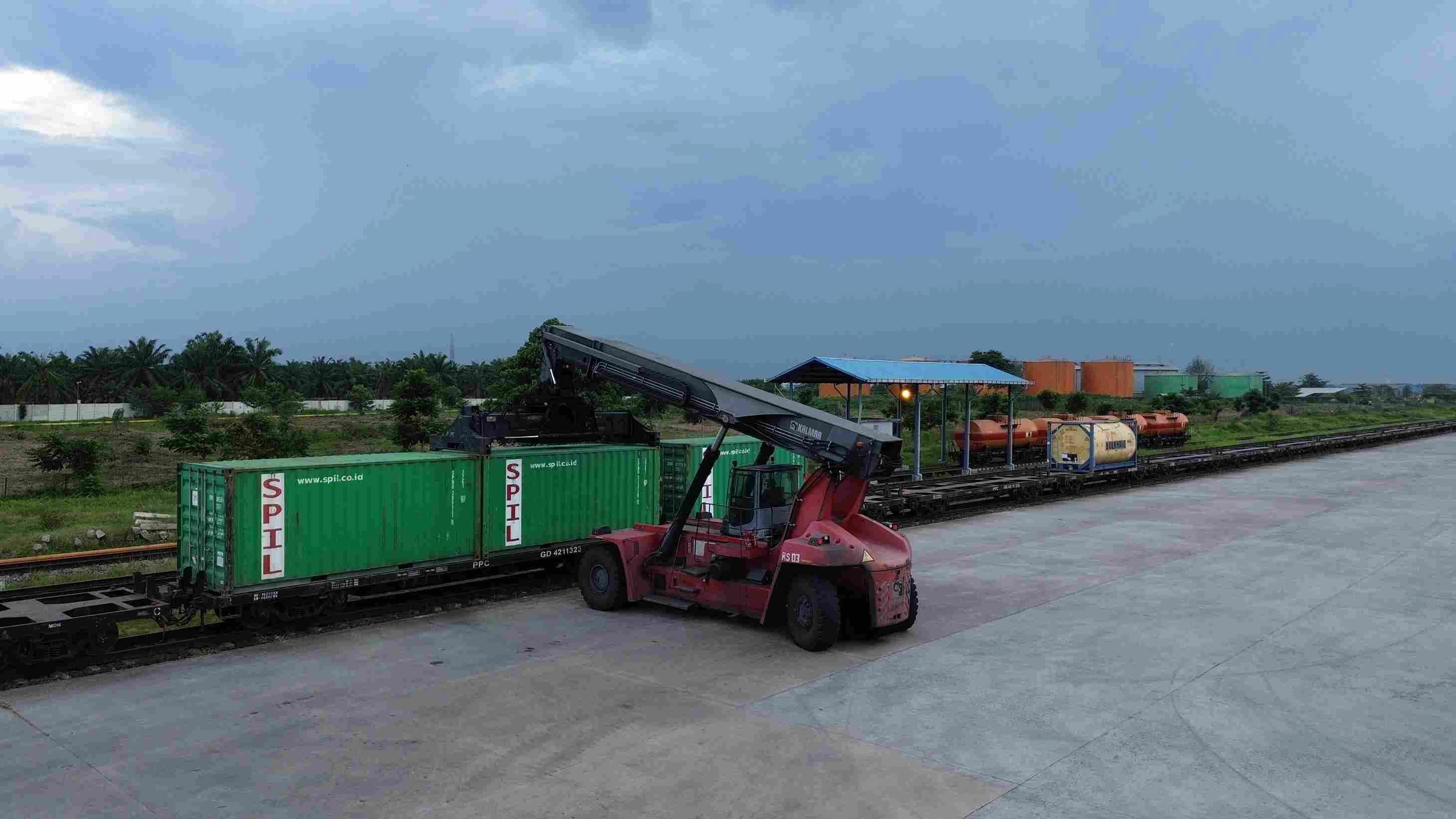
KAI Container Transport Grows 19.35 Percent, Boosting Logistics Efficiency and National Economic Connectivity
A nation's economic activity can be observed, among other indicators, by how seamlessly goods move from production centers to industrial zones, ports, distribution hubs, and ultimately into the hands of consumers. During the first five months of 2026, PT Kereta Api Indonesia (Persero) recorded positive growth in its container transport services, which serve as one of the backbones of national goods distribution.
From January to May 2026, KAI transported 2,428,471 tons of containerized cargo, marking an increase of 393,720 tons or 19.35 percent compared to the 2,034,751 tons recorded during the same period in 2025. This growth reflects the expanding utilization of rail-based transportation in supporting the supply chain and economic activities across various regions in Indonesia.
KAI’s Vice President of Corporate Communication, Anne Purba, stated that the increase in container volume mirrors the high demand for goods distribution driven by developments in industry, trade, and public consumption.
"The growth in container transport indicates rising distribution activities across various sectors. Rail transport is here to ensure that the flow of logistics remains scheduled, efficient, and capable of supporting the needs of both the business community and the public,"
This growth becomes even more relevant when contextualized with national logistics challenges. According to studies by the Ministry of National Development Planning (PPN/Bappenas), Indonesia’s logistics costs still hover around 14.29 percent of the Gross Domestic Product (GDP). The government aims to lower this figure to 8 percent of GDP by 2045. Efficiency in goods distribution is a critical factor in enhancing national economic competitiveness and strengthening Indonesia's position in the global supply chain.
On another note, Indonesia’s economy in 2025 grew by 5.12 percent. Compared to that figure, KAI’s container volume growth of 19.35 percent demonstrates a pace nearly four times higher. This condition indicates surging activities in production, trade, distribution, and logistics demands that utilize rail-based transportation.
In a global context, the role of containers holds a highly strategic position. World Bank data shows that more than 80 percent of world trade is transported by sea, while approximately 35 percent of global trade volume and over 60 percent of global trade value are moved using containers. These figures underscore that the smooth movement of containers serves as a vital indicator in supporting economic growth and international trade.
For Indonesia, the increase in rail-based container volume delivers a broader impact that goes beyond the mere movement of goods. Every container in transit carries raw materials for industries, manufactured goods heading to markets, export commodities moving toward ports, and various public necessities that must be delivered on time. The seamless nature of this distribution contributes to logistics cost efficiency, stabilizes the supply of goods, and supports economic productivity across various regions.
In addition to driving distribution efficiency, rail-based container transport also helps enhance the capacity of the national transportation system. With the ability to transport high volumes of goods in a single journey, rail transport supports more effective distribution while strengthening connectivity between industrial zones, logistics hubs, and ports.
"Robust logistics will strengthen the economy. Therefore, KAI will continuously develop its container services to support the connectivity of industrial estates, distribution centers, and ports, which serve as crucial nodes for national economic growth,"
VP of Corporate Communication KAI