
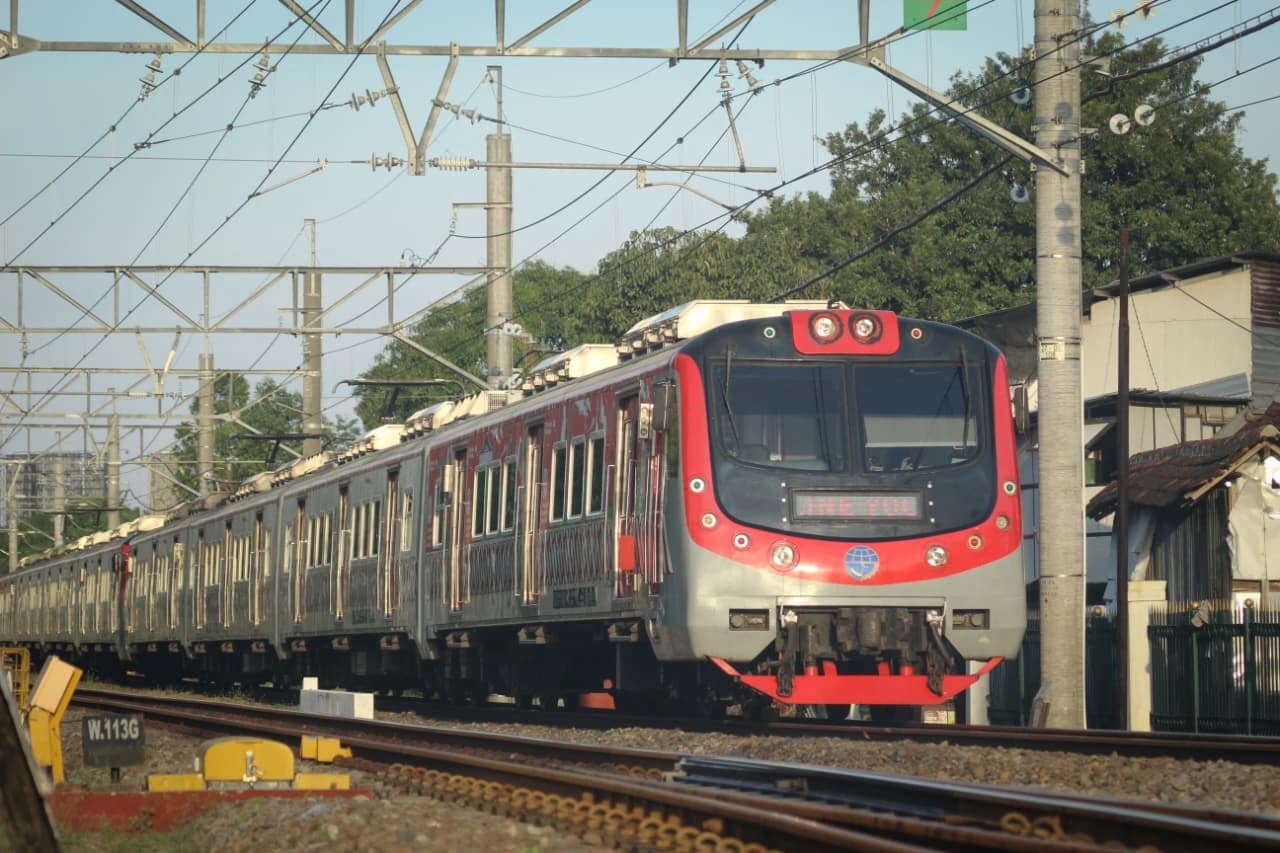
KAI Group's Urban Rail Transportation Continues to Grow Throughout 2025
PT Kereta Api Indonesia (Persero) recorded positive growth in its urban rail transportation services throughout 2025. Various rail-based transportation services operated by the KAI Group have increasingly become an integral part of people's daily mobility, supporting commuting, education, economic activities, as well as connectivity to airports and metropolitan areas.
Throughout 2025, the KAI Group's urban transportation services served a total of 442,111,779 passengers, up from 406,024,854 passengers in 2024, representing an increase of approximately 36,086,925 passengers. This growth reflects the increasing demand for urban mobility as social and economic activities continue to expand.
The trend is consistent with the 2025 Statistics Indonesia (BPS) analysis, which noted that Indonesia's metropolitan areas remain dominated by the productive-age population with high daily travel intensity, particularly to economic centers, educational institutions, and public service facilities. Greater Jakarta, Greater Bandung, Yogyakarta, Surabaya, Medan, and Palembang were identified as regions with the highest commuter flows, requiring high-capacity and scheduled public transportation.
The largest contribution to the KAI Group's urban transportation services in 2025 came from services operated by KAI Commuter, which served 400,737,915 passengers, an increase from 374,484,307 passengers in 2024. These services operate across several metropolitan and urban agglomeration areas that serve as major centers of daily mobility.
In the Greater Jakarta area, the Jabodetabek Commuter Line served 349,311,251 passengers throughout 2025, reflecting the high daily mobility of residents in Jakarta, Bogor, Depok, Tangerang, and Bekasi. In West Java, the Bandung Area II Commuter Line served 18,727,643 passengers, supporting mobility throughout the Greater Bandung region. Meanwhile, in East Java, the Surabaya Area VIII Commuter Line recorded 16,020,323 passengers, in line with increasing economic activity and daily travel in Surabaya and its surrounding cities.
In the Special Region of Yogyakarta and surrounding areas, the Yogyakarta Area VI Commuter Line served 9,015,768 passengers throughout 2025, becoming an important part of daily mobility for residents, students, and tourists. Also in the region, the Prameks Train, operating on the Yogyakarta–Solo corridor, served 1,113,023 passengers, supporting medium-distance regional travel.
In Banten, the Rangkasbitung–Merak Commuter Line served 4,463,446 passengers throughout 2025, connecting western Banten with maritime transportation hubs and industrial areas. For airport connectivity, the Soekarno-Hatta Airport Commuter Line served 2,346,934 passengers, supporting the mobility of airline passengers, airport employees, and business travelers traveling to and from central Jakarta.
In addition to commuter rail services, the KAI Group also operates the Jabodebek LRT, which served 28,816,787 passengers throughout 2025, up from 21,055,870 passengers in 2024. The service strengthens connectivity between residential areas in Bekasi, Depok, and East Jakarta and Jakarta's business districts and major transportation hubs.
Airport connectivity was also strengthened through airport rail services. In Yogyakarta, rail services to Yogyakarta International Airport (YIA) served 2,865,729 passengers throughout 2025, an increase from 2,730,791 passengers in 2024. These services consist of the Public Service Obligation (PSO) scheme, which provides affordable fares, and the commercial YIA Xpress service, offering direct journeys with shorter travel times.
In the Solo Raya and Yogyakarta regions, the BIAS Airport Train, connecting urban areas with Yogyakarta International Airport via the existing railway network, served 769,490 passengers throughout 2025, a significant increase compared with 192,187 passengers in 2024.
In North Sumatra, the Srilelawangsa Train serves as the primary rail connection between Medan City and Kualanamu International Airport, while also supporting commuter travel within the region. Throughout 2025, the service carried 4,115,680 passengers, up from 3,085,294 passengers in 2024, reflecting growing mobility among airline passengers, airport workers, and daily commuters in the Greater Medan area.
Meanwhile, in Palembang, the South Sumatra LRT served 4,626,481 passengers throughout 2025, an increase from 4,350,217 passengers in 2024, and continued to serve as the backbone of urban public transportation connecting the airport with key activity centers across the city. In Central Java, the Batara Kresna Train, connecting Solo and Wonogiri, served 179,697 passengers throughout 2025, up from 126,188 passengers in 2024, supporting mobility across the Solo Raya metropolitan area.
KAI Vice President of Corporate Communication Anne Purba said that the continued growth in urban rail ridership throughout 2025 provides an important foundation for further service improvements.
"Throughout 2025, the KAI Group's urban transportation services became an integral part of daily life across various regions. The increase in passenger numbers reflects growing mobility needs and serves as the foundation for KAI Group to continue improving service quality, travel comfort, and intermodal integration," Anne said.
Anne added that rail-based transportation contributes to more efficient travel times, helps manage urban traffic flow, and supports economic and social activities. In line with the latest BPS analysis, strengthening urban rail transportation remains one of the key elements in enhancing productivity across Indonesia's metropolitan areas.
Through the continuous development of its urban transportation services, the KAI Group remains committed to building an efficient, affordable, and integrated urban mobility system that meets the evolving needs of communities across cities in Indonesia. (San)
VP Corporate Communication KAI