
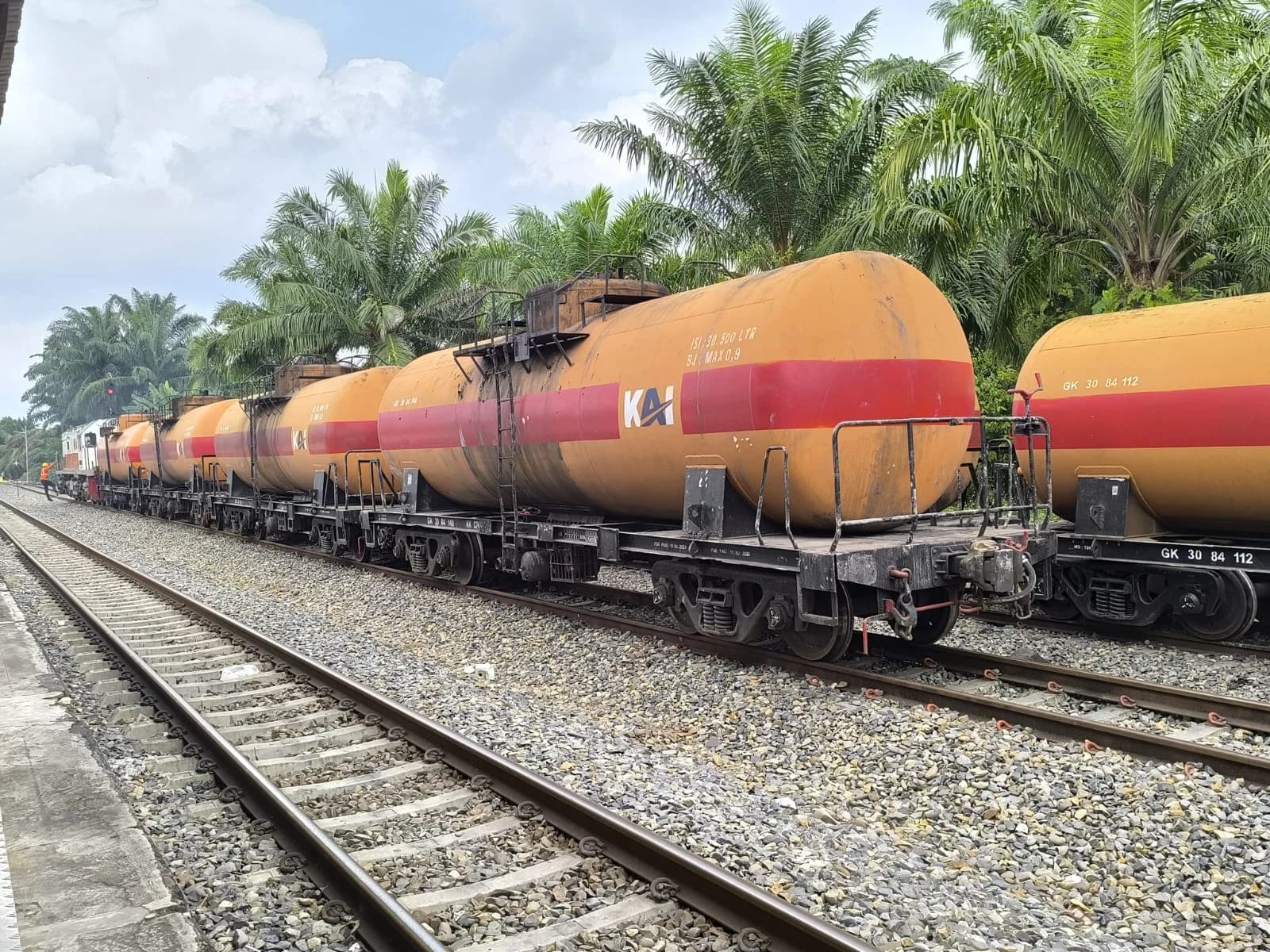
KAI Plantation Commodity Freight Grows 91 Percent, Railways Support the Movement of Strategic National Commodities
PT Kereta Api Indonesia (Persero) recorded significant growth in its plantation commodity freight services from January to August 2026. KAI’s plantation commodity freight volume reached 683,214 tons, growing 91.77 percent compared to 356,794 tons in the same period in 2025.
The increase reached 326,420 tons in one year. This growth reflects the increasing demand for the distribution of plantation commodities by rail, which offers large transport capacity, scheduled services, and a network connecting various industrial areas and production centers.
Vice President of Corporate Communication KAI Anne Purba said that plantation commodity freight is part of KAI’s logistics services that support national industrial activities through rail-based connectivity.
“Railways play an important role in supporting the distribution chain of various industrial sectors, including plantations. With the ability to transport large volumes in a single journey, these services provide industrial customers with an efficient and reliable logistics transportation option,” said Anne.
Indonesia holds an important position in the global plantation industry, particularly in the palm oil sector. Based on data from the Indonesian Palm Oil Association (GAPKI), as cited by the Ministry of Agriculture, Indonesia’s palm oil production reached approximately 51.66 million tons in 2025. Palm oil is widely used for food, industrial, and national energy needs.
In the energy sector, palm oil derivatives are among the feedstocks used in the national biodiesel program. The Government, through the Ministry of Energy and Mineral Resources (ESDM), began implementing B50 on July 1, 2026, which involves the use of a 50 percent biodiesel blend in diesel fuel as part of efforts to increase the utilization of energy resources from within the country.
In line with the development of the industry, KAI provides transportation for plantation commodities through its freight railway network, connecting production areas with various distribution destinations. This service supports the needs of industrial customers requiring large transport capacity and consistent travel schedules.
“The growth of plantation commodity freight is one indicator of the increasing demand for rail-based logistics. KAI continues to evaluate its freight services to meet industry needs and provide increasingly optimal transportation services,” said Anne.
Globally, palm oil is one of the world’s major vegetable oil commodities. Data from the United States Department of Agriculture (USDA) in its 2026 Oilseeds: World Markets and Trade report shows that Indonesia and Malaysia are the countries contributing the largest shares to global palm oil production.
Through its freight services, KAI continues to provide logistics connectivity linking various sectors of the economy. The growth of plantation commodity freight is part of the transformation of railways as a mode of transportation that supports national industrial and trade activities.
VP Corporate Communication KAI