
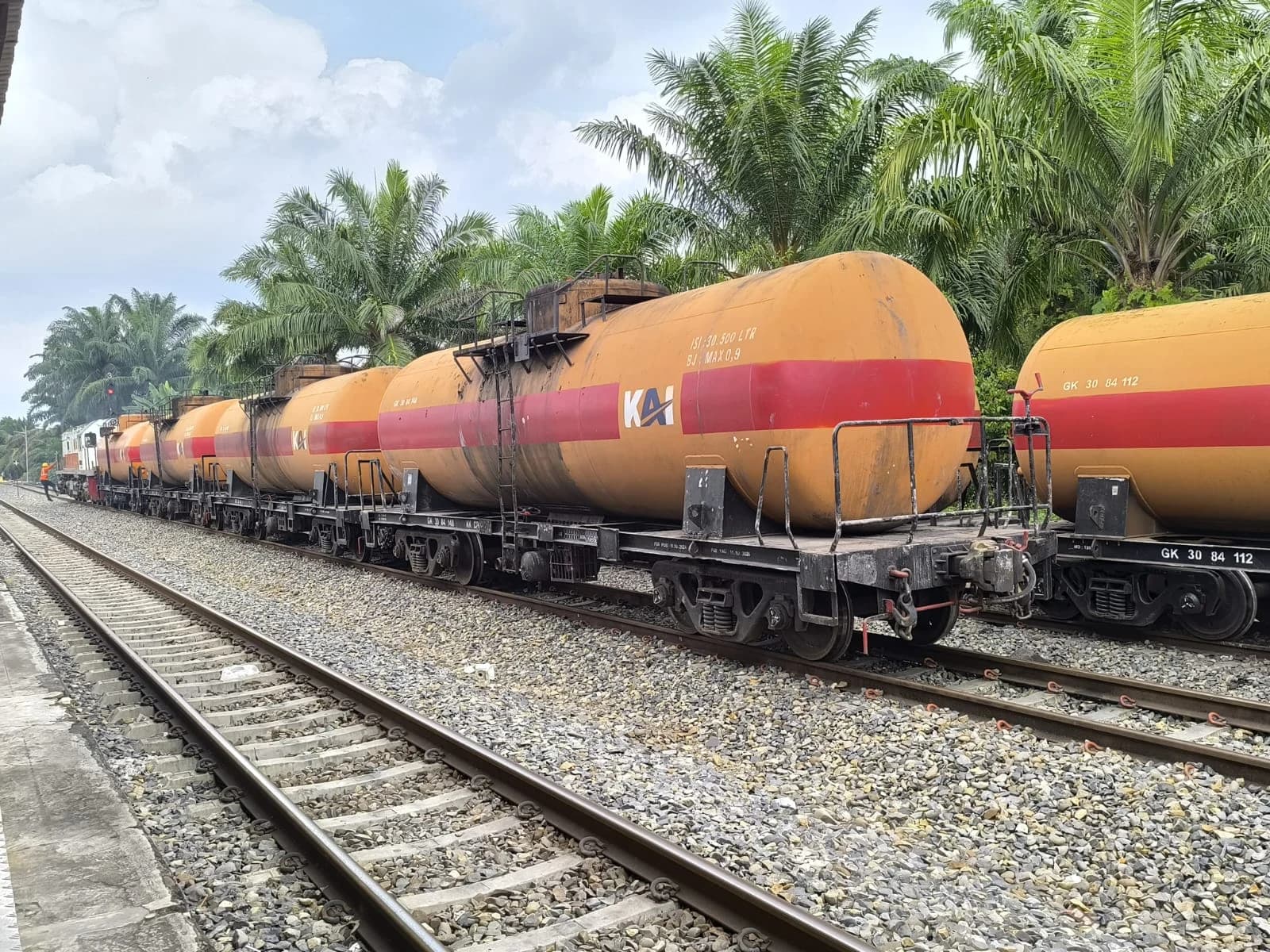
Plantation Freight Transport by KAI Increases 18% to 374,098 Tons, Strengthening the National Palm Oil Supply Chain
PT Kereta Api Indonesia (Persero) transported 374,098 tons of plantation commodities from January 1 to July 31, 2026. This volume increased by 18.00 percent compared to the same period in 2025, which recorded 317,026 tons, representing an additional 57,072 tons.
Growth was also reflected in the monthly performance. During July 2026, plantation freight volume reached 51,741 tons, an increase of 24.52 percent compared to 41,551 tons in July 2025. This represents an additional 10,190 tons within a single month.
KAI Vice President Corporate Communication Anne Purba stated that the majority of plantation commodities transported by KAI consist of crude palm oil (CPO). Rail-based logistics services help ensure smooth distribution of the commodity to processing facilities through high-capacity transport, scheduled operations, and controlled logistics management.
“The 18 percent increase reflects the growing demand for rail-based plantation logistics services. KAI supports the smooth distribution of CPO as a raw material for various industries, including the bioenergy sector, which now plays a strategic role in the national energy security policy,” said Anne.
CPO is processed into Fatty Acid Methyl Ester (FAME), the main component of biodiesel blended with diesel fuel. Under the B50 program, the fuel composition consists of 50 percent palm oil-based biodiesel and 50 percent conventional diesel.
The connection between the plantation and energy sectors has become even stronger following the Government’s implementation of the Mandatory B50 Biodiesel Program starting on July 1, 2026. The program was officially launched by the President of the Republic of Indonesia, Prabowo Subianto, on July 9, 2026, as part of the national strategy to strengthen energy independence and energy security.
The Ministry of Energy and Mineral Resources estimates that nationwide B50 implementation will require approximately 16.7 million to 18 million kiloliters of biodiesel, equivalent to around 15.2 million to 16.3 million tons of CPO. The program is projected to generate foreign exchange savings of up to Rp170 trillion, create approximately 2.1 million jobs, and reduce carbon dioxide emissions by up to 44.46 million tons.
“The increasing demand for CPO for biodiesel expands the domestic market for the plantation sector. Within this supply chain, railways play an important role in ensuring the safe, efficient, and sustainable distribution of raw materials from production areas to processing industries,” Anne added.
Indonesia’s B50 development has also attracted international market attention. The Oilseeds: World Markets and Trade report published by the United States Department of Agriculture (USDA) in July 2026 projects global palm oil production for the 2026/2027 marketing year to reach 81.44 million tons. Of that total, Indonesia is expected to produce 47.5 million tons, accounting for approximately 58.3 percent of global production.
The report also notes that the global palm oil market is closely monitoring the impact of Indonesia’s B50 policy, the potential effects of El Niño, and fluctuations in global crude oil prices. These factors demonstrate that Indonesia’s domestic energy policies have a significant influence on global vegetable oil demand and market dynamics.
In line with the Government’s policy, KAI has gradually implemented B50 fuel for its diesel-operated rolling stock since July 1, 2026. The implementation covers locomotives and generator cars following comprehensive testing of engine performance, fuel consumption, combustion stability, emissions, filter conditions, lubricants, and fuel systems.
“KAI plays an important role in two key areas of the B50 ecosystem. Through its plantation freight services, KAI supports the efficient distribution of palm oil commodities. At the operational level, KAI is gradually adopting B50 fuel for locomotives and generator cars while maintaining the highest standards of safety and operational reliability,” Anne explained.
KAI will continue strengthening its plantation freight services by improving transport capacity, rolling stock readiness, loading and unloading facilities, and coordination with customers and stakeholders. These efforts are aimed at supporting industrial supply chains, increasing the utilization of domestic energy resources, and enhancing the competitiveness of Indonesia’s plantation commodities.
“Railways connect production activities, industrial processing, and the nation’s energy needs. The continued growth in plantation freight volume presents an opportunity to further strengthen the role of railway logistics in supporting the downstream palm oil industry and Indonesia’s energy independence,” Anne concluded.
VP Corporate Communication KAI