
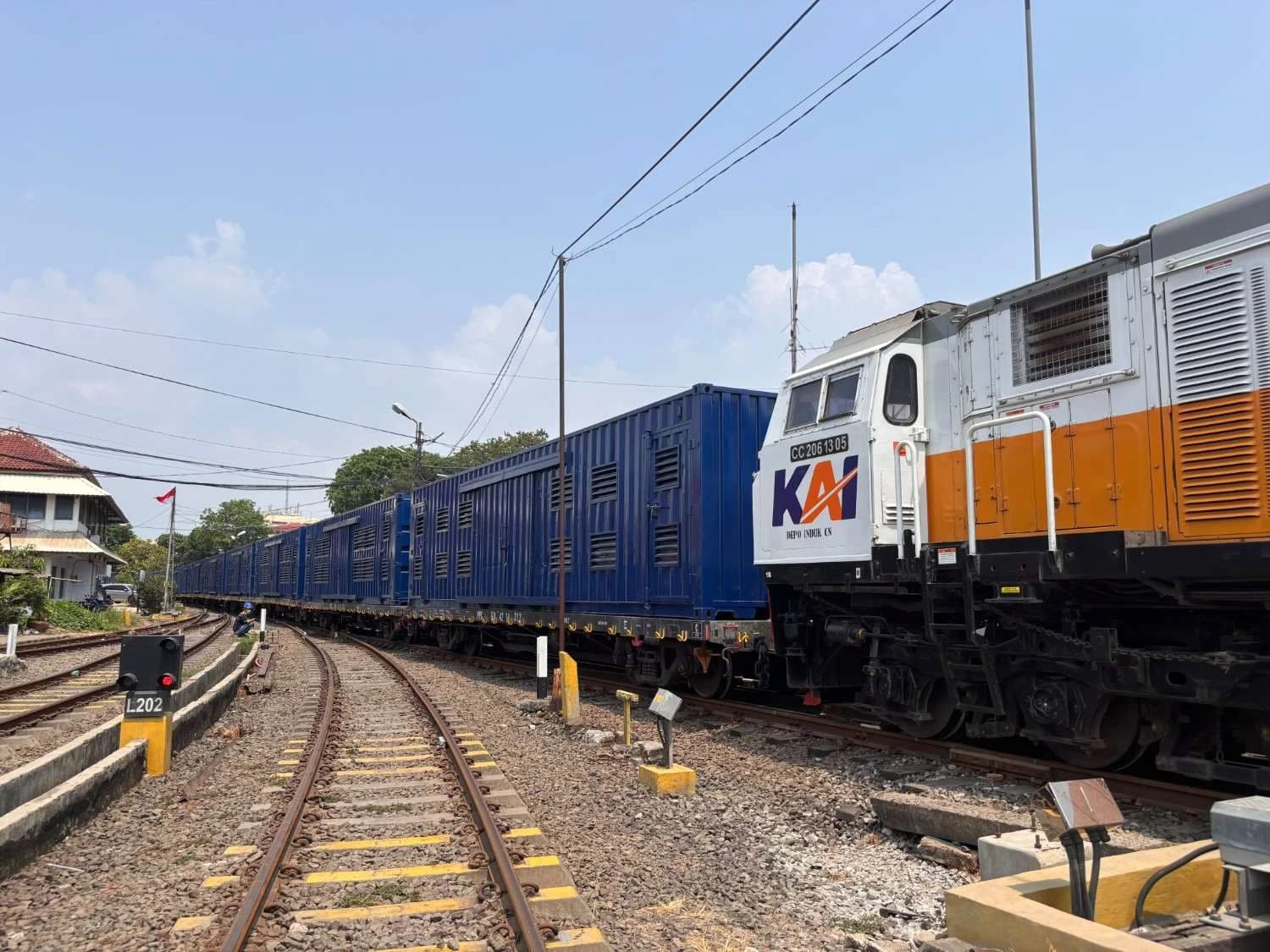
KAI Non-Coal Freight Transportation Reaches 9,15 Million Tons, Trial Run for Banyuwangi–Jakarta Agricultural Transport Begins
PT Kereta Api Indonesia (Persero) continues to develop rail-based freight transportation to support the distribution of various national commodities. Throughout January–September 2026, KAI’s non-coal freight transportation volume reached 9,148,571 tons, an increase of 2.6 percent compared to the same period in 2025, which recorded 8,912,566 tons.
KAI’s non-coal freight transportation includes various commodities, such as cement and clinker, containers, fuel, plantation products, retail freight, and fertilizers. In line with this development, KAI continues to expand the types of commodities that can be transported by rail, including agricultural products, food, and livestock.
One of the latest developments was carried out by KAI through its subsidiary, KAI Logistik, by conducting a trial run of agricultural freight transportation on the Banyuwangi–Jakarta route on September 28, 2026.
Vice President Corporate Communication KAI Anne Purba said the development of this service is part of KAI’s efforts to expand the utilization of the railway network to support the movement of goods from production areas to consumption centers.
“KAI’s non-coal freight transportation continues to grow with increasingly diverse commodities. The development of agricultural freight transportation from Banyuwangi opens up broader opportunities to utilize railways to support the scheduled and integrated distribution of food commodities between regions,” said Anne.
**Dragon Fruit Becomes the First Cargo**
In the initial trial, the train departed from Argopuro Station, Banyuwangi, on September 28, 2026, at 08:00 Western Indonesia Time (WIB), carrying 10 cars. The cargo was predominantly agricultural products from Banyuwangi, particularly dragon fruit.
The service was developed to transport agricultural and livestock commodities from production centers in East Java, particularly Banyuwangi, to Jakarta.
This trial also forms part of a comprehensive evaluation of service readiness, covering operational and technical aspects, travel time, loading and unloading processes, supporting facilities, as well as service readiness from the point of origin to the destination.
“The trial stage is important to ensure that every process can operate according to operational requirements. We want this service to be well prepared, from loading in the production area and the train journey to the arrival of commodities at the destination,” said Anne.
**Scheduled for Regular Operation Starting November 2026**
The development of this freight transportation service is a continuation of preparations for the transportation of agricultural products such as vegetables and fruit, food, livestock in the form of live cattle, as well as various supporting commodities on the round-trip Banyuwangi–Jakarta route.
The service is planned to begin regular operations in November 2026. The development of the service is planned to continue through December 2030, with a planned transportation volume of 84,200 flatcars during the cooperation period.
To support operations, loading areas are being prepared at four strategic stations, namely Argopuro and Kalisetail Stations in Banyuwangi, Rambipuji Station in Jember, and Probolinggo Station.
When fully operational, each train is planned to carry up to 20 container cars with a capacity of approximately 550 tons of commodities per trip.
Under the planned operational scheme, approximately 75 cattle can be transported using three cars, while the other cars will be used to transport agricultural products and other commodities.
The transportation will use containers adapted to the characteristics and types of commodities. For live livestock, the facilities will be prepared in accordance with technical, safety, and operational feasibility standards, testing, certification, applicable laws and regulations, while also taking animal welfare into consideration.
As part of its development, return cargo from Jakarta to Banyuwangi is also being prepared to optimize transportation capacity. Potential commodities to be transported include animal feed, fertilizers, bran, as well as other logistical needs.
Anne said the development of this service will complement KAI’s existing portfolio of non-coal freight transportation services.
“Railways have large transportation capacity and scheduled journeys. From cement and clinker, containers, fuel, plantation products, retail freight, to fertilizers, KAI’s freight transportation services continue to develop in line with logistics needs. The presence of agricultural and livestock freight transportation is expected to further connect production centers with markets and support the smooth operation of the national food supply chain,” concluded Anne.
VP Corporate Communication KAI