
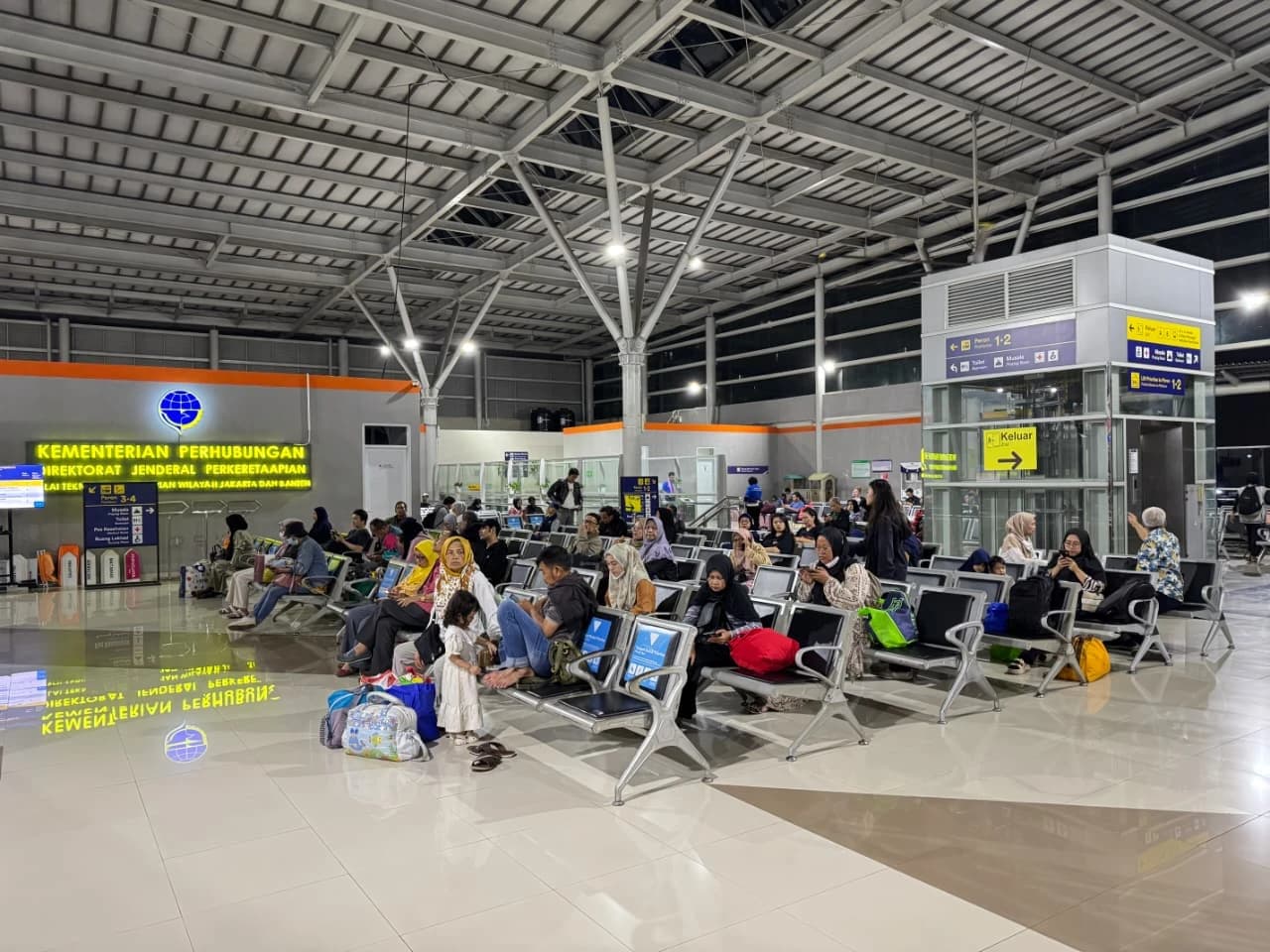
Intercity Train Activity in Bekasi Increases by 9.76 Percent, KAI Expands Travel Options from Jakarta’s Satellite Areas
The development of residential areas, business centers, and economic activities around Jakarta has been accompanied by an increasing need for intercity train travel. Public mobility is now increasingly spread across several stations in the capital’s surrounding areas, including Bekasi, Cikarang, and Jatinegara, which serve as departure and arrival options for long-distance train customers.
PT Kereta Api Indonesia (Persero) recorded 2,364,801 long-distance train customer boarding and alighting activities at Bekasi Station throughout January–October 2026, an increase of 9.76 percent compared with 2,154,519 activities during the same period in 2025. This represents an additional 210,282 boarding and alighting activities in the first ten months of this year.
KAI Vice President of Corporate Communication Anne Purba stated that this increase demonstrates the importance of developing intercity train access closer to where people carry out their daily activities.
“Intercity travel continues to develop in line with public mobility needs. For customers who live or carry out activities in Bekasi and its surrounding areas, the availability of train services from nearby stations provides more options for planning their journeys, including for work, visiting family, and other activities,” said Anne.
Increases in activity were also recorded at Jatinegara and Cikarang Stations. Throughout January–October 2026, long-distance train customer boarding and alighting activities at Jatinegara Station reached 1,562,963, an increase of 11.46 percent compared with 1,402,212 during the same period the previous year.
Meanwhile, Cikarang Station recorded 708,640 long-distance train customer boarding and alighting activities, an increase of 3.54 percent from 684,442 activities in January–October 2025.
In total, the three stations recorded 4,636,404 long-distance train customer boarding and alighting activities throughout January–October 2026, an increase of 395,231 activities, or approximately 9.32 percent, compared with the same period the previous year.
“The increase in activity at these three stations provides an indication that the need for intercity travel access is becoming more widely distributed. Service development needs to follow this distribution so that people have departure and arrival alternatives that suit their needs,” Anne explained.
In addition to serving intercity journeys, Bekasi, Cikarang, and Jatinegara also play important roles in the movement of Commuter Line customers across the Jabodetabek area.
Based on January–October 2026 data, entries and exits through Commuter Line electronic gates, or gate-in and gate-out activities, at Bekasi Station reached 19,508,891. Meanwhile, Cikarang Station recorded 12,719,884 activities and Jatinegara Station recorded 5,761,600 activities.
In total, the three stations recorded 37,990,375 Commuter Line entries and exits during the first ten months of 2026.
The high volume of urban service activity illustrates the role of these three stations in supporting people's daily journeys, while also demonstrating the potential for connectivity between commuter services and intercity trains.
“Mobility patterns among people in Jakarta and its surrounding areas are diverse. Some customers use the Commuter Line for daily activities, while on other occasions they need to travel between cities. The availability of both types of services in the same area provides broader travel alternatives,” said Anne.
In line with these evolving needs, KAI is preparing to add intercity train stops through the 2026 Train Travel Schedule (GAPEKA), which will come into effect on December 1, 2026.
At Bekasi Station, the number of long-distance train services making stops will increase from 136 to 139, representing an addition of three services.
These additions include Train Manahan number 59 on the Solo Balapan–Gambir route, Train Bangunkarta number 176 on the Pasar Senen–Jombang route, and Train Tegal Bahari number 226 on the Pasar Senen–Tegal route.
Meanwhile, Cikarang Station will have an additional six train services making stops, increasing the total from 52 to 58 services.
These additions consist of Train Manahan number 61 on the Solo Balapan–Gambir route, Train Pangandaran number 128 on the Gambir–Sidareja route, Train Parahyangan number 133 on the Bandung–Gambir route, Train Parahyangan number 134 on the Gambir–Bandung route, Train Singasari number 149 on the Blitar–Pasar Senen route, and Train Tawangjaya Premium number 213 on the Semarang Tawang–Pasar Senen route.
At Jatinegara Station, the number of long-distance train services making stops will increase from 94 to 96. The additions consist of Train Cakrabuana number 123 on the Cirebon–Gambir route and Train Gumarang number 178 on the Pasar Senen–Surabaya Pasarturi route.
Anne emphasized that these additional stops apply to specific train services as listed in GAPEKA 2026.
“With these additional stopping options, people can adjust their departure or arrival locations according to their individual travel needs. For some customers, this can provide an alternative way to access intercity journeys without always having to choose the main stations in central Jakarta,” said Anne.
The expansion of intercity travel options in Bekasi, Cikarang, and Jatinegara is also in line with the overall growth in KAI Group mobility.
Throughout January–October 2026, KAI Group served 442,529,105 customers, an increase of 6.86 percent compared with 414,116,947 customers during the same period in 2025.
For KAI's long-distance and local train services, the number of customers reached 49,932,766, an increase of 8.99 percent from 45,814,275 customers in January–October 2025.
According to Anne, this mobility growth is one of the considerations in arranging access, developing capacity, and adjusting train services in the future.
KAI will continue to evaluate changing travel needs in metropolitan areas, as well as the connectivity between urban and intercity services, to provide transportation options that are increasingly relevant to the public.
“Regional development needs to be accompanied by transportation options that suit the activities of its residents. Through the addition of stopping stations in GAPEKA 2026, we want people in Bekasi, Cikarang, and the surrounding areas to have more options for connecting with various cities across Java by train,” Anne concluded.
VP Corporate Communication KAI