
78.08 Million Passengers in the First Semester of 2026, Bogor Line Becomes the Commuter Rail Line with the Highest Mobility
PT Kereta Api Indonesia (Persero) recorded the Bogor Line as the commuter rail (KRL Commuter Line) route with the highest number of passengers. Throughout January–June 2026, the Bogor Line served 78,077,679 passengers, demonstrating the high dependence of residents in Bogor, Depok, and surrounding buffer areas on rail-based public transportation.
The role of the Bogor Line has continued to strengthen in recent years. In 2022, this route served 102,054,022 passengers. The figure increased to 133,040,885 passengers in 2023, then 145,920,264 passengers in 2024, and reached 155,009,997 passengers in 2025.
Vice President of Corporate Communication KAI, Anne Purba, stated that the high passenger volume on the Bogor Line indicates that commuter rail has become an essential part of daily travel for the public, particularly for work access, education, economic activities, and connectivity to Jakarta.
“The Bogor Line has become one of the main routes supporting daily mobility. With 78.08 million passengers in the first semester of 2026, strengthening service capacity has become an important necessity to ensure that public travel can continue in a more orderly, comfortable, and reliable manner,” said Anne.
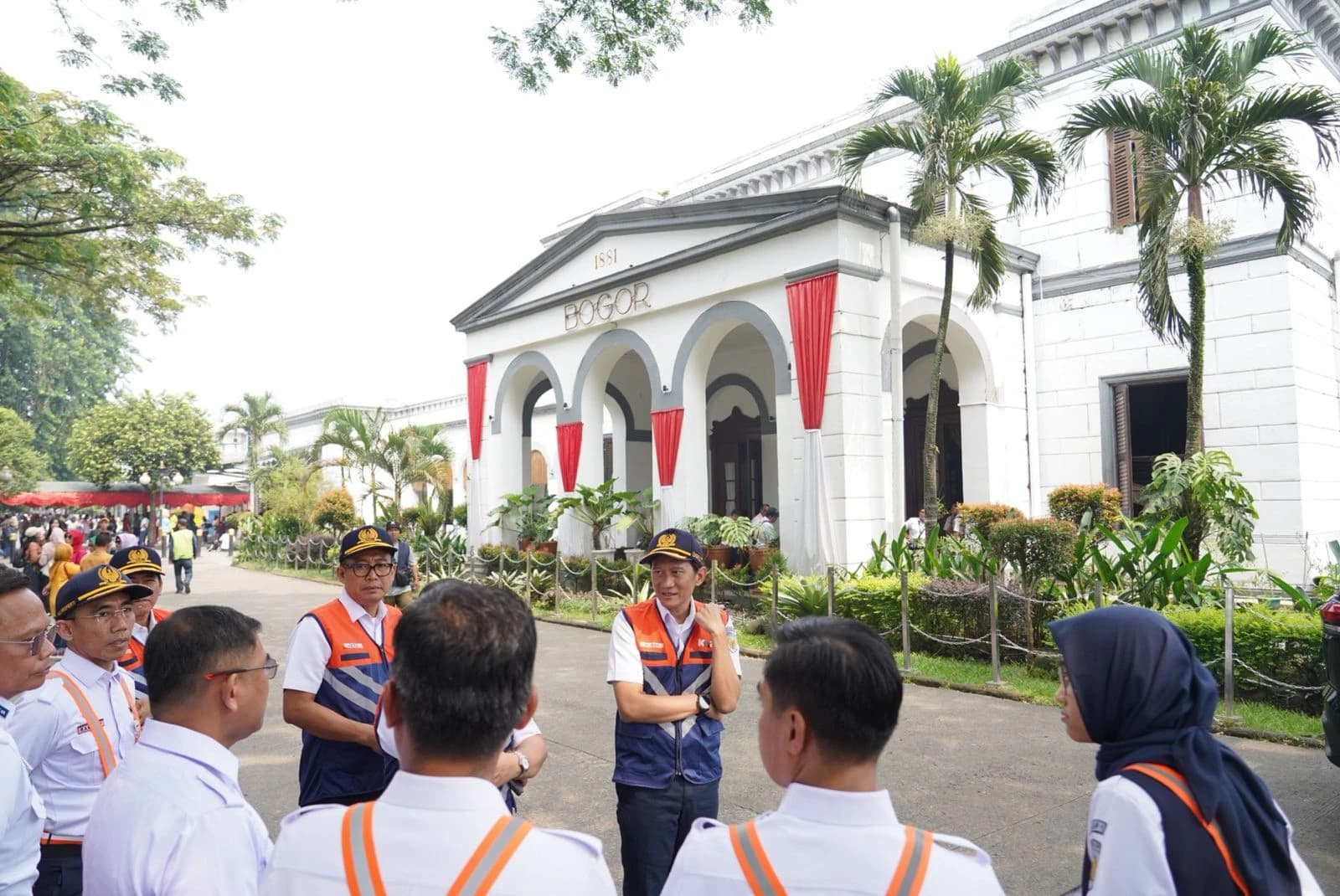
Within this route, Bogor Station serves as the node with the highest passenger activity. From January–June 2026, Bogor Station recorded 18,451,462 commuter rail passenger movements, consisting of 9,371,057 gate-in and 9,080,405 gate-out. The average passenger movement at Bogor Station reached approximately 101,942 per day.
In the list of the five stations with the highest commuter rail passenger movements in the first semester of 2026, Bogor Station ranks first with 18,451,462 passenger movements. This is followed by Tanah Abang Station with 17,291,480 passenger movements, Sudirman Station with 13,078,339 passenger movements, Citayam Station with 11,465,614 passenger movements, and Bekasi Station with 11,425,878 passenger movements.
Anne explained that the data serves as the basis for KAI in preparing service capacity improvements on the Bogor Line. One of the efforts includes the development of platforms 6, 7, and 8 at Bogor Station to support the operation of 12-car commuter train sets (SF12).
“The readiness of SF12 is part of efforts to increase capacity in a single trip. For passengers, the benefits can be felt through more adequate service space, more organized boarding and alighting flow, and improved travel readiness, especially during peak hours,” she said.
Currently, the development work on platforms 6, 7, and 8 at Bogor Station has entered the finishing stage and is proceeding in parallel with operational testing. The project, which began on 15 April 2026, is targeted for full completion by 15 July 2026.
The development includes preparatory works, structural and architectural works, mechanical, electrical, and plumbing (MEP), railway track works, as well as overhead electrical systems (LAA). KAI has also installed overcapping or canopies in the platform area to enhance passenger comfort while waiting for commuter trains, both in hot and rainy conditions.
As part of the completion process, KAI conducted a load test using a locomotive on 29 June 2026, followed by an operational trial of commuter trains on 1 July 2026. These stages were carried out to ensure safety readiness, infrastructure reliability, and smooth operations before the facilities are fully utilized.
KAI, together with KAI Commuter, continues to coordinate to ensure that customer services remain safe, orderly, and smooth during the construction process. Passenger flow arrangements, service information, and station staff guidance have been prepared to maintain public mobility.
In addition to strengthening capacity at Bogor Station, KAI, together with the Directorate General of Railways of the Ministry of Transportation of the Republic of Indonesia, is also preparing connectivity between Bogor Station and Bogor Paledang Station. This enhancement is important to facilitate passenger transfers from the Commuter Line to Pangrango train services as well as other modes of transportation in the Bogor area.
“KAI aims to ensure that service improvements are carried out in accordance with passenger needs. The Bogor Line serves millions of daily journeys each year, making capacity readiness, safety, and connectivity key priorities in service development,” Anne concluded.
VP Corporate Communication KAI