
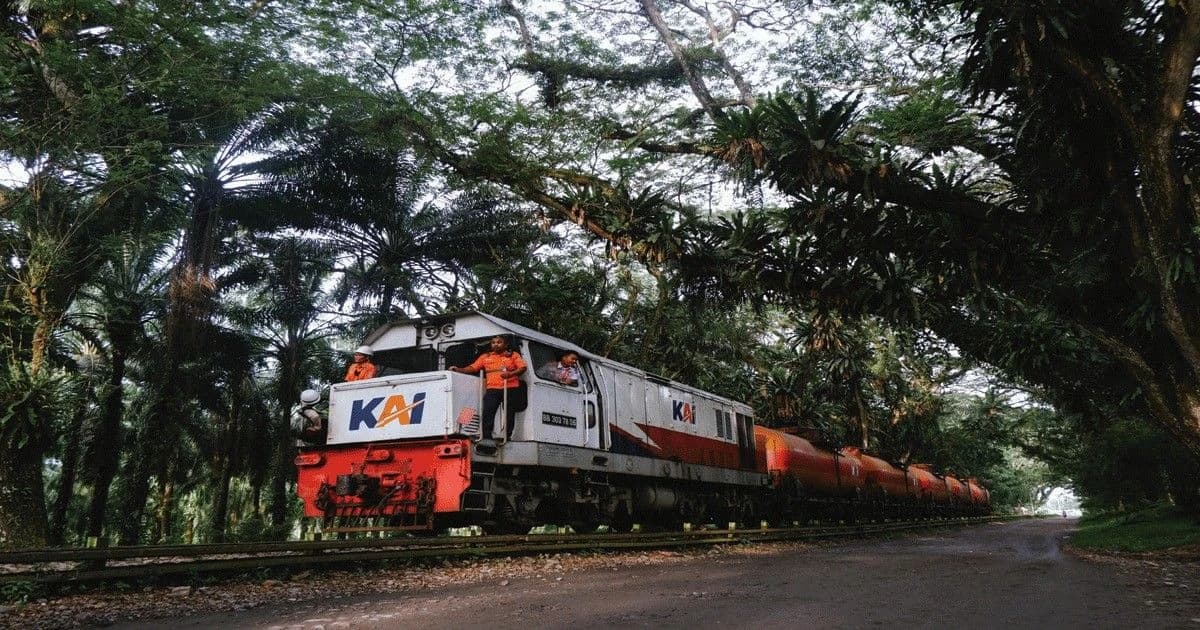
KAI's Plantation Commodity Transportation Grows by 7.78%, Strengthening Indonesia's Export Commodity Supply Chain
PT Kereta Api Indonesia (Persero) recorded positive performance in plantation commodity transportation from January through May 2026. The volume of plantation commodities transported reached 268,728 tons, an increase of 7.78 percent compared with the same period in 2025, when it totaled 249,327 tons. This growth demonstrates the expanding role of rail-based transportation in supporting the distribution of Indonesia's leading commodities.
Most of the plantation commodities transported by KAI consist of crude palm oil (CPO) and other palm oil derivatives. As one of Indonesia's key export commodities, palm oil is closely linked to various sectors of the economy, including manufacturing, trade, and export activities that contribute significantly to the country's foreign exchange earnings.
The increase in plantation commodity transportation reflects the growing demand among businesses for a mode of transport capable of moving large volumes of goods consistently. Rail transportation plays an important role in ensuring the smooth distribution of commodities from production areas to processing facilities and export ports.
Vice President of Corporate Communication KAI Anne Purba said that the growth in plantation commodity transportation indicates that rail-based logistics is increasingly trusted as an integral part of the national supply chain for strategic commodities.
"Plantation commodities, particularly palm oil, make a significant contribution to economic activities across many regions. Smooth distribution is essential for maintaining the continuity of industrial raw material supplies while also supporting the competitiveness of Indonesian commodities in the global market," said Anne.
Across various regions of Sumatra, particularly along plantation corridors that serve as the country's primary palm oil production centers, efficient commodity distribution plays a vital role in sustaining regional economic activity. The movement of plantation products to industrial zones and export ports supports business operations, employment opportunities, and the continuity of supply chains involving multiple sectors of the economy.
The use of rail transportation also provides added value in terms of distribution efficiency. With its large carrying capacity in a single trip, rail freight helps maintain the smooth flow of goods while reducing the burden of heavy truck traffic on public roads. This supports more reliable and sustainable distribution for high-volume commodities such as palm oil.
According to Anne, the growth in plantation commodity transportation is a positive signal for Indonesia's national logistics sector. Stronger connectivity between production areas, processing industries, and ports will support more efficient economic activity while reinforcing Indonesia's position as one of the world's leading producers of plantation commodities.
"KAI will continue to strengthen its logistics services to support the movement of Indonesia's productive sectors. Through rail freight transportation, the distribution of plantation commodities can become more efficient, support regional economic growth, and strengthen the supply chain for Indonesia's export commodities,"
VP Corporate Communication KAI