
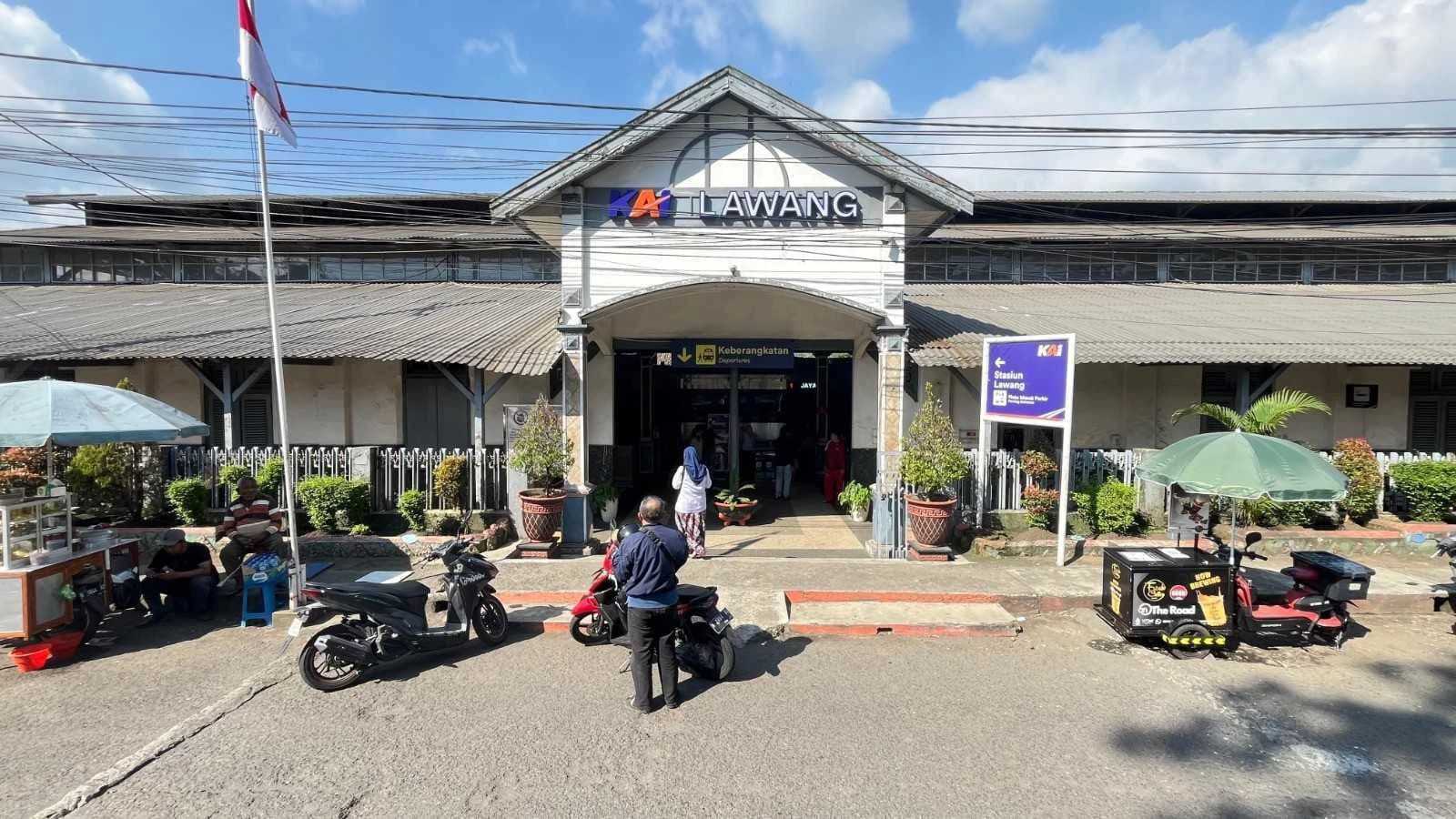
Lawang Station Passenger Volume Increases 21.67%, Strengthening Economic Agglomeration and Productive Mobility in Northern Malang
Amid the continued growth of the Surabaya–Malang metropolitan area, Lawang Station continues to strengthen its role as an increasingly strategic mobility hub for communities in Northern Malang. The increase in passenger volume at this station, which has been in operation since 1879, reflects how rail transportation has become an increasingly preferred mode of travel to support economic activities, education, and tourism.
During January–April 2026, Lawang Station served 10,449 departing passengers, an increase of 21.67% compared with 8,588 passengers during the same period in 2025. Meanwhile, arriving passenger volume reached 8,970, representing a 16.11% increase compared with 7,726 passengers in the previous year.
This growth demonstrates Lawang's increasingly important role as a mobility buffer zone connecting Malang City, Malang Regency, and Surabaya. Strategically located along the main intercity railway corridor, Lawang experiences steady travel demand throughout the day for work, education, commerce, and tourism.
Demographically, the area also has significant mobility potential. According to the 2025 Lawang District Statistics published by Statistics Indonesia (BPS), approximately 70.5% of Lawang's population falls within the productive age group of 15–64 years. This demographic composition reflects strong demand for transportation capable of efficiently connecting people to economic and educational centers.
For workers and students, railway services provide a more predictable travel pattern. Reliable travel times offer greater certainty amid increasing traffic congestion along the Surabaya–Malang corridor in recent years. This has become particularly important for suburban areas such as Lawang, where many residents commute daily.
Lawang Station's role has also expanded alongside the growing economic connectivity of Northern Malang. The region has a strong economic base in agriculture, horticulture, trade, and nature-based tourism. BPS data show that Lawang produces approximately 6,800 quintals of avocados, 30,200 kilograms of Java turmeric (temulawak), and more than 3.7 million rose stems annually.
These production activities generate substantial downstream economic activity, including agricultural distribution, intercity trade, workforce mobility, and the movement of micro, small, and medium enterprises (MSMEs). In this context, railway transportation plays an important role in maintaining connectivity between production areas and major consumption and commercial centers in Surabaya, Malang, and other cities across East Java.
Lawang has also developed as a transit point for travelers visiting tourist destinations across Greater Malang and Pasuruan. The station's proximity to Wonosari Tea Plantation, Bukit Kuneer, Sumberawan Spring, Taman Safari Prigen, and Mount Arjuno hiking trails continues to drive growing tourist mobility, particularly during weekends and holiday seasons.
Vice President Corporate Communication KAI Anne Purba stated that the increase in passenger volume at Lawang Station reflects growing public demand for efficient public transportation directly connected to economic activity centers.
“Lawang Station has evolved into an important hub supporting productive mobility in Northern Malang. The movement of workers, students, tourists, and regional agricultural products is becoming increasingly dynamic and requires transportation that is reliable, safe, and offers dependable travel times.”
In addition to serving public mobility, Lawang Station also plays an important operational role in railway operations across East Java. Located at an elevation of 491 meters above sea level, the highest station within KAI Operational Area 8 Surabaya serves as a brake inspection point for trainsets before traversing the ascending and descending railway sections toward Bangil and Malang.
Connectivity at Lawang Station is strengthened through Commuter Line Dhoho and Penataran services, offering affordable fares ranging from IDR 12,000 to IDR 24,000. The station also serves agglomeration train services such as Arjuno Ekspres, Tawang Alun, and Ijen Ekspres, supporting intercity mobility throughout East Java. In addition, Lawang Station is a stop for the Jayabaya Train operating between Malang and Pasarsenen, providing direct rail access from Lawang to Jakarta.
The increasing use of rail transportation in Lawang has also contributed to improved transportation efficiency across the region. As more people choose rail travel, pressure from private vehicle traffic along the Surabaya–Malang corridor—one of East Java's busiest transportation corridors—has gradually been reduced.
“The growth in passenger numbers at Lawang Station demonstrates that rail transportation is becoming an increasingly important component in supporting the expansion of metropolitan areas, strengthening regional economic distribution, and providing more efficient and sustainable mobility for the public.”
VP Corporate Communication KAI