
75 KAI Stations Recorded 7.64 Million Passenger Boarding and Alighting Activities in Sumatra
Rail travel in Sumatra connects provincial capitals with cities and regencies across the island. During the first half of 2026, KAI's 75 stations in Sumatra recorded a total of 7,637,540 passenger boarding and alighting activities. The figure comprised 3,818,770 passenger boardings and 3,818,770 passenger alightings. On average, these stations handled approximately 42,196 passenger boarding and alighting activities per day between January and June 2026.
KAI Vice President of Corporate Communication Anne Purba said the figures highlight the important role stations play in supporting a wide range of travel needs across Sumatra.
"Passenger journeys in Sumatra are spread across many stations. People travel for work, education, business, medical treatment, family visits, and tourism. Each station serves the unique characteristics and mobility needs of its surrounding community," Anne said.
The five busiest stations during the first half of 2026 were Medan Station with 997,723 passenger activities, followed by Padang Station with 613,140, Kertapati Station with 587,556, Pariaman Station with 432,449, and Tanjungkarang Station with 390,415.
Together, these five stations recorded 3,021,283 passenger activities, accounting for 39.56 percent of total passenger movements in Sumatra. The remaining 4,616,257 activities, or 60.44 percent, were distributed across the other 70 stations.
This distribution demonstrates that rail travel in Sumatra is supported by a broad station network, serving not only major city centers but also commercial districts, regency capitals, industrial areas, educational hubs, tourist destinations, and stations connected to airports.
"One interesting finding is that the majority of passenger activities actually take place outside the five busiest stations. This shows that rail services play an important role in the daily lives of communities across many regions," Anne added.
North Sumatra Regional Division I
The 28 stations operated by Regional Division I North Sumatra recorded 2,781,970 passenger boarding and alighting activities, representing 36.42 percent of KAI's total passenger activities in Sumatra.
Medan Station recorded the highest volume with 997,723 activities, followed by Kisaran Station (289,385), Rantau Prapat Station (258,281), Tanjung Balai Station (252,216), Tebing Tinggi Station (205,035), and Siantar Station (193,654).
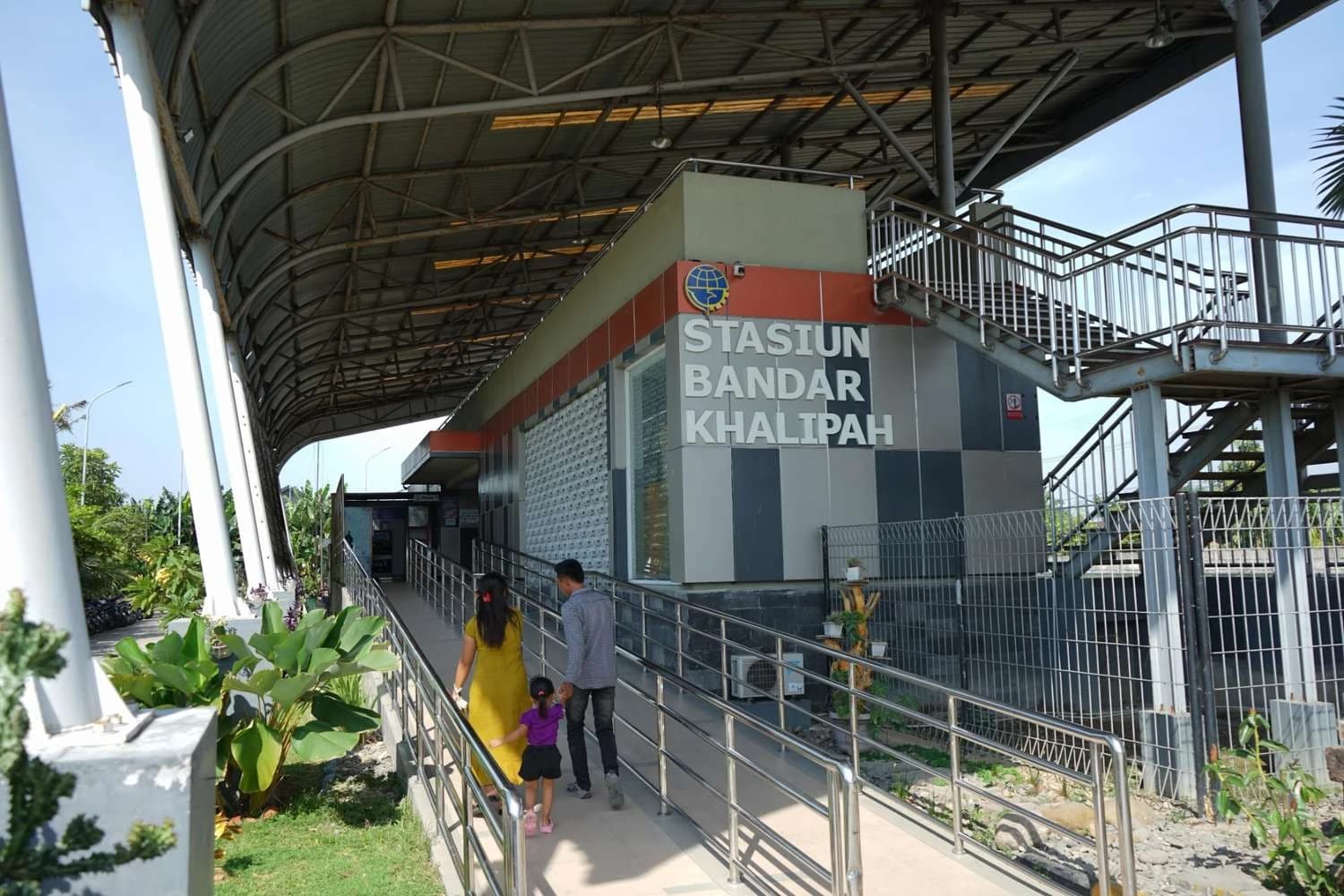
Other stations also recorded significant activity, including Bandar Kalipah (95,715), Lubukpakam (76,736), Perlanaan (55,073), and Mambang Muda (54,894). These figures illustrate strong travel connections between Medan, plantation areas, commercial centers, educational hubs, and cities along the eastern coast of North Sumatra.
West Sumatra Regional Division II
The 20 stations in Regional Division II West Sumatra recorded 2,284,932 passenger activities, accounting for 29.92 percent of the total.
Padang Station handled 613,140 activities, followed by Pariaman (432,449), Air Tawar (213,880), Naras (138,383), Lubuk Alung (131,044), and Minangkabau International Airport Station (110,093).
Additional passenger movements were recorded at Kuraitaji (98,580), Alai (81,830), Pauh Kambar (72,766), and Kayutanam (65,352).
The distribution reflects the role of rail transport in connecting Padang with educational areas, residential communities, beach tourism destinations, the airport, and communities along the Padang–Pariaman and Padang–Kayutanam corridors.
"Travel patterns in West Sumatra reflect strong connections between daily commuting, education, tourism, and airport access. Regardless of their size, every station plays an important role in serving the communities around it," Anne explained.
South Sumatra Regional Division III
The nine stations operated by Regional Division III Palembang recorded 1,209,971 passenger activities.
Kertapati Station led with 587,556 activities, followed by Lubuklinggau (255,237), Lahat (111,345), Prabumulih (99,634), and Muara Enim (93,325).
These stations connect government centers, commercial districts, educational institutions, industrial zones, mining areas, and residential communities throughout South Sumatra, reflecting strong travel demand between Palembang and cities across the province.
Tanjungkarang Regional Division IV
Meanwhile, the 18 stations operated by Regional Division IV Tanjungkarang recorded 1,360,667 passenger activities.
Tanjungkarang Station handled 390,415 activities, followed by Kotabumi (257,105), Baturaja (206,406), Martapura (100,186), and Blambangan Umpu (99,199).
Other stations included Labuan Ratu (79,454), Waytuba (41,403), Tulung Buyut (26,223), Peninjawan (22,698), and Tegineneng (22,217).
The figures highlight the role of rail services in supporting mobility between Lampung and South Sumatra, including travel to urban centers, educational institutions, traditional markets, public service facilities, and family destinations.
Passenger Activity Continued to Grow
Monthly passenger boarding and alighting activities reached 1,247,838 in January, 1,078,232 in February, 1,343,802 in March, 1,269,520 in April, 1,332,066 in May, and 1,366,082 in June 2026.
June recorded the highest passenger activity during the first half of the year, averaging approximately 45,536 passenger movements per day, exceeding the semester average of 42,196 daily activities.
According to Anne, boarding and alighting data provide valuable insights into regional travel patterns, helping KAI understand peak travel periods, station service requirements, passenger information needs, staffing readiness, and connectivity with other transport modes.
"Behind every figure is a passenger journey that deserves to be served safely and comfortably. Station activity data help KAI better understand how customers use our services every day and how travel needs differ across regions," she said.
KAI currently manages railway operations across Java and Sumatra. In Sumatra, operations cover Regional Division I North Sumatra, Regional Division II West Sumatra, Regional Division III Palembang, Regional Division IV Tanjungkarang, and the Aceh Regional Subdivision. Nationwide, KAI operates 627 railway stations and 7,765 kilometres of active railway track.
The boarding and alighting figures presented in this release represent passenger movements recorded at both departure and arrival stations. Each journey is therefore counted twice, meaning the total of 7.64 million reflects station service activities rather than the number of unique passengers.
"Railway stations are where passenger journeys intersect with the daily life of communities. Through safe, punctual, and comfortable services, KAI continues to provide people with reliable access to more cities and regions across Sumatra," Anne concluded.
VP Corporate Communication KAI