
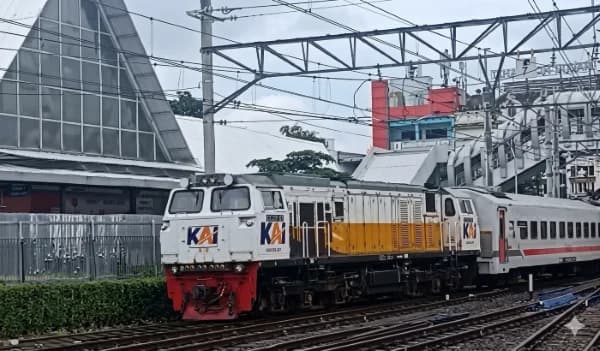
116 High-Risk Railway Crossings Closed, KAI Accelerates the Elimination of Accident-Prone Crossing Points
Public mobility continues to grow alongside increasing economic, educational, and social activities across various regions. Amid this growth, safety remains an inseparable element of building a reliable transportation system. One of the key priorities of PT Kereta Api Indonesia (Persero) is reducing the number of level crossings that pose a high risk to both railway operations and road users.
As part of this effort, as of 2 June 2026, KAI, in collaboration with various stakeholders, has successfully closed 116 out of 172 priority level crossings identified for nationwide safety improvements. This achievement represents 67 percent of the targeted closures, while the remaining 56 crossings are still being processed through coordination with local governments, regional authorities, and surrounding communities.
This initiative is part of KAI's broader program to address 1,810 unguarded level crossings across its operational network. Of these, 172 crossings with road widths of less than two meters have been recommended for closure due to their high safety risks for both train operations and road users. Meanwhile, the remaining 1,638 crossings have been prioritized for safety improvements through various protective measures tailored to local conditions.
Vice President of Corporate Communication KAI Anne Purba stated that the closure of level crossings is based on comprehensive safety assessments and evaluations. The initiative is aimed at reducing high-risk locations that have the potential to cause accidents.
"Every level crossing that has been closed has undergone a thorough evaluation and safety assessment. Our primary focus is to eliminate risk points that could potentially lead to accidents. The more high-risk crossings we successfully close, the greater our opportunity to create safer journeys for both the public and railway operations."
According to Anne, the closure of 116 crossings demonstrates increasingly strong collaboration between KAI, the central government, local governments, regional authorities, and local communities in supporting transportation safety improvements. This cooperation is essential, as each crossing has unique characteristics, environmental conditions, and safety requirements.
This collaboration has become even more important because level crossings represent the intersection between railway tracks and public roads, requiring a high level of discipline and vigilance from all road users. Therefore, reducing the number of high-risk crossings is considered one of the most effective preventive measures to minimize the potential for accidents.
KAI data shows that between 2023 and 24 May 2026, there were 1,074 accidents at level crossings, resulting in a total of 964 casualties, including 370 fatalities, 247 people seriously injured, and 347 people with minor injuries. Around 80 percent of these incidents occurred at unguarded crossings, while 88 percent were caused by road users attempting to cross despite an approaching train. These figures serve as a reminder that safety requires continuous efforts from all parties through both infrastructure improvements and strict compliance with traffic regulations.
Anne added that the benefits of closing dangerous level crossings are often not immediately visible in everyday life. However, every crossing that is permanently closed represents one less potential risk that could endanger communities in the future.
"When a high-risk crossing is successfully closed, what we are truly doing is reducing the likelihood of future accidents. Safety always begins with prevention. Therefore, public support is essential to ensure that crossings which have been officially closed are not reopened independently, allowing their long-term safety benefits to be fully realized."
KAI will continue accelerating the completion of the remaining 56 crossings currently under review so that the target of closing all 172 priority crossings can be achieved as soon as possible. Through this initiative, KAI hopes to further reduce accident-prone locations, ensuring that both railway operations and community activities around railway corridors can be carried out more safely, orderly, and securely.
VP Corporate Communication KAI