
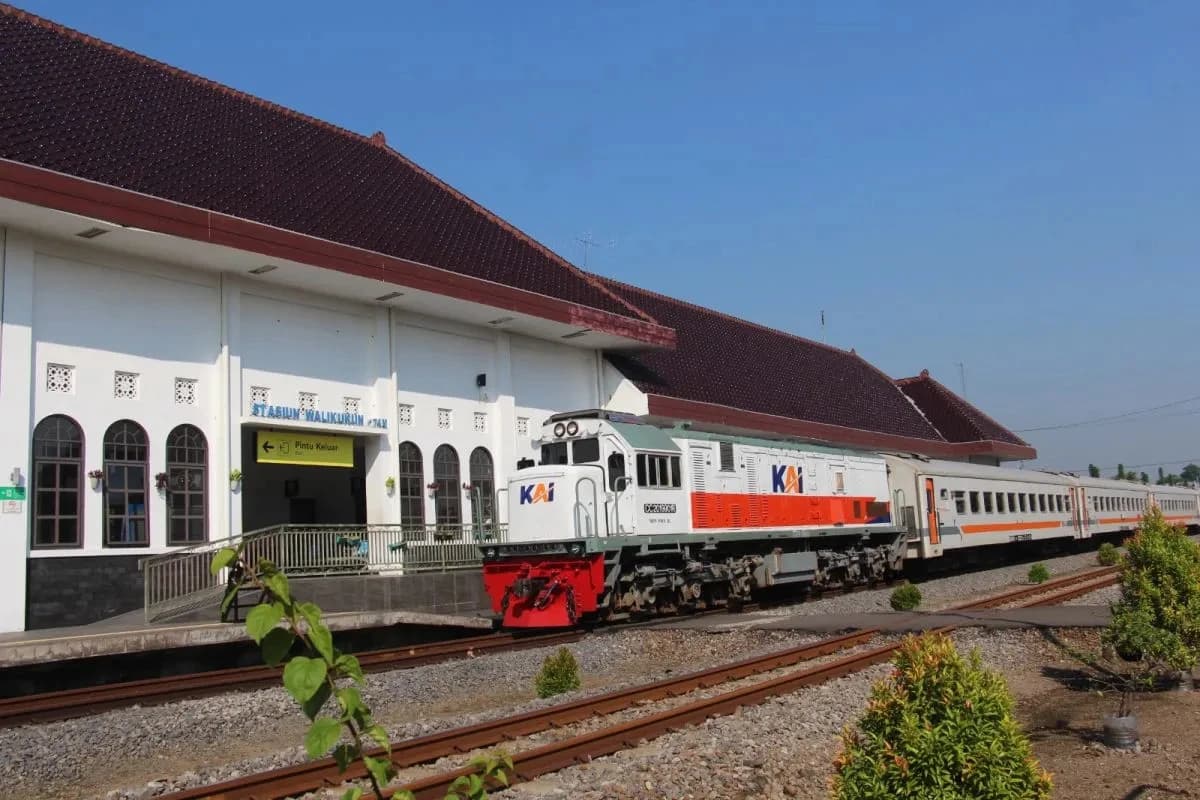
Passenger Mobility in Ngawi Increases, Customer Traffic at Walikukun Station Grows by 12 Percent in Early 2026
Located in the border area between East Java and Central Java, Walikukun Station plays an important role as a mobility hub for communities in the western part of Ngawi Regency. Its position on a strategic interregional route makes this station a connector for economic activities, education, trade, and social travel, with community movements becoming increasingly dynamic over time.
Customer movements at Walikukun Station from January to April 2026 showed a positive growth trend compared to the same period in the previous year. During this period, the volume of departing customers reached 24,311 people, an increase of 12.33 percent compared to January–April 2025, which recorded 21,642 customers. Meanwhile, the volume of arriving customers reached 22,671 people, an increase of 9.07 percent compared to the same period last year, which recorded 20,784 customers.
The increase in both indicators shows the growing intensity of community mobility in the East Java and Central Java border areas. Trains are increasingly becoming the choice of people who need travel with more predictable travel times to support daily activities and intercity journeys.
The growth of customers at Walikukun Station is in line with the socio-economic development of Ngawi Regency, which continues to show positive performance. Based on data from the Central Statistics Agency (BPS), the economy of Ngawi Regency in 2025 grew by 5.31 percent, increasing compared to the 2024 growth of 4.64 percent. In terms of business sectors, the transportation and warehousing sector recorded the highest growth, reaching 13.14 percent.
The quality of life of the people of Ngawi Regency has also continued to improve. BPS recorded that the Human Development Index (HDI) of Ngawi Regency in 2025 reached 74.43, an increase of 0.52 points compared to 2024, which stood at 73.91. During the 2021–2025 period, the HDI of Ngawi Regency grew by an average of 0.81 percent annually. This condition reflects improvements in education, health, and people’s purchasing power.
In addition, the open unemployment rate in Ngawi Regency in 2025 was recorded at 2.26 percent, while the poverty rate decreased to 13.62 percent. These figures indicate that community economic activities continue to move forward and require stronger connectivity support between regions.
KAI Vice President of Corporate Communication Anne Purba explained that the growth of customers at Walikukun Station shows the increasing public need for public transportation that can support regional productivity and connectivity.
“The increase in customers at Walikukun Station shows that community mobility in border areas continues to grow. Trains have become one of the travel options that support economic activities, education, trade, and social needs of communities moving between regions every day. This growth also reflects the increasingly strong relationship between transportation connectivity and regional development,” said Anne.
Walikukun Station itself has a long history in the development of transportation on Java Island. The station began operating on May 24, 1884, during the Staatsspoorwegen (SS) era to support the distribution of agricultural products from inland areas to trade centers. Along with the development of time, its function has continued to evolve according to the increasingly diverse needs of the community.
Currently, the existence of Walikukun Station also supports access to various destinations in Ngawi Regency. From this area, people can reach several tourist destinations such as Trinil Museum, which is known as one of Indonesia’s important paleoanthropological sites, Jamus Tea Plantation on the slopes of Mount Lawu, and Srambang Park, which has become one of the community’s favorite natural tourism destinations.
According to Anne, the increase in mobility through Walikukun Station is a signal that border areas are now increasingly connected with activity centers in East Java and Central Java. As transportation access becomes easier to reach, opportunities for economic growth, education, tourism, and broader social interaction among communities continue to develop.
“Walikukun Station has a strategic position as a gateway for community mobility in border areas. KAI continues to maintain service quality and customer comfort so that this station can continue to support community activities and strengthen interregional connectivity. The current customer growth shows that travel needs continue to develop along with increasing economic and social activities in the area,” said Anne.
VP Corporate Communication KAI