
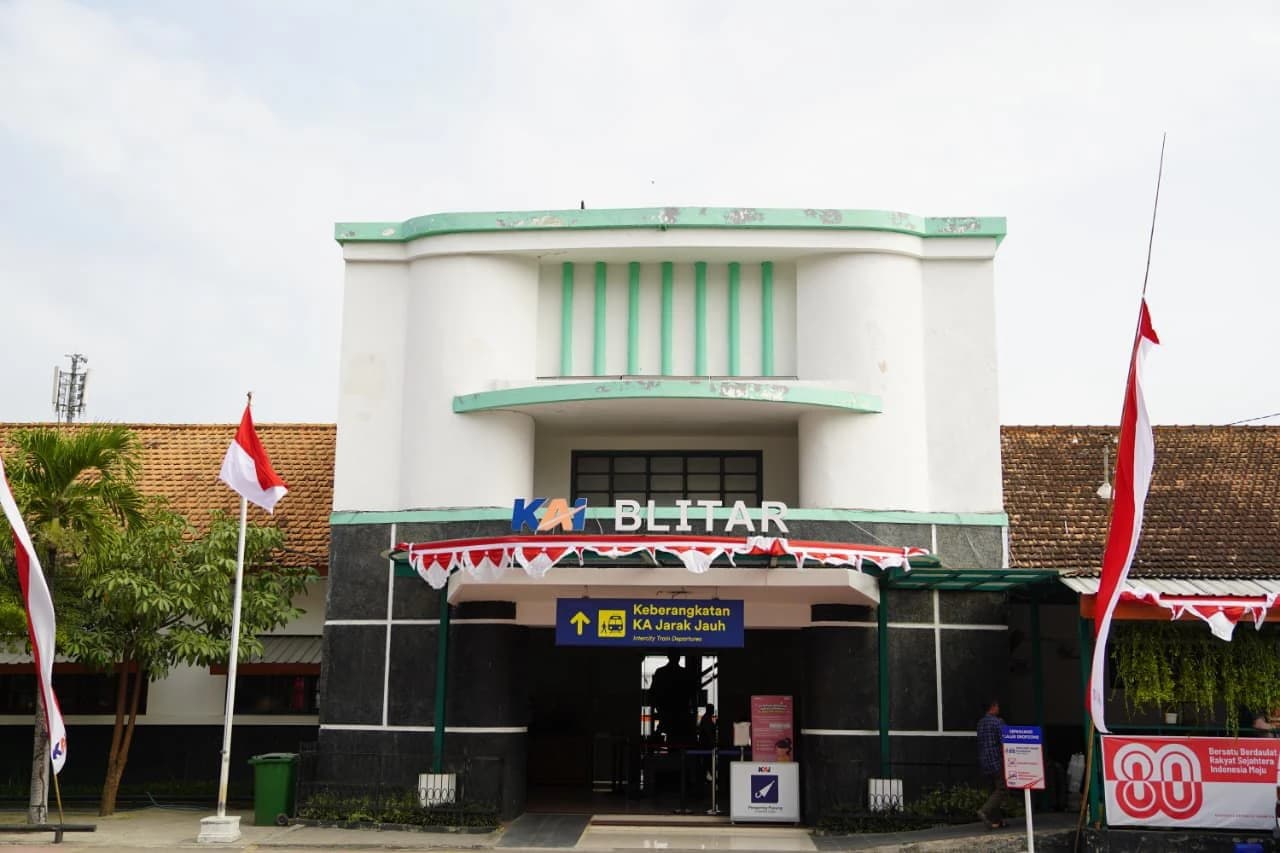
Taking the Train to Blitar Becomes an Alternative for the 2026 Eid al-Adha Long Holiday
The Eid al-Adha long holiday always brings a unique pattern of mobility. Some people choose to return to their hometowns, while others use the time to take short trips with their families. During this period, public transportation with reliable schedules and extensive intercity connectivity becomes a preferred choice for many people.
Among several destination cities in East Java, Blitar is one of the destinations showing a continuous growth trend in travel demand. The city, known as the final resting place of Indonesia’s first President Soekarno, is now increasingly accessible through Java’s railway services.
Data from PT Kereta Api Indonesia (Persero) shows that from January to April 2026, Blitar Station served 70,638 departing customers and 75,761 arriving customers. In total, there were 146,399 customer movements at the station during the first four months of this year.
Specifically in April 2026, customer volume reached 17,497 departing customers and 17,698 arriving customers. This figure is expected to increase again during the May 2026 Eid al-Adha long holiday period, in line with the high public interest in traveling by train.
KAI Vice President of Corporate Communication Anne Purba said that current travel patterns indicate a growing public interest in medium-distance and long weekend trips using public transportation.
"Blitar has a strong destination character because it combines historical, cultural, natural, and culinary tourism within one area that is relatively easy to reach by train. This connectivity provides people with more practical travel options with predictable travel times," she said.
According to Anne, the position of Blitar Station is also strategic because it is served by various railway services crossing the southern, central, and northern routes of Java. This condition makes access to Blitar more flexible from major cities such as Jakarta, Bandung, Yogyakarta, Solo, Purwokerto, and Malang.
On the southern Java route, Blitar Station serves the Malabar Train on the Bandung–Malang round-trip route and the Kahuripan Train on the Blitar–Kiaracondong round-trip route. Meanwhile, on the central and northern Java routes, the station serves the Gajayana Train, Brawijaya Train, Majapahit Train, Matarmaja Train, Brantas Train, Singasari Train, Kertanegara Train, and Malioboro Ekspres Train.
In addition to intercity services, regional community mobility is also supported through the Dhoho and Penataran Commuter Line services, which connect several cities across East Java.
This interregional connectivity directly contributes to the movement of the tourism sector and local economy. Tourists visiting Blitar generally explore historical sites such as Bung Karno’s Tomb, Gebang Palace, and the PETA Monument. Meanwhile, natural and family tourism destinations such as Serang Beach, Rambut Monte, Kampung Coklat, and Blitar Park have also become travel attractions for visitors during weekends and holiday seasons.
Anne said that easier transportation access has also changed public travel patterns, which are now becoming more spontaneous and flexible.
"Trains have now become part of modern mobility trends because journeys can be planned more efficiently, comfortably, and remain connected to many destinations. During long holidays such as Eid al-Adha, short escapes and family trips usually experience an increase," she said.
KAI also encourages the public to plan their journeys earlier and purchase tickets through the Access by KAI application or other official channels to obtain more flexible travel schedule options.
VP Corporate Communication KAI