
Manggarai Integration Strengthens Urban Public Transportation Connectivity
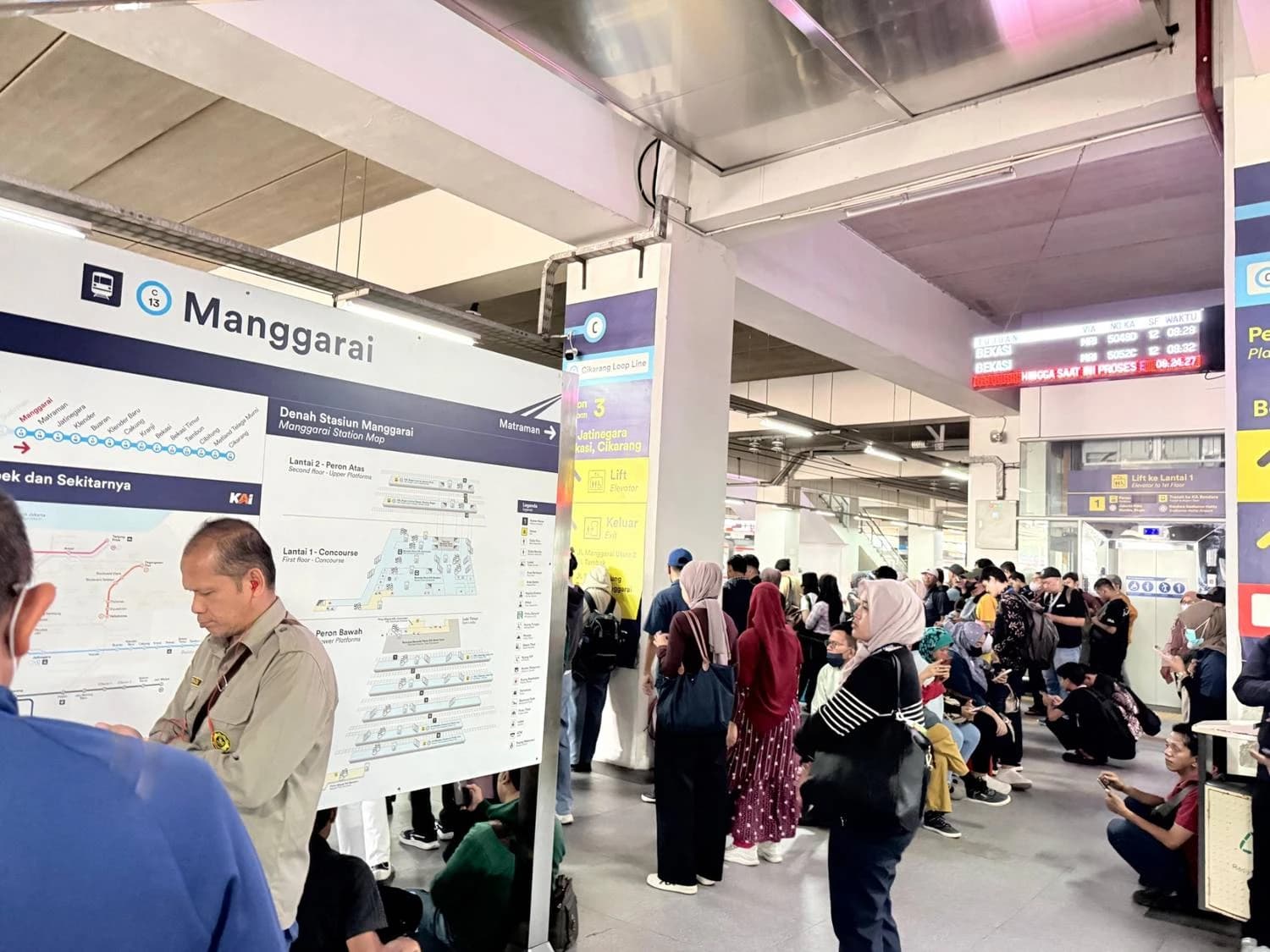
The continued growth of urban mobility has increased the need for a more integrated multimodal transportation system. In this context, Manggarai Station plays a vital role as one of the largest transportation interchange hubs in the Greater Jakarta area, connecting various public transportation services within a single integrated complex.
PT Kereta Api Indonesia (Persero) supports the development of multimodal integration at the Manggarai area as part of strengthening urban public transportation connectivity. The integration is expected to facilitate smoother transfers between transport services, shorten travel times, and expand public access to economic centers, educational institutions, and public services across Jakarta and its surrounding areas.
Vice President Corporate Communication KAI Anne Purba stated that Manggarai has evolved into a major interchange point connecting travelers from surrounding suburban areas to activity centers in the capital city. According to Anne, transportation integration has become increasingly important as daily urban mobility continues to grow.
“Multimodal integration at Manggarai is an important part of creating journeys that are more efficient, better connected, and easier for the public to access. When transfers between transportation modes become more seamless, travel times become more efficient, and the use of public transportation also continues to increase.”
KAI data show that during the 2023–2025 period, the number of Commuter Line passengers passing through the Manggarai hub reached 5,142,739 passengers in 2023, increasing to 5,575,711 passengers in 2024, and totaling 5,456,309 passengers in 2025. Meanwhile, during January–April 2026, passenger volume reached 1,802,445. This consistently high volume reflects Manggarai's strong role as a primary hub for urban mobility.
Manggarai's role has also been strengthened through its connection with the Airport Commuter Line serving Soekarno-Hatta International Airport. The service recorded passenger growth from 1,970,531 passengers in 2023 to 2,242,536 in 2024, and further increased to 2,346,934 passengers in 2025. During January–April 2026, the Airport Commuter Line served 837,778 passengers. Of this total, Manggarai Station recorded 161,074 Airport Commuter Line passengers during the same period.
The strengthening of integration at Manggarai is also aligned with the planned development of Jakarta LRT Phase 1B, connecting Velodrome to Manggarai, which is designed to support multimodal integration at Manggarai Station as a major transportation hub. The project will span 6.4 kilometers with five stations and is expected to serve between 80,000 and 100,000 passengers per day once operational.
According to the Manggarai integration development plan, the area will be connected with the Commuter Line, Airport Commuter Line, Transjakarta, the Manggarai Bus Terminal, and the Jakarta LRT network through a seamless integrated connectivity concept. The integration plan is divided into three zones connecting the Transjakarta bus stops, Manggarai Bus Terminal, and the concourse areas of the Airport Commuter Line Station and Manggarai Station.
Anne added that the success of urban public transportation largely depends on how easily passengers can transfer between different modes of transport. Therefore, transportation integration is a key factor in maintaining sustainable urban mobility amid the increasingly dynamic growth of metropolitan areas.
“Public transportation will become more effective when every mode is well integrated with one another. Integration at Manggarai is expected to strengthen the role of mass transportation as an efficient, safe, and accessible mobility option capable of serving more activity centers.”
VP Corporate Communication KAI