
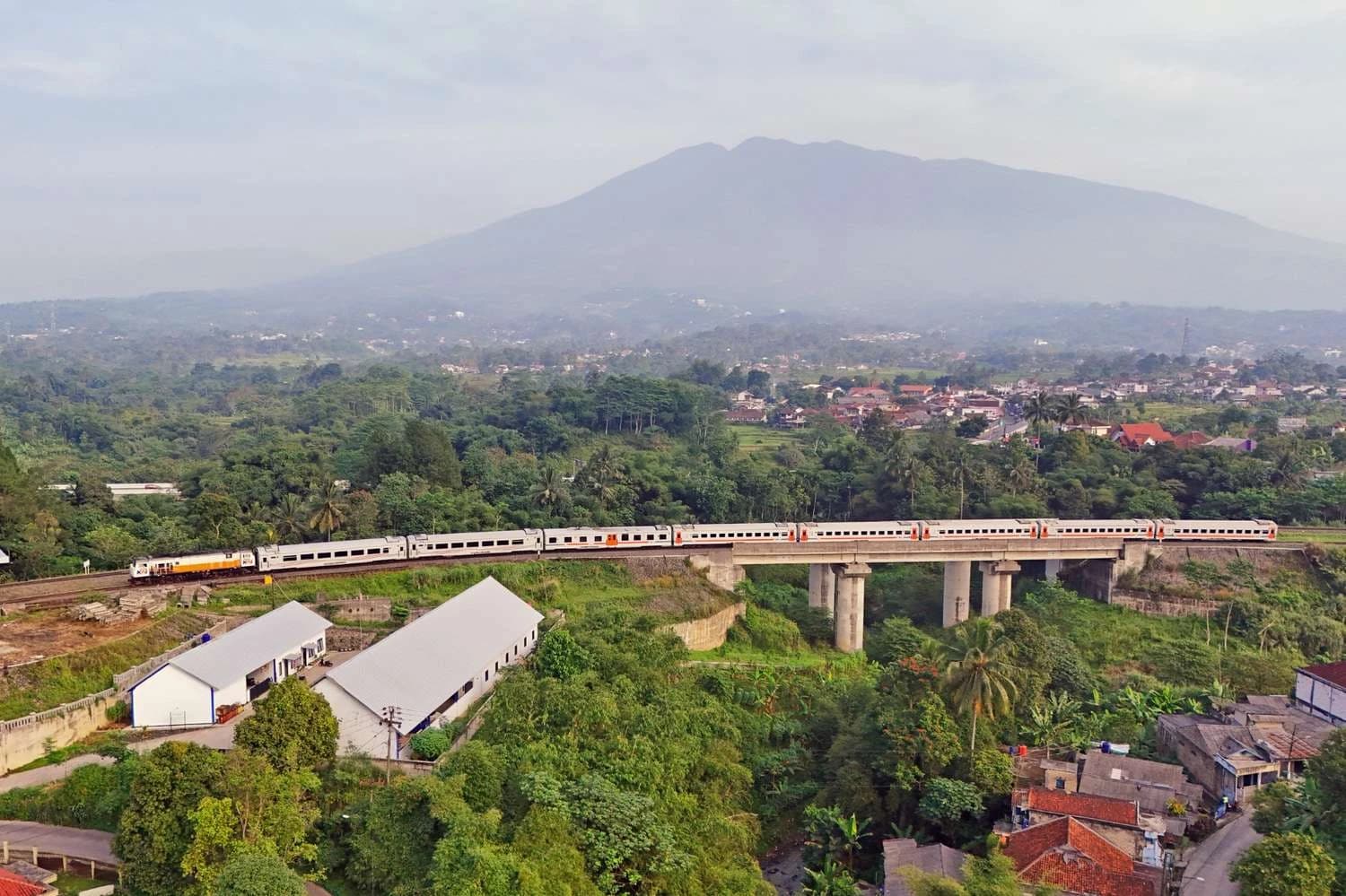
B50 Trial in Railway Operations Supports National Energy Efficiency
Amid increasing public mobility and national logistics distribution needs, PT Kereta Api Indonesia (Persero) continues to optimize the measured utilization of subsidized fuel to support safe, affordable, and sustainable public transportation services.
Government support through its energy subsidy policy plays an important role in maintaining the sustainability of rail-based transportation services that connect communities, industrial areas, distribution centers, and economic regions across Indonesia every day.
As of 18 May 2026 at 09:20 WIB, KAI's subsidized fuel consumption reached 83,915,377 liters, or 39.15% of the total government allocation of 214,342,000 liters for 2026.
The utilization is managed in a measured manner through strengthened operational governance, energy consumption control, and the optimization of passenger and freight train operations that support national mobility.
Vice President Corporate Communication KAI Anne Purba stated that the government's energy subsidy provides a direct impact on the affordability of public transportation services and the smooth distribution of national logistics.
“Government support through energy subsidies helps maintain the sustainability of mass transportation services that are utilized by the public every day. KAI manages its utilization in an accountable and measurable manner to provide optimal benefits for national mobility and goods distribution.”
Throughout January–April 2026, KAI served 19,218,440 Long-Distance and Local Train passengers, an increase compared to 17,709,669 passengers during the same period in 2025. This growth reflects increasing public confidence in rail-based mass transportation as a mode capable of supporting intercity mobility more effectively and efficiently.
In addition to serving passengers, energy use in KAI's operations also supports freight transportation carrying various strategic commodities such as containers, cement, clinker, and parcels. Freight trains help maintain the distribution chain through their large carrying capacity and more predictable travel times.
The strengthening of rail-based transportation also helps reduce congestion caused by logistics vehicles on highways, improve the efficiency of national distribution, and support a more sustainable transportation system.
As part of strengthening national energy efficiency, KAI, together with the Government, continues to carry out further testing on the implementation of biodiesel in diesel-powered railway equipment to ensure operational readiness remains aligned with safety standards and service reliability.
The testing is conducted jointly with the Ministry of Energy and Mineral Resources and LEMIGAS through stages including fuel blending, rolling stock inspections, and operational testing on locomotives and power generator cars.
For locomotives, testing is carried out at Sidotopo Depot with a focus on monitoring engine performance and fuel consumption. Meanwhile, testing of power generator cars is conducted at Yogyakarta Train Depot through fuel consumption evaluation and periodic inspections every 300 operating hours.
“KAI continues to ensure that all energy management processes are carried out in accordance with the principles of safety, operational reliability, and good corporate governance. Every stage is implemented gradually and in a measured manner to ensure service quality for customers remains well maintained.”
Throughout 2025, the use of biodiesel in Long-Distance Train services resulted in total carbon emissions of 127,315,192 kg CO₂e, or approximately 127.3 thousand tons, from a total of 47.4 million passengers. Rail-based transportation also produces lower emissions than private vehicles, thereby helping keep emissions from the transportation sector under better control.
Anne added that energy management in the railway sector will continue to be directed toward supporting regional connectivity and national productivity through increasingly efficient and sustainable public transportation services.
“Railways connect communities, industrial areas, distribution centers, and economic regions across the country every day. Therefore, energy subsidies and the optimization of their utilization play an important role in maintaining public mobility, ensuring smooth logistics distribution, and supporting national economic growth.”
VP Corporate Communication KAI