
KAI Continues Operational Recovery to Serve Public Mobility for Tomorrow’s Workday, May 11, 2026
PT Kereta Api Indonesia (Persero) continues the operational recovery process for Cikarang Line Commuter Line travel ahead of weekday public activities. Various operational safety measures remain in place to ensure train travel continues to run safely and in a controlled manner amidst ongoing track inspection processes.
During the recovery process, KAI continues to apply train travel speed restrictions at several points along the Bekasi to Cikarang line, with speeds ranging from 60–80 km/h. This policy is implemented to support track inspection processes, operational recovery, and train travel safety.
KAI Vice President of Corporate Communication Anne Purba stated that safety remains the top priority throughout every stage of the ongoing operational recovery.
"Speed restrictions are still necessary so that the track inspection and operational recovery processes can proceed smoothly while prioritizing train travel safety. We understand that this condition impacts travel delays, particularly on the Cikarang Commuter Line, and we express our sincere apologies to our customers,"
KAI recorded that the operational performance of the Cikarang Line Commuter Line continues to show a recovery trend. On May 7, 2026, departure punctuality was recorded at 87% and arrival punctuality at 81%, with average delays of 2.2 minutes for departure and 3.3 minutes for arrival. Meanwhile, on May 8, 2026, departure punctuality rose to 88% and arrival punctuality to 85%, with average delays reduced to 1.8 minutes for departure and 2.3 minutes for arrival.
Anne added that KAI continues to coordinate with various parties so that the train travel recovery process improves day by day.
"In parallel, KAI continues to coordinate with various stakeholders to ensure train journeys recover further while prioritizing travel safety above all,"
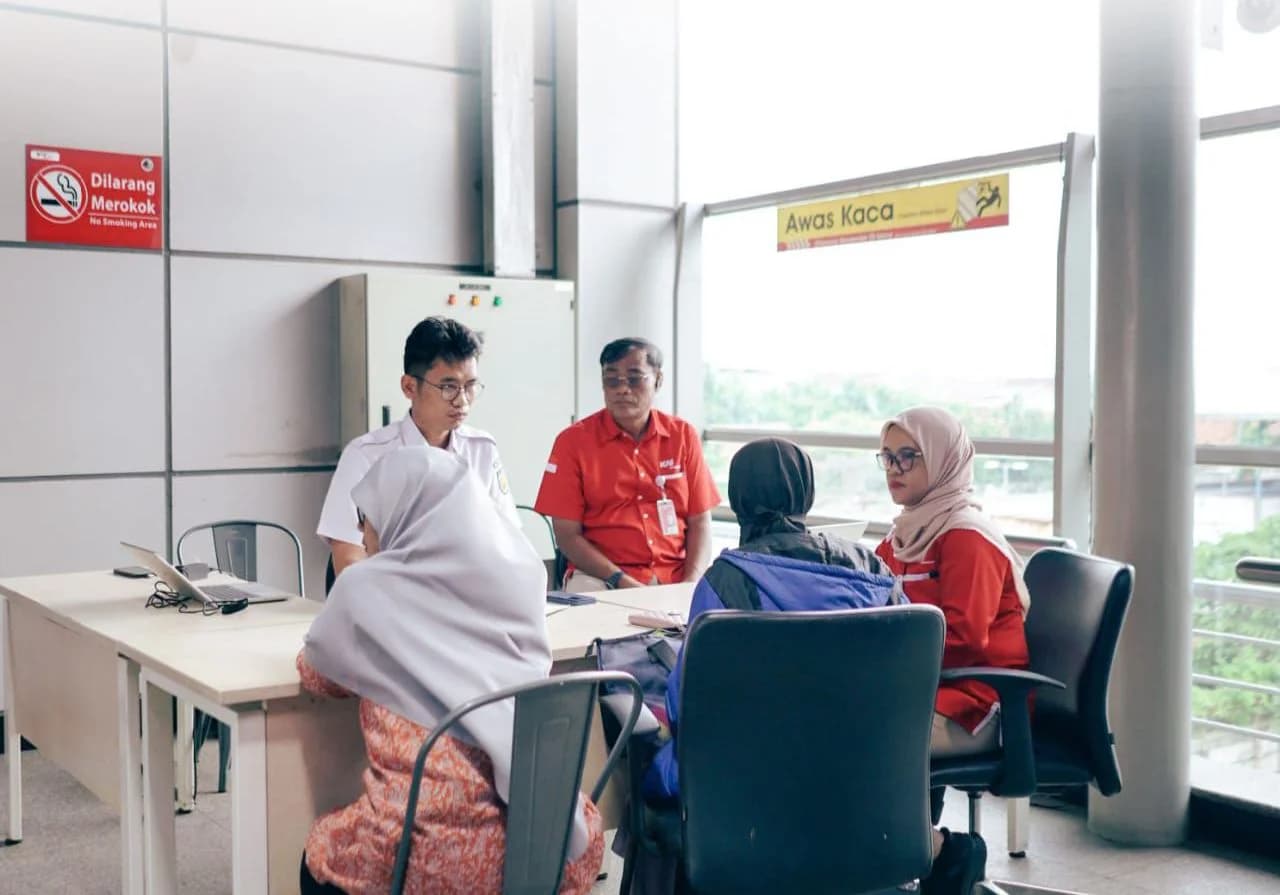
In addition to focusing on operations, KAI continues its assistance for customers and families affected by the incident at Eastern Bekasi Station.
As of Sunday (5/10) at 08:00 WIB, a total of 97 customers have been discharged to continue their recovery with their families. Meanwhile, 11 other customers remain under follow-up treatment at several hospitals, with their conditions monitored periodically.
"We continue to maintain communication with hospitals, families, and relevant parties to ensure every step of the assistance process goes smoothly. We continue to monitor customers who are still hospitalized, while those who have returned home also continue to receive support as needed,"
KAI also maintains its claim or reimbursement service for customers who paid for medical treatment independently. Submissions can be completed by attaching required documents including proof of travel, customer identification, receipts and itemized medical costs, a medical summary, and a copy of a bank account. Once documents are declared complete, the claim process will be coordinated with the insurance provider, with an estimated completion time of no later than 21 working days.
Psychological support through trauma healing services also remains available for customers or families seeking assistance. The service can be accessed via the Information Post at Eastern Bekasi Station or through the call center at 0812-9660-5747. Assistance is provided in stages, starting from telemedicine to in-person sessions based on the customer's condition and needs.
KAI also continues to secure customer belongings left behind during the incident. As of May 10, 2026, at 08:00 WIB, a total of 121 items have been found. Of that number, 80 items have been handed over to their owners, while 41 other items remain in the verification process at the Eastern Bekasi Station Lost and Found service.
"We understand that every item left behind holds significant meaning for customers and their families. Therefore, the logging and handover processes are carried out meticulously so that items can be received by their rightful owners,"
The Information Post at Eastern Bekasi Station will remain operational until May 11, 2026, to serve information, administrative, follow-up service, and psychological support needs for customers and families.
"KAI will continue the operational recovery process and customer assistance in stages while ensuring Commuter Line travel can run increasingly better and safer to serve community mobility,"
VP Corporate Communication KAI