
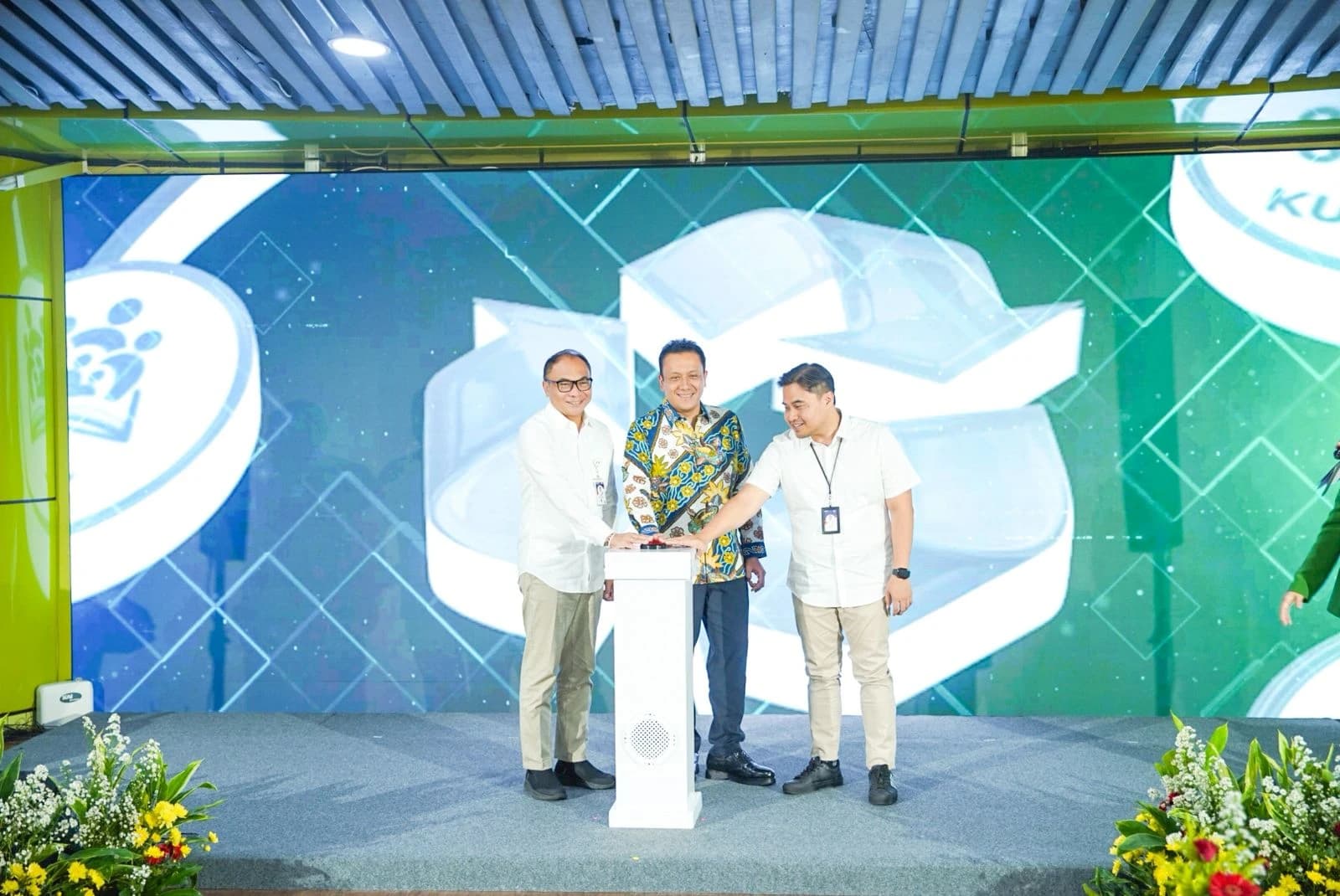
KAI Group Strengthens Integrated Waste Management Transformation at Gambir Station
KAI Group has strengthened its sustainability commitment through the launch of its Integrated Waste Management program, inaugurated at the Hall of Gambir Station, Jakarta, on Thursday (21/5). The program marks a strategic step toward establishing a more modern, measurable, and integrated waste management system across railway operations.
The event was attended by KAI Director of Portfolio Management and Information Technology I Gede Darmayusa, Indonesia's Vice Minister of Environment Faisal Malik, representatives from the Ministry of Environment, local governments, environmental management partners, the management of KAI Services, and other relevant stakeholders.
KAI Director of Portfolio Management and Information Technology I Gede Darmayusa stated that the increasing mobility of railway passengers is directly proportional to the growing challenges of waste management in station areas and railway operations.
“Railway passenger mobility continues to increase every day. Along with this growth comes a significant challenge that must be managed collectively, including waste management in public service areas. Therefore, KAI Group believes that waste management must be carried out in a more integrated manner, starting from waste sorting, transportation, processing, and recycling, to deliver greater environmental benefits.”
He added that strengthening waste management is an essential part of supporting the transformation of public transportation into a more environmentally friendly and sustainable system.
As the initial implementation phase, Gambir Station was selected as the pilot project location because it is one of the country's major transportation hubs with a high volume of passenger traffic. Every day, the station generates waste from passenger activities, commercial tenants, railway operations, and other public service areas.
Overall, total waste generation across the KAI Group currently reaches approximately 1,854 tons per year, or more than 4.3 tons per day. This situation underscores the need for a more modern and measurable waste management system capable of reducing dependence on final disposal sites (landfills).
Through this program, KAI Group, together with KAI Services, will develop an integrated waste management system based on the circular economy concept by establishing modern TPS3R (Reduce, Reuse, Recycle Waste Processing Facilities), strengthening waste sorting, processing both organic and inorganic waste, and exploring the potential for converting waste into environmentally friendly energy.
KAI Services President Director Krisna Arianto stated that waste management transformation is part of strengthening public transportation services while placing greater emphasis on environmental sustainability.
“We have developed this Integrated Waste Management program to establish a waste management system that is more effective, measurable, and sustainable. We aim to create cleaner and more comfortable station environments while fostering a stronger culture of environmental awareness in public transportation areas.”
The program will also be supported through the use of digital technology to monitor waste tonnage, sorting, transportation, and processing more accurately and transparently. Its implementation is carried out through collaboration among KAI Group, KAI Services, the Ministry of Environment, Regional Environmental Agencies, environmental partners such as Enviro, Kepul.id, PT Anak Bangsa Juara, as well as the participation of the public and railway passengers.
KAI Group has set a roadmap for the gradual implementation of the program throughout 2026–2029 by introducing integrated waste management systems at major railway stations and other strategic operational areas.
Through this transformation, KAI Group expects waste management in public transportation areas to deliver greater environmental benefits, support carbon emission reductions, improve service quality, and strengthen Indonesia's greener and more sustainable public transportation ecosystem.
VP Corporate Communication KAI