
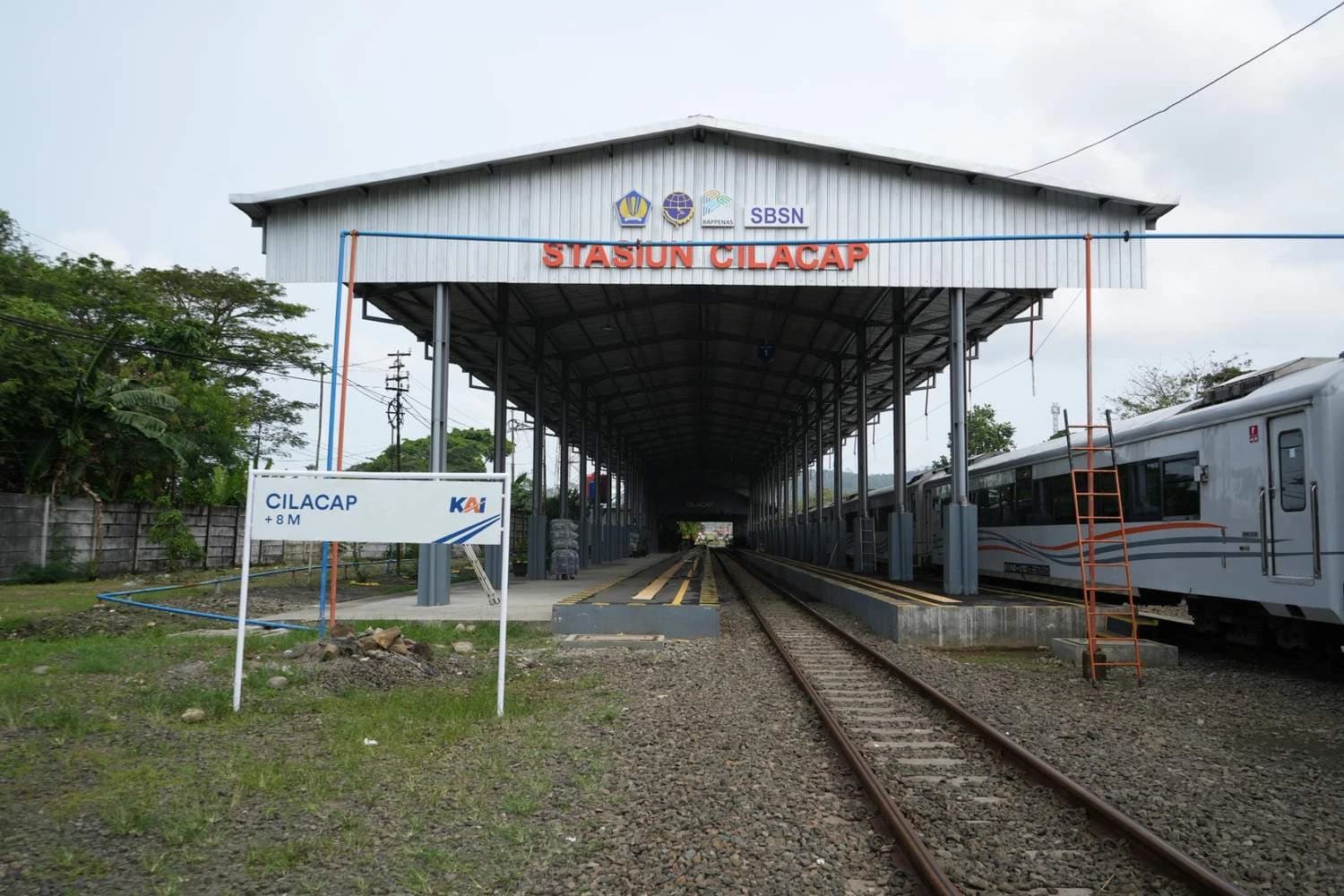
Customers Arriving at Cilacap Station Grow by 16.79 Percent, Strengthening Mobility in Southern Java’s Industrial Region
In Cilacap Regency, community mobility begins from early morning. There are workers traveling to industrial areas, students making intercity journeys for education, traders transporting goods, and families traveling for social and economic purposes. Amid these activities, trains have become one of the transportation modes that keep communities connected across various regions of Java.
As a strategic industrial and energy area on the southern coast of Java, Cilacap has a high level of community movement. The presence of railway services at Cilacap Station supports the rhythm of daily activities by providing more efficient, measurable, and reliable travel options.
PT Kereta Api Indonesia (Persero) recorded that from January to April 2026, a total of 73,433 customers departed and 76,207 customers arrived through Cilacap Station. These figures increased compared to the same period in 2025, which recorded 65,041 departing customers and 65,253 arriving customers.
The number of departing customers increased by 12.90 percent, or an additional 8,392 customers. Meanwhile, arriving customers grew by 16.79 percent, or an additional 10,954 customers compared to the same period last year.
Vice President of Corporate Communication KAI, Anne Purba, stated that this growth reflects the increasing need for public transportation that supports both economic activities and the daily social mobility of communities.
“At Cilacap Station, trains serve more than just intercity transportation. There are workers who help maintain industrial activities every day, students pursuing education, business owners connecting regional trade, and communities traveling to meet their families. This customer growth shows that rail transportation has become an increasingly important part of Cilacap people’s lives,” said Anne.
According to Anne, Cilacap’s position as a center for processing industries, energy, and maritime activities has driven continued growth in mobility demand. Based on data from Statistics Indonesia (BPS), the manufacturing sector provides the largest contribution to Cilacap’s Gross Regional Domestic Product (GRDP), accounting for 33.99 percent.
This condition creates high daily mobility, especially among industrial workers, logistics distribution activities, and intercity trade. Railway services provide communities with more stable travel access amid the high movement of people in industrial areas.
Several key train services operating through Cilacap Station have become popular choices for passengers. For Long-Distance Train services, customers are served by the Purwojaya Train operating on the Cilacap–Gambir route, Wijayakusuma Train on the Cilacap–Ketapang route, and Sancaka Utara Train on the Cilacap–Surabaya Pasarturi route. Meanwhile, agglomeration services such as Joglosemarkerto and Kamandaka strengthen connectivity to Yogyakarta, Purwokerto, Solo, and Semarang.
Beyond passenger services, KAI’s strategic role in Cilacap is also reflected in the national logistics sector. The region is home to Indonesia’s largest oil refinery, which supplies approximately 60 percent of fuel demand on Java Island. Through rail-based transportation, KAI supports the distribution of aviation fuel (Avtur) and fertilizer transportation to maintain the smooth supply of energy and support the national agricultural sector.
“Rail-based logistics distribution helps maintain supply chains through large transport capacity and more predictable delivery times. The benefits are not only experienced by the industrial sector but also by the wider community through reliable energy supplies and agricultural support distribution,” said Anne.
The presence of Cilacap Station also supports local tourism and economic activities. Its connection to the Tanjung Intan Port area and tourist destinations such as Teluk Penyu Beach and Jetis Beach contributes to increased tourist movement and supports MSME activities in the southern coastal region of Java.
KAI views the growth in customers at Cilacap Station as part of the development of community social and economic activities. Therefore, service improvements continue to be carried out through enhanced customer facilities, accessibility, and railway operational reliability.
“Every train journey carries economic activities and community livelihoods within it. KAI will continue maintaining services at Cilacap Station so that public mobility, industrial growth, logistics distribution, and connectivity across southern Java can continue to develop sustainably,” concluded Anne.
VP Corporate Communication KAI