
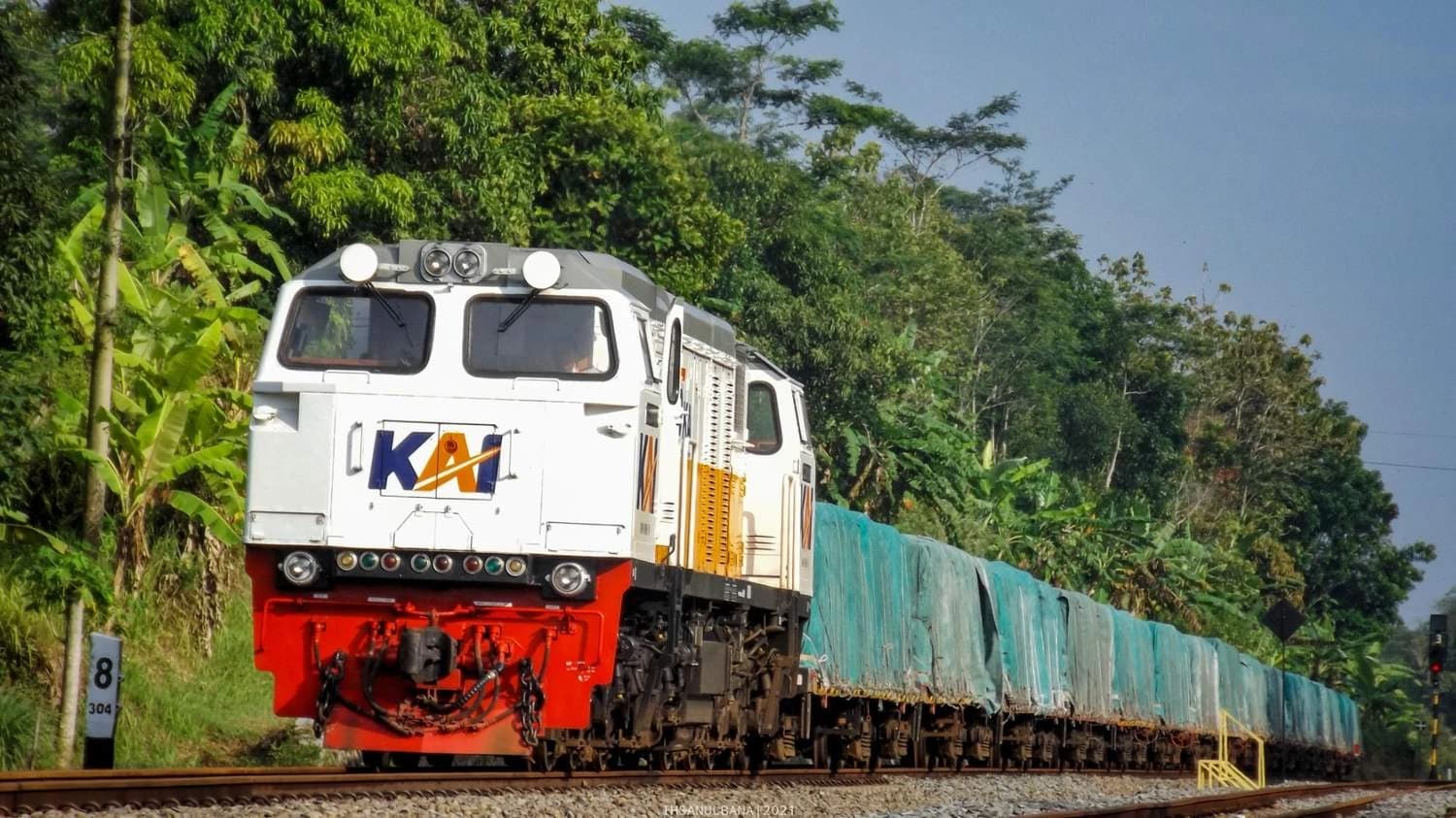
KAI's Cement and Clinker Freight Reaches 752 Thousand Tons, Supporting the Distribution of National Construction Materials
PT Kereta Api Indonesia (Persero) recorded a cement and clinker freight volume of 752,852 tons during January–April 2026. This figure highlights the role of rail-based transportation in ensuring the smooth distribution of construction materials, which are essential for infrastructure development, industrial estates, and residential housing projects across various regions of Indonesia.
In April 2026, cement and clinker freight volume reached 185,258 tons. Previously, KAI transported 205,794 tons in January 2026, followed by a significant increase to 357,120 tons in February. This distribution reflects the strong demand for construction material logistics across rapidly developing regions.
Vice President Corporate Communication KAI Anne Purba stated that cement and clinker transportation is one of the strategic logistics services supporting the national supply chain. Rail transportation is considered capable of maintaining distribution continuity through its large carrying capacity, predictable transit times, and efficient interregional logistics operations.
“The movement of cement and clinker is closely linked to construction activities. When distribution runs smoothly, the development of industrial estates, housing, public facilities, and regional connectivity can also progress more effectively.”
Statistics Indonesia (BPS) data show that the construction sector remains one of the main pillars of the national economy. In the first quarter of 2026, the construction sector grew by 5.49% year-on-year, while its contribution to Indonesia's Gross Domestic Product (GDP) reached 9.83% in 2025. These conditions indicate that demand for the distribution of construction materials continues to grow alongside development activities across various regions.
KAI continues to expand its freight services to meet the increasing needs of national logistics distribution. The use of rail transportation for logistics also helps reduce congestion caused by heavy-duty trucks on highways while improving energy efficiency and minimizing road damage caused by high-tonnage vehicles.
Anne added that today's national logistics distribution requires transportation modes capable of moving large volumes consistently. Railways have become one of the preferred options because they offer reliable operational punctuality and can sustainably support the distribution of various strategic commodities.
“Rail-based freight transportation will continue to play an important role in supporting national economic growth. KAI is committed to maintaining reliable and safe freight distribution services while meeting the evolving needs of both industry and the public.”
VP Corporate Communication KAI