
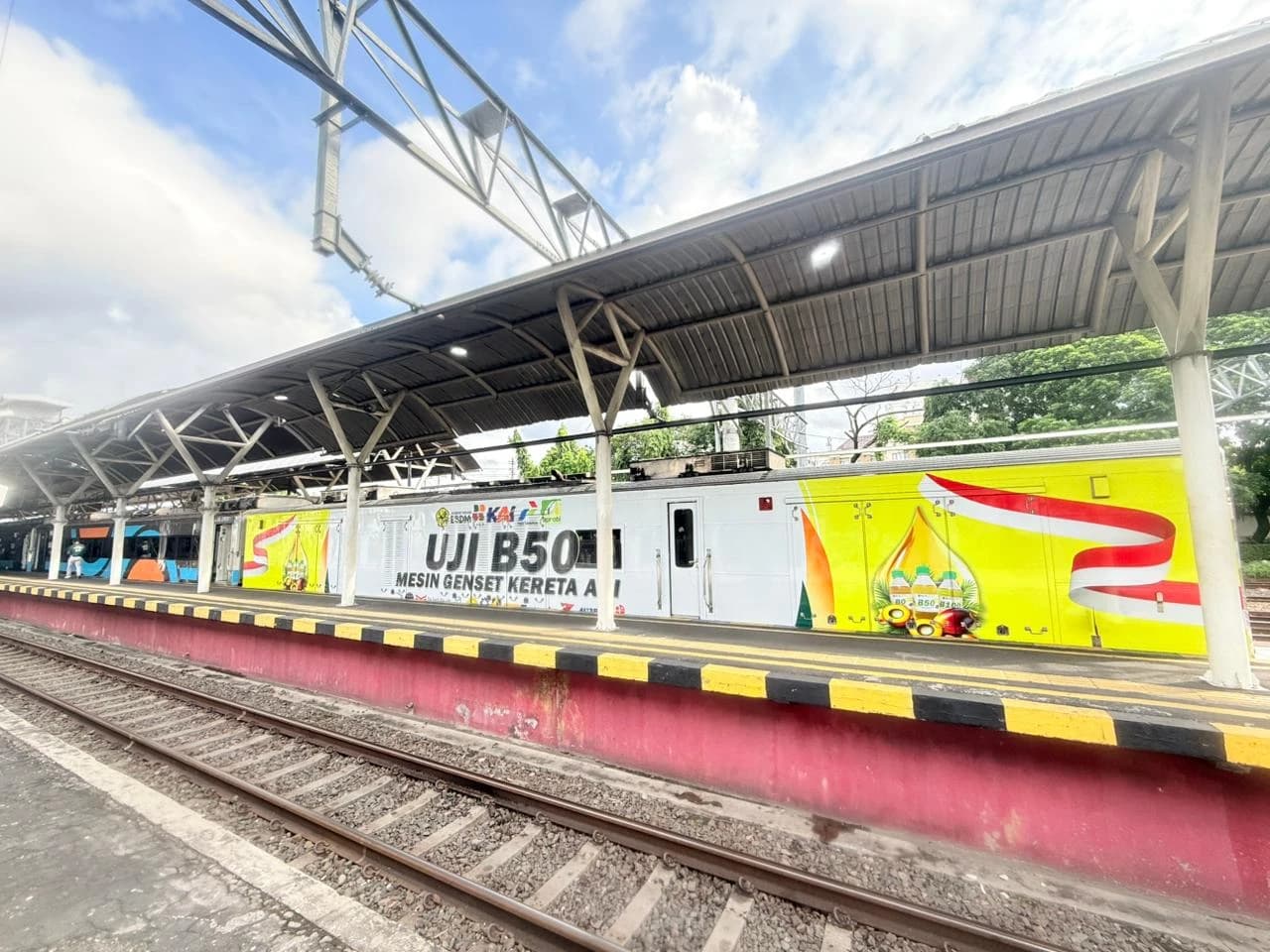
Accelerating B50 Implementation, KAI Strengthens Rolling Stock Testing to Ensure Safety and Operational Reliability
The Government will implement the mandatory nationwide use of B50 biodiesel starting on 1 July 2026 as part of efforts to strengthen energy security and accelerate the transition toward more sustainable energy use. The policy represents a strategic step to expand the utilization of bio-based energy across various national transportation sectors.
As a rail-based public transportation operator, PT Kereta Api Indonesia (Persero) continues to strengthen its readiness for the implementation of B50 through a series of technical tests on diesel-powered railway rolling stock. This measure is taken to ensure travel safety, operational reliability, and service quality for customers are maintained throughout the energy transition process.
KAI Vice President Corporate Communication Anne Purba stated that the implementation of B50 is a continuation of the biodiesel utilization previously introduced through the B35 and B40 implementation stages within KAI's operational environment.
“KAI supports the Government's initiative to strengthen the use of more sustainable energy. At every stage of its implementation, safety, rolling stock reliability, and service quality remain our top priorities.”
Throughout 2025, the use of B40 biodiesel in Long-Distance Train services resulted in total carbon emissions of 127,315,192 kg CO₂e, or approximately 127.3 thousand tons, from a total of 47.4 million passengers. Meanwhile, from January to April 2026, KAI's Long-Distance and Local Train services served 19,218,440 passengers while consistently using biodiesel-based fuel on various diesel-powered train operations.
According to various transportation studies, rail-based transportation produces lower emissions than private vehicles. Average train emissions range between 15–40 grams of CO₂ per passenger-kilometer, while private vehicles may emit approximately 120–250 grams of CO₂ per passenger-kilometer. This demonstrates that traveling by train helps keep transportation-sector emissions under better control amid increasing public mobility.
To support the implementation of B50, KAI is collaborating with the Ministry of Energy and Mineral Resources and LEMIGAS through phased testing that has been conducted since mid-April 2026. The testing process begins with fuel blending, followed by rolling stock inspections, and continues with operational testing across various types of railway fleets.
For locomotives, testing is being conducted at Sidotopo Depot with a focus on monitoring engine performance and fuel consumption during the use of B50. Observations are carried out to ensure combustion characteristics, engine performance stability, and operational efficiency remain optimal under daily operating conditions.
Meanwhile, testing on power generator cars is being conducted at Yogyakarta Train Depot, focusing on fuel consumption monitoring and periodic testing every 300 operating hours. The testing includes initial inspections, the use of B40 as a benchmark, and the subsequent use of B50 to evaluate rolling stock performance under various operating conditions.
KAI is also preparing longer-term testing to ensure rolling stock durability remains reliable during intensive field operations. To date, all testing results are still undergoing evaluation and monitoring jointly with the Government and the relevant technical teams.
“The accelerated implementation of B50 requires well-measured preparedness to remain aligned with public transportation safety standards and service quality. KAI continues to strengthen coordination and technical testing to ensure its implementation can proceed optimally and sustainably.”
VP Corporate Communication KAI