
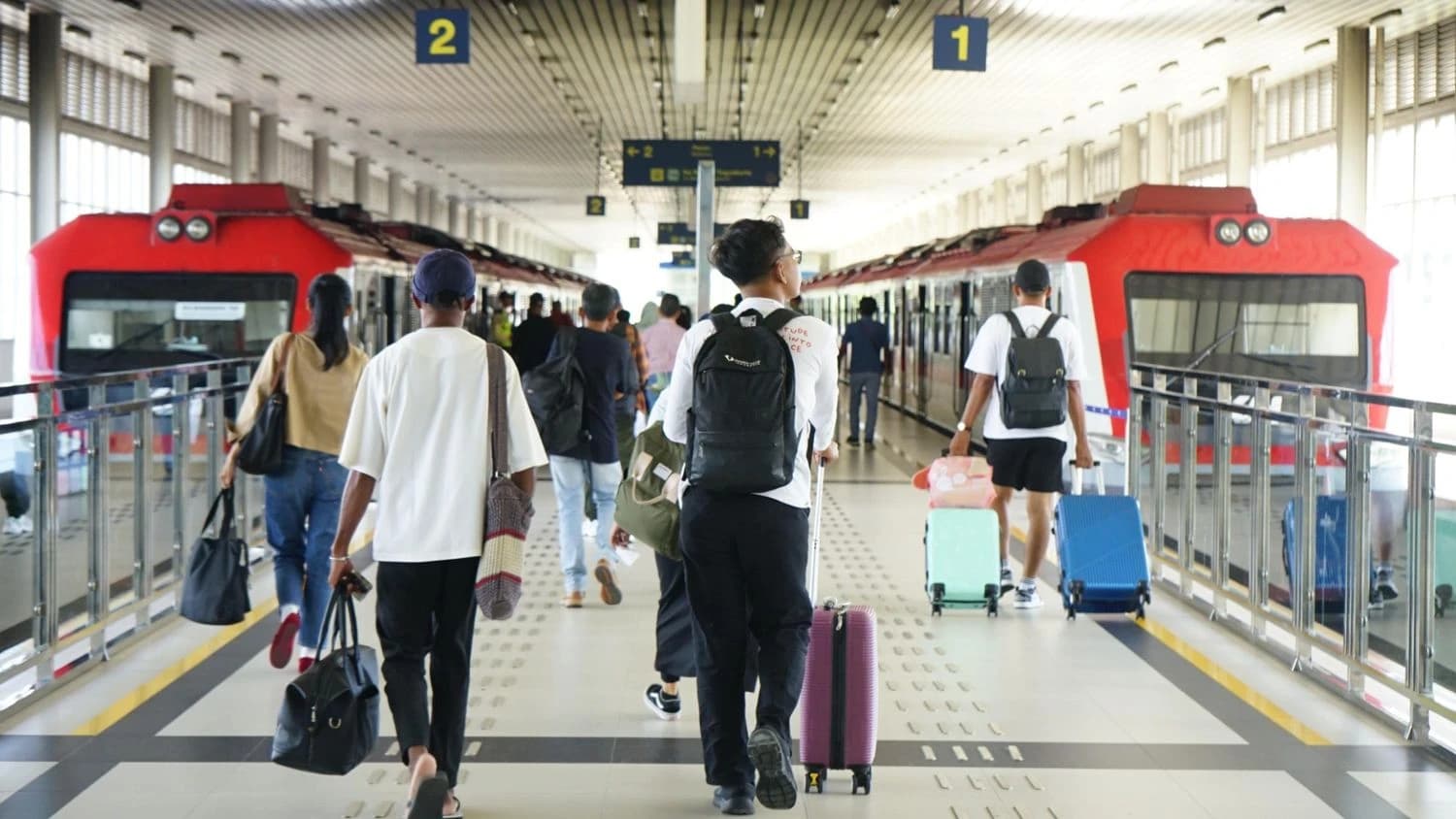
KAI Group’s Airport Rail Services Continue to Grow, Strengthening Connectivity and National Tourism
Public mobility to and from airports increasingly depends on transportation connectivity that is fast, well-integrated, and offers reliable travel times. Amid increasingly dynamic urban activities, airport rail services have become an essential part of people's travel patterns, supporting business, education, tourism, and intercity travel.
This shift in travel behavior is reflected in the growing use of rail-based transportation services across various regions. People now consider not only travel distance but also time efficiency, intermodal integration, and the ease of access between city centers and airports.
PT Kereta Api Indonesia (Persero) recorded that KAI Group’s airport rail services served 3,246,711 customers during the January–April 2026 period. This figure includes customers using the Soekarno-Hatta Airport Commuter Line, YIA Airport Rail, Srilelawangsa Airport Rail in Medan, Minangkabau Express in Padang, as well as integrated rail transportation services such as the South Sumatra LRT and BIAS Airport Rail, which connect airport areas with major activity centers in various regions.
The growing use of these services demonstrates that rail-based connectivity is becoming increasingly important in supporting modern mobility. Airport rail services not only provide easier access to airports but also strengthen connectivity between urban areas, economic centers, and national tourism destinations.
For the Soekarno-Hatta Airport Commuter Line, customer numbers reached 837,778 during January–April 2026, an increase of 18.69 percent compared to 705,859 customers during the same period last year. This growth reflects the increasing demand among Greater Jakarta residents for reliable transportation to Soekarno-Hatta International Airport amid heavy urban traffic congestion.
In Yogyakarta, the YIA Airport Rail service continues to strengthen connectivity between the airport, the city center, educational districts, and tourism destinations. During January–April 2026, the YIA Regular Airport Rail served 619,498 customers, while the YIA Xpress served 301,400 customers, bringing the total to 920,898 customers, an increase compared to 888,653 customers during the same period in 2025. This growth demonstrates that integrated transportation access is becoming increasingly important in supporting tourism and public mobility in Yogyakarta and its surrounding areas.
Airport connectivity also continues to improve in North Sumatra through the Srilelawangsa Airport Rail service operating on the Medan–Kualanamu and Medan–Binjai routes. During January–April 2026, the service carried 1,414,031 customers, an increase from 1,379,178 customers during the same period last year. This railway serves as an important link connecting the Medan metropolitan area, surrounding regions, and Kualanamu International Airport, one of the primary transportation gateways in northern Sumatra.
In West Sumatra, the Minangkabau Express continues to improve public access to Minangkabau International Airport. During January–April 2026, the service carried 74,004 customers on the Pulau Aie–Padang–Tabing–Duku–Minangkabau International Airport route, with a travel time of approximately 45 to 50 minutes. The service provides residents and visitors with a more efficient, affordable, and direct transportation option connecting Padang city center with the airport.
As one of Indonesia's leading tourism destinations, West Sumatra depends heavily on efficient airport connectivity to support visitor mobility. Convenient transportation between Padang city center and Minangkabau International Airport contributes to tourism, business travel, education, and everyday public mobility throughout the region.
Rail-based connectivity has also been strengthened in Solo through the Adi Soemarmo Airport Rail (BIAS), which has now been extended to Madiun. This service expands access for communities in the Greater Solo area, Sragen, Ngawi, Magetan, and Madiun, allowing them to reach the airport without relying entirely on road transportation. In addition to facilitating travel, this enhanced connectivity also creates greater opportunities for regional economic growth and tourism development.
In Palembang, the South Sumatra LRT continues to play a strategic role in supporting access to Sultan Mahmud Badaruddin II Airport and urban mobility. From January to April 2026, the service carried 1,441,069 customers across its 13 stations, connecting the airport area with the city center and Jakabaring. The South Sumatra LRT demonstrates how rail-based public transportation has become an integral part of daily urban mobility.
The momentum of long holiday periods and the increasing number of leisure trips in recent years has further highlighted the importance of airport connectivity integrated with public transportation. Convenient access between airports, city centers, and tourist destinations has become one of the key factors shaping the travel experience of both domestic and international visitors.
Vice President of Corporate Communication KAI, Anne Purba, stated that the growth in airport rail customers reflects the increasing public demand for an integrated and efficient transportation system.
“Transportation connectivity has become an essential part of modern travel patterns. Rail-based services help make journeys more reliable, efficient, and directly connected to major public activity centers,” said Anne.
Anne added that strengthening public transportation connectivity also has a broader impact on regional development and the national tourism sector.
“When airports, railway stations, city centers, and tourist destinations are well connected, people gain greater mobility, and regional economic activities continue to grow,” Anne concluded.
VP Corporate Communication KAI