
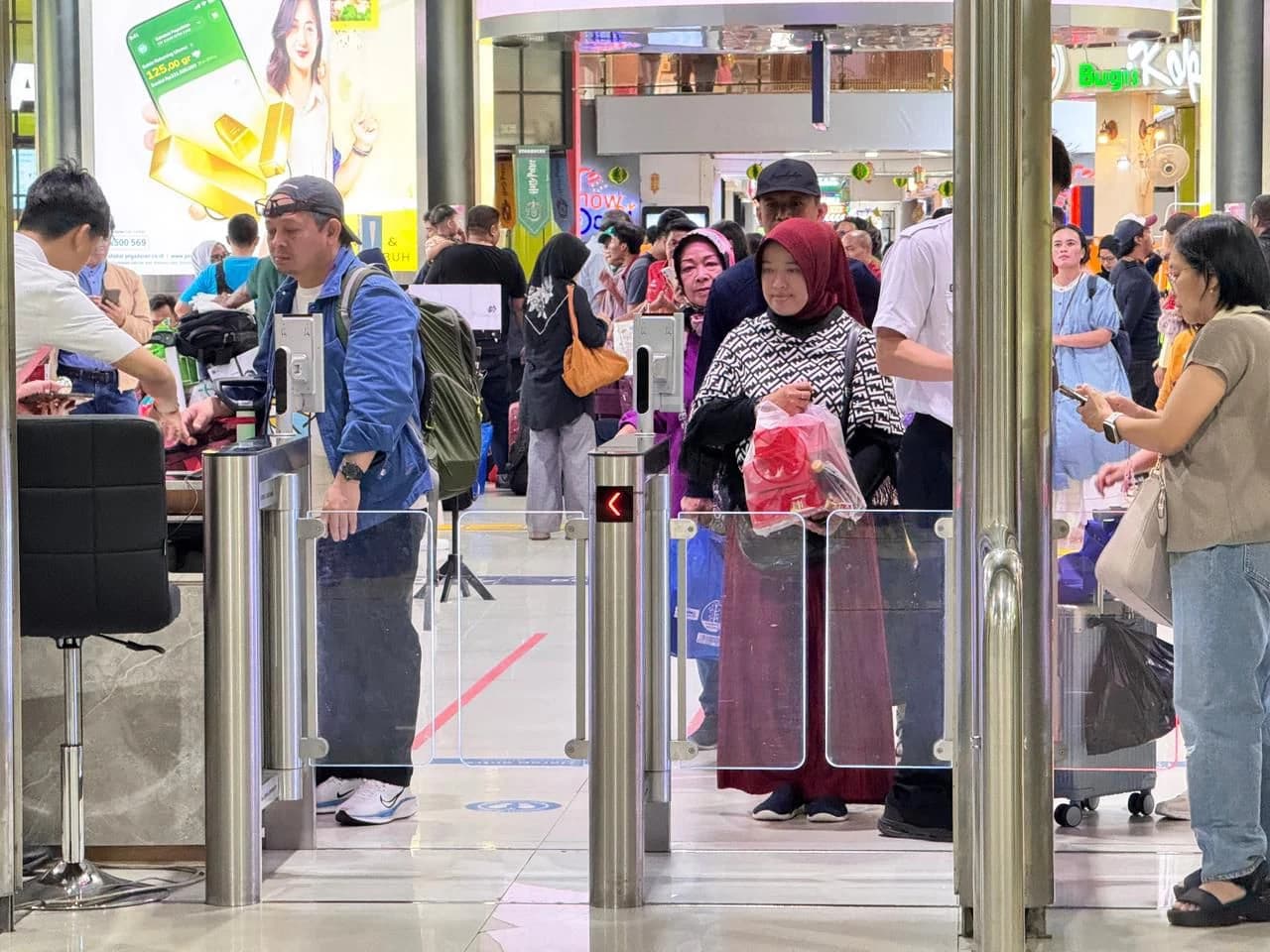
Rail Transport Drives Low-Emission Mobility and Indonesia’s Economic Growth
Public movement at the beginning of 2026 began to shape a new direction in daily mobility patterns. Travel now feels more planned, with a need for time certainty, affordable costs, and more environmentally friendly transportation choices.
Throughout January to March 2026, KAI Group served 128,055,072 passengers, an increase of 9.97% compared to the same period of the previous year. This growth not only reflects increased mobility, but also shows how areas around stations are moving along, opening up more economic activity and community interaction.
KAI Vice President of Corporate Communication Anne Purba stated that this change goes hand in hand with the increasingly connected rail-based transportation services.
"Trains are increasingly becoming part of people's daily lives. From daily commutes to intercity travel, everything is connected in an increasingly integrated service system," Anne said.
Along with that, intercity movement continues to increase. Long-Distance and Local Train services served 14,515,350 passengers in the first quarter of 2026, growing by 18.40% compared to the previous year. Momentum such as Eid al-Fitr became one of the main drivers, when people move in large numbers to return to their hometowns or travel to various cities.
At the same time, daily mobility remains a primary support. Every day, millions of people rely on the Commuter Line for work, school, and carrying out activities. Throughout the first quarter of 2026, this service served 101,382,889 passengers, an increase of 8.11% compared to the same period of the previous year.
Growth is also visible in Jabodebek LRT which served 7,754,946 passengers or an increase of 22.10%. The increasingly dynamic activity of Jakarta's buffer zones drives the need for fast and affordable transportation. On the other hand, Airport Train services served 1,755,275 passengers, an increase of 8.48%, strengthening access to activity centers and tourist destinations in various cities.
This movement is also seen outside Java. South Sumatra LRT served 1,084,242 passengers, an increase of 7.38%, while Whoosh served 1,408,815 passengers, an increase of 4.07%, presenting a more efficient Jakarta–Bandung journey. In eastern Indonesia, the Makassar–Parepare train served 75,421 passengers, growing by 66.45%, showing the public's increasingly strong acceptance of train services.
Amidst this increased mobility, the way people enjoy travel has also changed. Traveling by train now feels calmer with more predictable travel times. The scenery along the route becomes part of the experience enjoyed during the journey.
Through services like panoramic trains and tourist trains, journeys present a different atmosphere. KAI Wisata recorded 78,134 passengers, an increase of 110.10%, showing public interest in a more personal and memorable travel experience.
"Public trust continues to grow. Trains are used by various groups with diverse needs, and connect travel within an increasingly integrated ecosystem," Anne concluded.
This growth also brings an impact on energy efficiency. Rail-based transportation contributes to emission reductions, along with the use of more environmentally friendly fuels. In 2025, the use of B40 biodiesel on Long-Distance Train services generated emissions of around 127.3 thousand tons of CO₂e from 47.4 million passengers.
Entering the first quarter of 2026, with 14,515,350 passengers, estimated emissions are around 38.9 thousand tons of CO₂e. This figure shows that emission efficiency per passenger is maintained, while also demonstrating the role of mass rail-based transportation in suppressing emissions compared to private vehicle use.
This change is increasingly felt in urban areas such as Jabodetabek. Consistent growth of KRL users across various routes shows a shift in public choices when determining transportation modes. Travel becomes more orderly, costs are more affordable, and daily activities can be planned better.
The impact is also visible around stations. Areas develop, economic activity increases, and business opportunities grow following passenger movements. Connected mobility gives people space to move more productively.
"Transportation infrastructure that continues to be strengthened presents increasingly reliable services. The impact is felt in people's lives, time is better guarded and activities become more productive," Anne explained.
The strengthening of this system is also supported by increasingly widespread intermodal integration. Jabodetabek LRT connects with Whoosh at Halim Station, while the Dukuh Atas area brings together the LRT and KRL at a single point. Access to the airport is also increasingly easy through various interconnected main stations.
Throughout the first quarter of 2026, all these services showed growth. Jabodetabek LRT served 7.75 million passengers, Whoosh 1.40 million passengers, Jabodetabek Commuter Line 87.98 million passengers, and Airport Commuter Line 634 thousand passengers.
"Inter-service connectivity makes travel more efficient. Every transportation node complements each other, so the public has more choices in planning trips," Anne concluded.
VP Corporate Communication KAI