
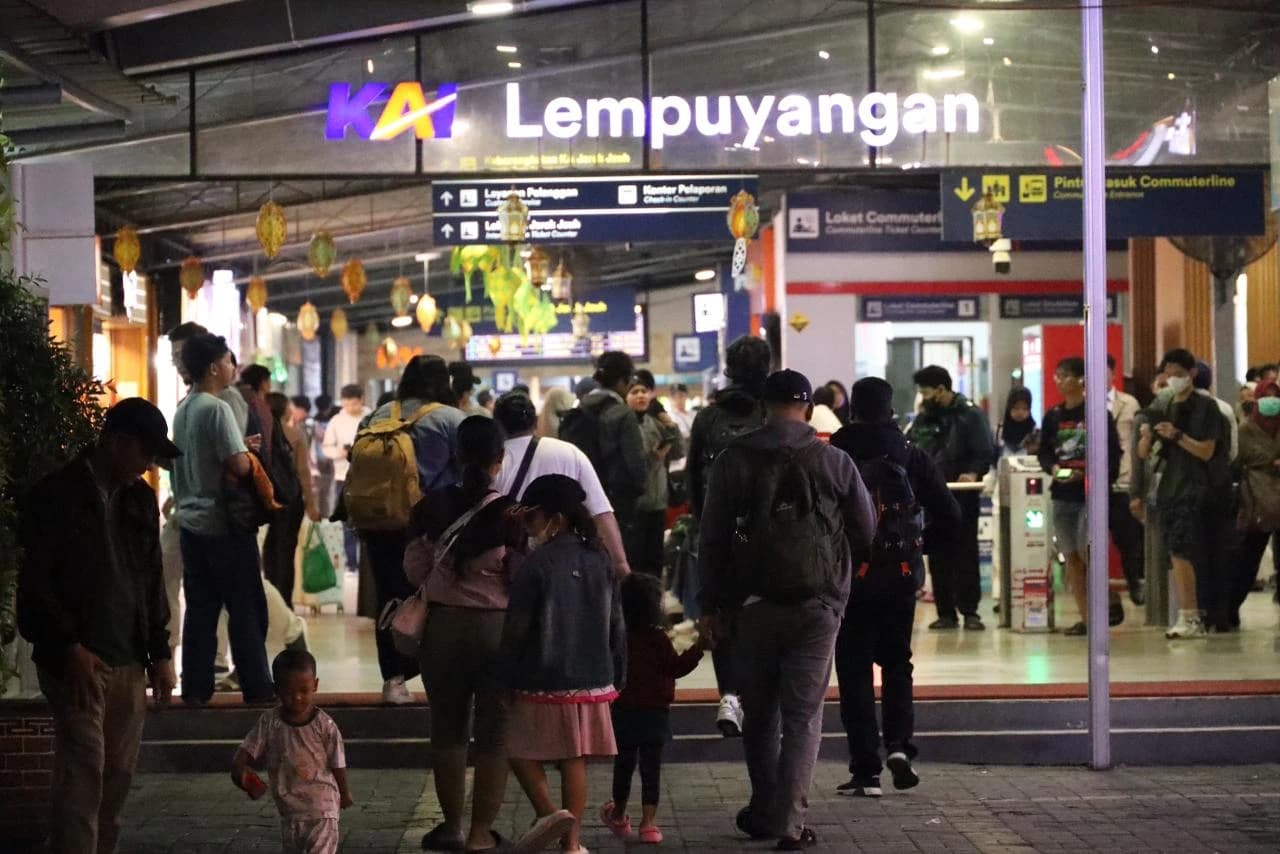
Urban Mobility Grows Across Yogyakarta–Solo to Madiun, KAI Strengthens Connectivity and Expands Community Access
The movement of people in the Yogyakarta, Solo, and greater Madiun agglomeration areas continued to rise in the first quarter of 2026. Railways served as the primary connector for various activities, ranging from commuting and studying to increasingly vibrant tourism and culinary travel across each region.
KAI Vice President of Corporate Communication Anne Purba stated that this trend demonstrates a growing and increasingly interconnected mobility need between regions.
"Trains are now part of everyday life for the public. Journeys have become more certain, affordable, and capable of reaching more points of activity, including tourist areas and culinary centers in Yogyakarta, Solo, and Madiun," Anne said.
On the Prambanan Express (KA Prameks) service on the Kutoarjo–Yogyakarta route, customer volume in the first quarter of 2026 reached 277,045 passengers, an increase from 238,260 passengers during the same period in 2025, or a growth of approximately 16.27%.
With a fare of IDR 8,000, KA Prameks connects Purworejo, Kulon Progo, and downtown Yogyakarta. This service makes it easier for the public to reach various destinations, from tourist areas and educational centers to culinary hubs that form part of daily community activities.
Growth was also visible on the Yogyakarta–Palur KRL Commuter Line, which served 2,222,716 passengers in the first quarter of 2026, a 19.19% increase compared to the previous year's 1,864,803 passengers.
This route connects downtown Yogyakarta, educational districts, airport access at Maguwo Station, as well as Solo and its surroundings. High travel intensity indicates that urban mobility requires services with tighter frequencies and greater capacity.
Airport-bound mobility also continued to expand. The YIA Airport Train recorded 697,267 passengers in the first quarter of 2026, an increase of about 12.11% compared to 621,936 passengers in the same period of 2025.
In the Solo and Madiun agglomeration regions, the Adi Soemarmo Airport Train (KA BIAS) served 208,583 passengers, growing 31.12% from the previous year. This service strengthens interregional connectivity within an increasingly integrated travel corridor.
Meanwhile, the Batara Kresna Train on the Solo–Wonogiri route served 40,763 passengers, preserving the connection between southern Solo and the city center and economic activities.
Anne added that this upward trend shows urban mobility needs will continue to evolve alongside regional growth and community activities.
"As mobility continues to rise, the need for services with larger capacity, higher frequency, and increasingly efficient operations becomes even more relevant to prepare from now on," Anne explained.
The development of rail-based urban transportation systems, including the strengthening of more modern and environmentally friendly services, is considered a vital part of answering these future needs.
"The direction of urban transportation development will continue to follow community needs. Railways have room to grow larger, connect more regions, and serve more journeys within a single integrated system," Anne concluded.
VP Corporate Communication KAI