
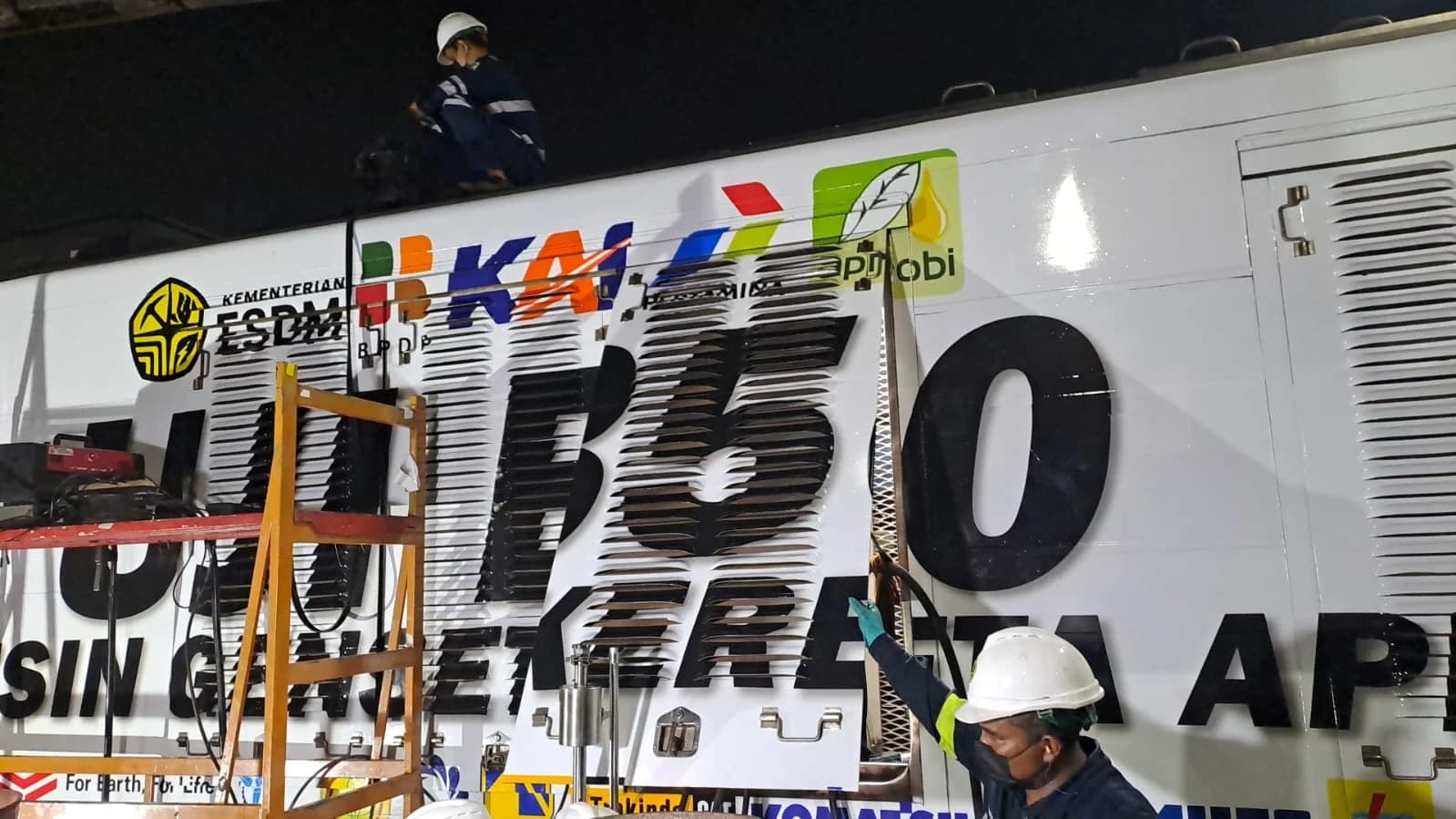
Accelerating B50 Implementation: KAI Rigorously Expands Testing to Safeguard Safety, Service, and Sustainability
The government has set the mandatory implementation of B50 biodiesel, which will be enforced simultaneously across all sectors in Indonesia starting July 1, 2026. This policy forms part of strengthening national energy sovereignty while promoting the use of more sustainable energy.
As part of the national transportation system, PT Kereta Api Indonesia (Persero) is preparing steps to ensure facility and operational readiness, particularly for diesel-powered locomotives, while maintaining service quality and travel safety.
KAI Vice President of Corporate Communication Anne Purba stated that the implementation of B50 is a continuation of biodiesel utilization from previous stages that has been running consistently within the railway sector.
"KAI continues to advance the use of more environmentally friendly energy through biodiesel. In every stage, travel safety and service quality for customers remain top priorities," Anne said.
In 2025, the use of B40 biodiesel on Long-Distance Train services recorded a total carbon emission of 127,315,192 kg CO₂e, or approximately 127.3 thousand tons from 47.4 million customers. Entering 2026, this sustainability trend continues. Up to the first quarter of 2026, the volume of Long-Distance Train customers was recorded at 14,515,350 passengers, with estimated emissions of around 38.9 thousand tons CO₂e, which remain well-controlled alongside the consistent use of biodiesel-based fuel.
At the same scale of mobility, the use of private vehicles has the potential to generate much higher emissions. The average emissions from private vehicle trips can reach around 36–45 kg CO₂ per passenger for medium distances, compared to around 2.7 kg CO₂ per passenger for trains. This demonstrates that using trains can reduce emissions by up to approximately 90 percent per trip.
With this passenger volume, the use of trains is estimated to have contributed to a potential emission reduction of around 480 to 610 thousand tons CO₂e compared to if the journeys had been made using private vehicles.
To support the implementation of B50, KAI is collaborating with the government through the Ministry of Energy and Mineral Resources and LEMIGAS (Oil and Gas Research and Development Center) in a series of phased tests.
Testing began with the fuel blending process in mid-April 2026, followed by facility condition checks and fuel usage tests on locomotives at the Sidotopo Depot.
Simultaneously, testing was also conducted on power generator cars at the Yogyakarta Train Depot. The test series started with initial inspections, followed by using B40 as a benchmark, then using B50 to observe facility performance, and concluding with endurance tests under high-load conditions.
Subsequent phases involving longer-term testing are also prepared to ensure that facility performance remains optimal during daily operations.
To date, all test results are still undergoing evaluation and are continuously monitored to ensure long-term compatibility.
"KAI ensures that this accelerated implementation process runs in harmony with readiness in the field. Through collaboration with the government and phased testing, we are committed to delivering transportation services that are safe, reliable, and sustainable," Anne concluded.
VP Corporate Communication KAI