
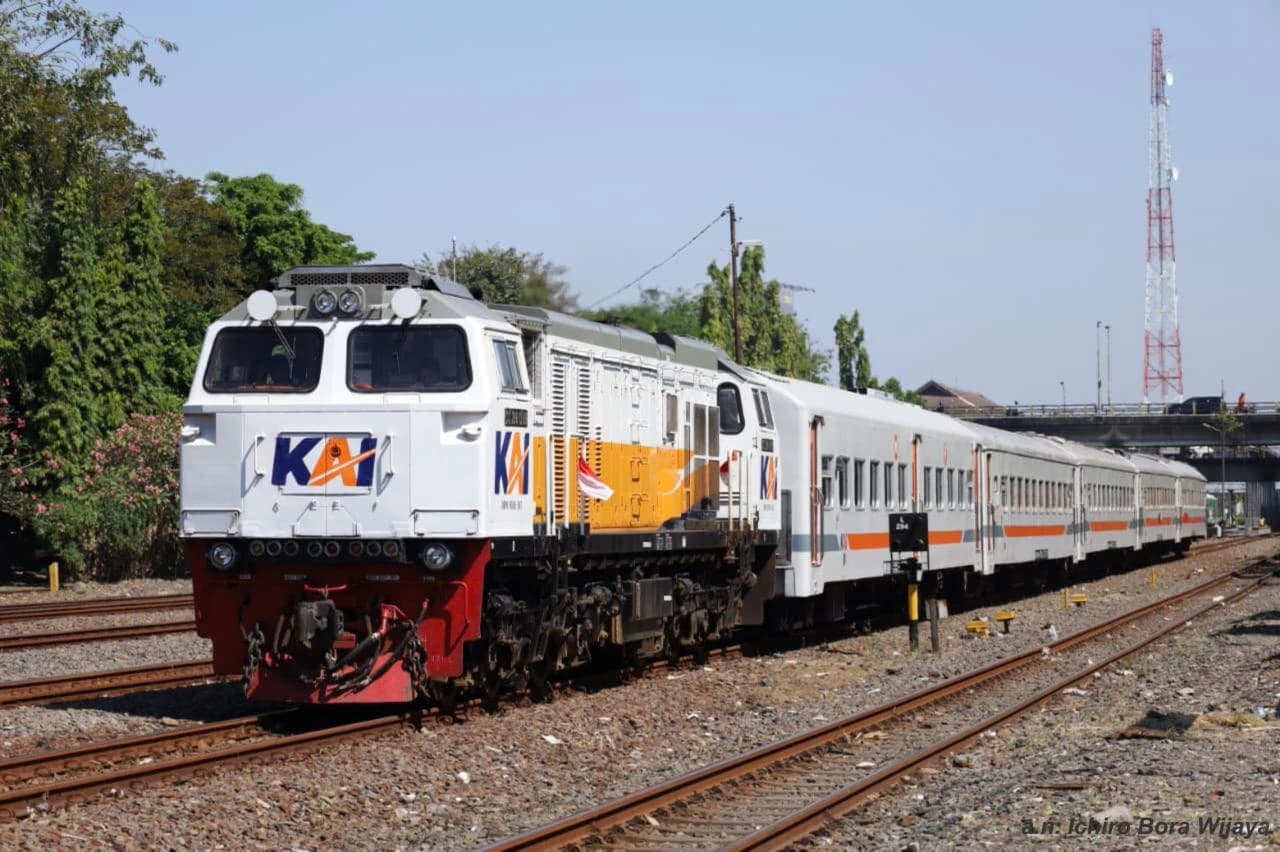
East Java Urban Mobility Continues to Grow: Surabaya Commuter Line Bolsters Daily Movement and Access to Essential Services
Surabaya and its surrounding regions are developing as an interconnected space of activity. Passenger movement between Surabaya, Sidoarjo, Gresik, Mojokerto, and Malang shows a continuously increasing intensity, driven by the growth of residential areas, economic centers, education hubs, and public services.
Throughout the first quarter of 2026, the Commuter Line service in Operational Area (Daop) VIII Surabaya served 4,067,386 passengers. This figure increased compared to the same period in 2025 with 3,689,565 passengers, continuing a steady growth trend from 3,432,759 passengers in 2024 and 3,118,491 passengers in 2023. This rise reflects a shifting mobility pattern where the public increasingly relies on rail-based public transportation for daily activities.
Passenger movement is predominantly concentrated during peak morning and evening rush hours, particularly on routes connecting residential zones to activity centers. This pattern highlights the establishment of a robust intercity commuter network across East Java.
The Surabaya Commuter Line network links various strategic areas through routes including Surabaya–Blitar, Surabaya–Malang, Surabaya–Pasuruan, as well as Surabaya–Cepu and Bojonegoro. This connectivity provides convenient access for the public to reach economic centers, educational districts, and major healthcare referral facilities within an integrated travel system.
Access to education and health services forms a vital part of this mobility. Scheduled and affordable travel helps students reach intercity educational institutions while making it easier for residents to access comprehensive medical care in larger cities.
Data from the Central Bureau of Statistics of East Java Province for 2025 indicates that East Java's demographic structure remains dominated by the productive age group (15–64 years), holding the largest proportion of the total population. Meanwhile, the elderly population (aged 60 and above) is also steadily increasing. This demographic reality drives the demand for a transportation system capable of serving active mobility while remaining inclusive for all age groups.
Vice President of Corporate Communication at KAI, Anne Purba, stated that the growth in passenger volume reflects escalating mobility needs in urban areas.
"The movement of people in Surabaya and its surroundings shows a continuously rising trend. Commuter Line services support daily activities with more reliable travel times—whether for work, education, or other essential needs," Anne said.
With large passenger capacities per trip, trains efficiently accommodate public mobility while helping reduce highway congestion. Scheduled travel systems also provide passengers with reliable transit predictability.
KAI continuously adjusts its services by increasing capacity, reinforcing trip frequencies, and expanding integration with connecting modes around stations. These efforts are directed at maintaining smooth mobility and elevating passenger travel quality.
"The mobility of East Java's population continues to grow and become more interconnected. With rising demands, the development of more modern transportation—including electrification that supports larger capacities and eco-friendly operations—needs to be accelerated so that public access to education, healthcare, and economic activities becomes even easier," Anne concluded.
VP Corporate Communication KAI