
Earth Day 2026: KAI Accelerates Low-Emission Operations for Efficient and Sustainable Mobility
Throughout January to March 2026, KAI Group served 128,055,072 passengers, marking a 9.97% increase compared to the same period in the previous year. This growth reinforces the role of railways as the backbone of mass mobility with superior energy efficiency per passenger.
This efficiency is reflected in emission performance. During the 2026 Lebaran transport period, for example, long-distance train journey emissions were recorded at approximately 8,928,821 kg CO₂e. In an equivalent travel comparison, this figure is lower than that of private vehicles, thereby supporting emissions control in the transportation sector.
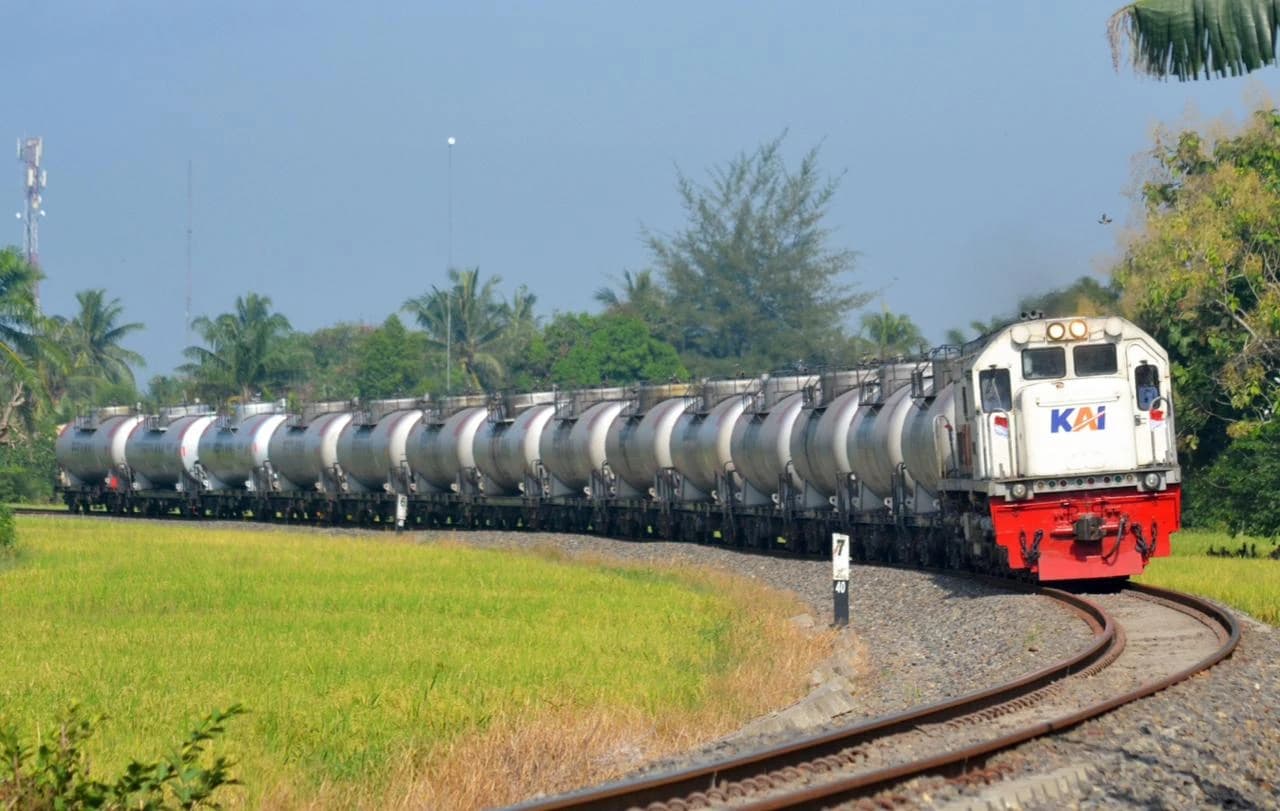
The strengthening of low-emission operations is carried out through the utilization of cleaner energy. Since February 2025, all KAI locomotives have been using B40 Biodiesel and are being prepared for the development of B50 Biodiesel. KAI has also operated Solar Power Plants (PLTS) across 92 locations with a total capacity of 4,430.65 kWp to support operational energy needs.
Transformation is also directed toward the development of electric-based systems. KAI is currently promoting the electrification of strategic routes such as Rangkasbitung–Merak, as well as the development of Cikarang–Cikampek and Bogor–Cigombong to enhance capacity, trip frequency, and long-term energy efficiency.
This strengthening aligns with the development of KRL (Commuter Line) services as the backbone of urban mobility, carrying the potential to increase capacity from 1.1 million to 1.4 million passengers per day by 2030.
On the rolling stock side, KAI is executing a fleet rejuvenation and modernization program. A total of 151 locomotives and 328 passenger cars are projected to be upgraded to improve operational efficiency and service reliability.
KAI is also preparing to adopt technologies such as the Battery Electric Multiple Unit (BEMU), which enables operations with lower local emissions and supports transport decarbonization.
This transformation is enhanced through the customer experience. Via the Access by KAI application, passengers can view the estimated carbon footprint of their journeys.
Operationally, service reliability remains well-maintained. Throughout the first quarter of 2026, KAI recorded an On Time Performance for passenger train departures of 99.84% and arrivals of 97.61%. This punctuality provides travel certainty and supports public productivity.
KAI Vice President of Corporate Communication Anne Purba stated that the transformation undertaken by KAI is aimed at answering future mobility needs.
"Railways reflect the advancement of a nation's civilization. Through the transformation we are implementing, KAI continues to strengthen a transportation system that is efficient, low-emission, and capable of addressing community mobility needs," Anne said.
"We direct this development so that every journey delivers broader benefits—from service quality and efficiency to environmental impact," Anne added.
Earth Day serves as a reminder that mobility and sustainability go hand in hand.
"Through the ongoing transformation, KAI will continue to deliver efficient, reliable transportation services that contribute to the progress of civilization in harmony with sustainability," Anne concluded.
VP Corporate Communication KAI