
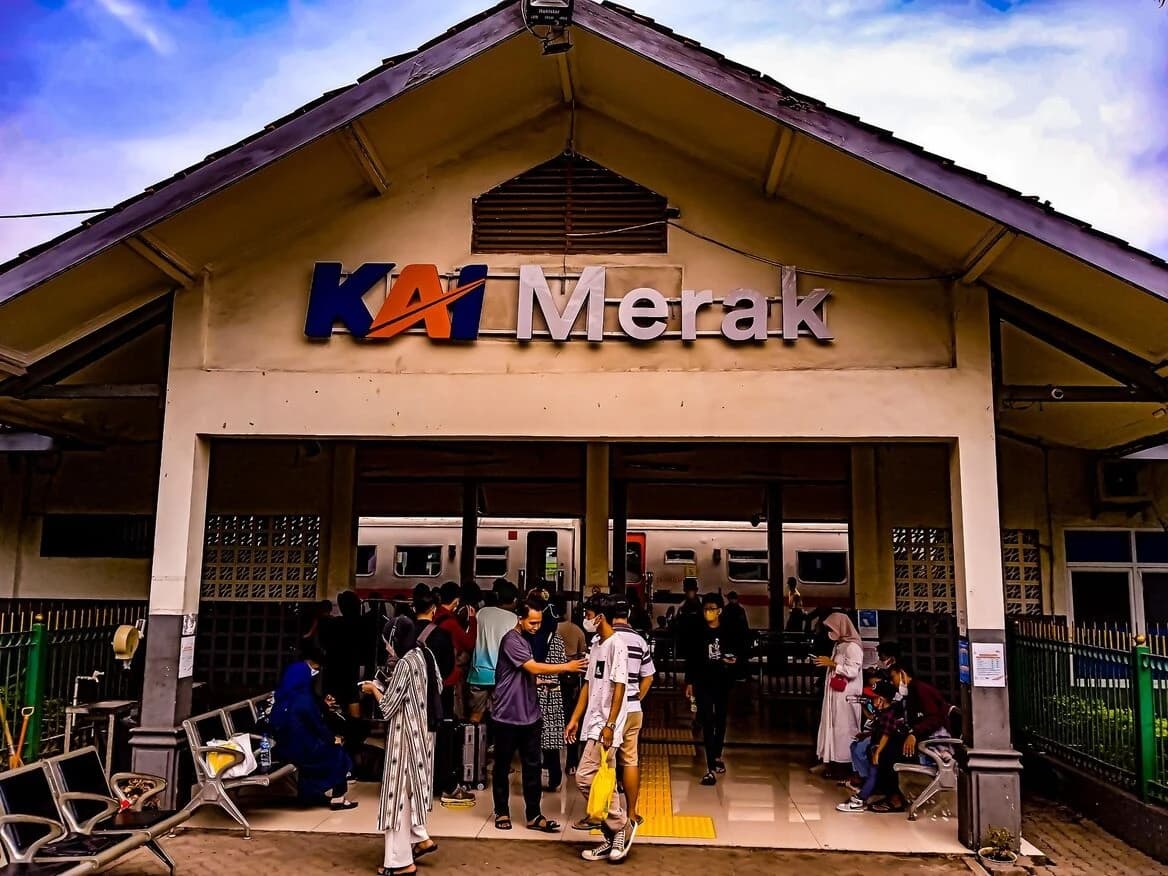
Rangkasbitung–Merak Electrification Drives Connectivity and Growth in New Areas
Weekends always carry their own stories. Some look to unwind, others set out to explore new places, while many continue their journey toward Sumatra using public transit. As this mobility keeps moving, trains stand out as an affordable and comfortable travel choice.
PT Kereta Api Indonesia (Persero) records that Commuter Line user volume along the Rangkasbitung route shows consistent growth. In 2022, passenger volume reached 43,317,716, rising to 62,085,471 in 2023, then 69,999,362 in 2024, and climbing further to 77,552,716 in 2025. From January to March 2026, passenger numbers reached 20,197,205.
This growth illustrates how the Rangkasbitung corridor has developed into a vital artery supporting public mobility across Jakarta's expanding outer sub-regions.
Vice President of Corporate Communication at KAI, Anne Purba, stated that service enhancements along this corridor result from collaboration with partners, including the Directorate General of Railways (DJKA) under the Ministry of Transportation.
"Electrification along the Tanah Abang–Rangkasbitung route currently spans 72.769 track kilometers with double tracks. This development proceeds alongside the Ministry of Transportation's DJKA, including infrastructure upgrades and faster Commuter Line travel speeds," said Anne.
These upgrades enable the Commuter Line to run 12-car train formations (SF 12), up from the previous 8-to-10-car setups. The increased capacity offers a more comfortable journey for passengers.
Infrastructure and operational improvements continue, including refinements to the electrification network. These upgrades allow for more efficient headway arrangements, increasing travel frequency and shortening passenger wait times.
Meanwhile, movement along the Rangkasbitung–Merak route continues to grow. In 2023, local train services served 3,617,478 passengers, increasing to 4,269,154 in 2024, and reaching 4,463,498 in 2025. From January to March 2026, user numbers reached 1,134,514.
This corridor also offers the Farmers and Traders Train (Kereta Petani Pedagang) service, which served 11,349 users in the first quarter of 2026. This service supports local economic activity, particularly for small-business owners bringing farm produce to market.
"Public movement along this corridor continues to expand and interconnect. Future developments are expected to broaden access, foster integrated housing areas, strengthen industrial and distribution activities, and support tourism connectivity all the way to coastal and inter-island destinations," Anne added.
Travelers can currently journey from Tanah Abang to Merak at very affordable rates. The Commuter Line route from Tanah Abang to Rangkasbitung costs Rp8,000, followed by the Rangkasbitung–Merak local train for Rp3,000.
From Merak Station, journeys can continue via ferry toward Bakauheni Port. Regular ferry fares average around Rp23,000 per person, while express ferries cost approximately Rp85,000 per person.
This connected route makes inter-island travel increasingly accessible. Upon arriving in Bakauheni, travelers can explore various destinations across Lampung, from clean sandy beaches and serene coastal spots to local culinary specialties like seruit and fresh seafood dishes.
"Trains serve as an integral part of ongoing public mobility, linking urban areas to other regions. It is our hope that this connectivity will keep expanding so more communities can enjoy convenient travel," Anne concluded.
VP Corporate Communication KAI