
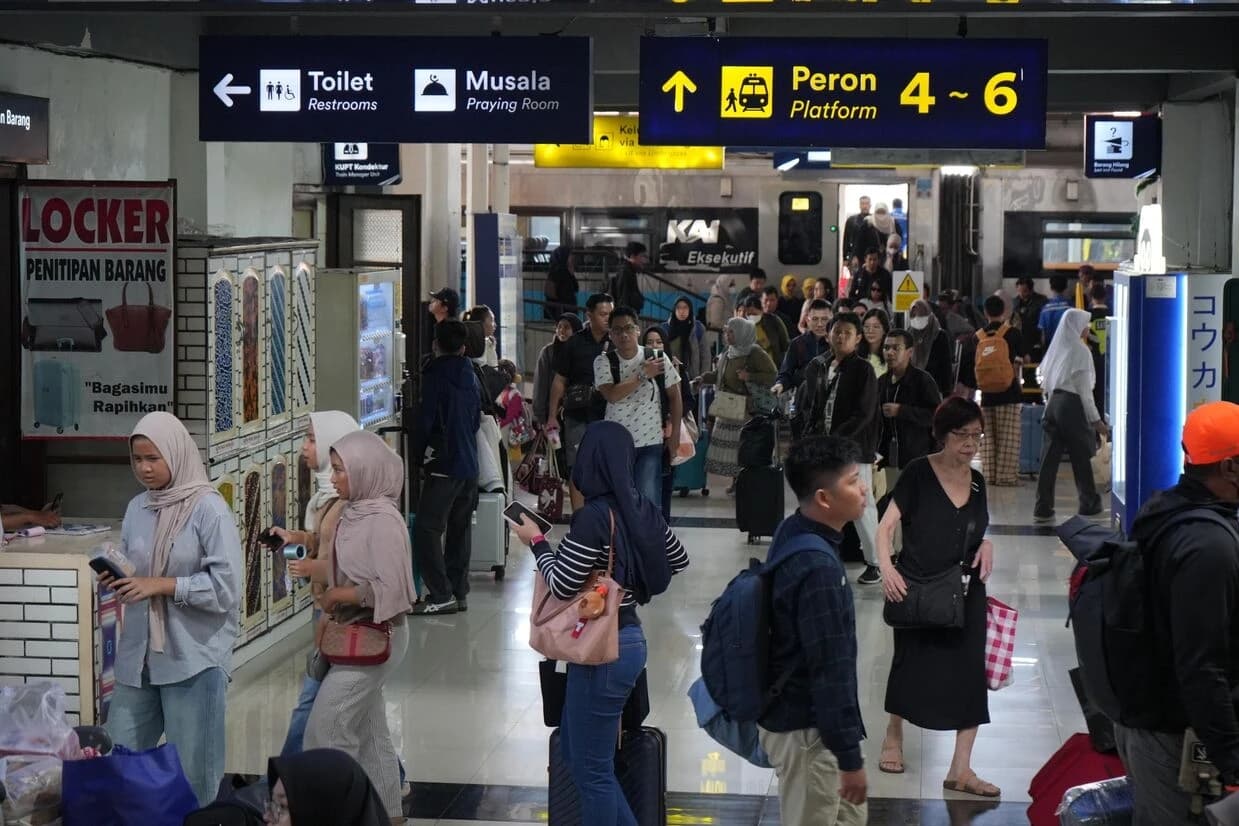
Trains Are Increasingly Attractive, KAI Group Serves 128.05 Million Customers in the First Quarter of 2026
Public mobility in early 2026 demonstrates an increasingly clear pattern. Trains are becoming a choice closely tied to daily life, from morning commutes to work, the recently passed Eid homecoming, to travel plans for upcoming long weekends.
From January to March 2026, KAI Group served 128,055,072 passengers, an increase of 9.97% compared to 116,451,006 passengers during the same period in 2025.
Vice President of Corporate Communication at KAI, Anne Purba, stated that this figure reflects growing public interest in railway services.
"Trains are increasingly appealing to the public because they meet diverse travel needs. From daily commutes to intercity travel, everything is connected within a service system that is becoming more integrated," said Anne.
Long-Distance and Local Train services managed directly by KAI, for instance, served 14,515,350 passengers, representing an 18.40% increase compared to 12,261,632 passengers in the first quarter of 2025.
Momentums such as Eid serve as a major driver, as people move between cities to return to their hometowns. A similar atmosphere will reappear during long weekends and the end-of-year holidays.
On the other hand, daily routine activities continue steadily. KAI Commuter served 101,382,889 passengers, up 8.11% from 93,773,976 passengers in the same period last year.
"Every day, millions of people across various cities rely on the Commuter Line to travel from home to work, school, and back again," Anne explained.
LRT Jabodebek served 7,754,946 passengers, an increase of 22.10% compared to 6,351,283 passengers in Q1 2025.
This growth highlights the increasingly active buffer zones around Jakarta, where there is a demand for fast, affordable, and integrated transportation.
Services managed by KAI Bandara also served 1,755,275 passengers, an 8.48% increase from 1,618,119 passengers the previous year.
"In Medan, the Srilelawangsa Train connects the public to Kualanamu Airport. In Yogyakarta, the YIA Airport Train carries passengers to tourist destinations and activity centers," Anne added.
South Sumatra LRT also served 1,084,242 passengers, showing a 7.38% increase compared to 1,009,737 passengers in Q1 2025. This service connects Sultan Mahmud Badaruddin II Airport with the Jakabaring area.
Whoosh high-speed rail served 1,408,815 passengers, up 4.07% from 1,353,760 passengers during the same period last year. The Jakarta–Bandung journey now feels shorter and more efficient with Southeast Asia's first high-speed train.
The Makassar–Parepare train line served 75,421 passengers, recording a 66.45% jump compared to 45,312 passengers in Q1 2025.
This growth is a positive signal that the presence of railway services in eastern Indonesia is gaining strong acceptance. Public enthusiasm reflects appreciation while showing state presence through affordable transportation that supports local activities, including tourism and daily travel.
KAI Wisata services served 78,134 passengers, surging by 110.10% compared to 37,187 passengers the previous year.
Train travel feels more memorable, whether moving from one city to another or enjoying every moment along the way. Through panoramic cars, tourist trains, and special charter cars, every journey offers an enjoyable atmosphere. Wide window views, a calmer ambiance, and personalized service add distinct color throughout the trip.
Anne added that this growth shows how trains are integrating into daily life, used by people from diverse economic backgrounds to fulfill their daily mobility needs.
"These numbers reflect growing public trust. Trains have become a part of everyday life, serving diverse needs across various communities, and connecting journeys within an increasingly integrated ecosystem," Anne concluded.
VP Corporate Communication KAI