
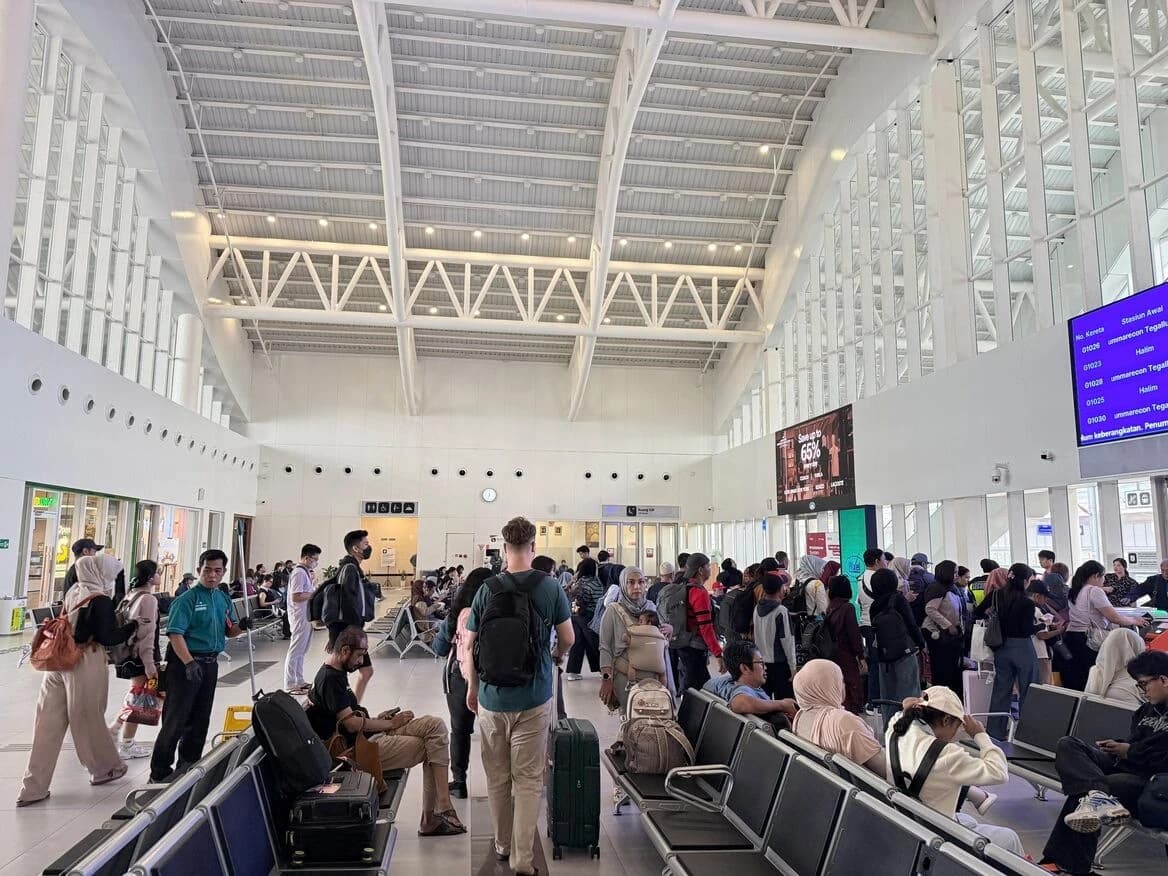
32.46 Million Customers, KAI Group's Highest Record in the Last 5 Years
KAI Group recorded public mobility during the 2026 Eid (Lebaran) Transport period reaching 32,460,915 passengers between March 11 and April 1, 2026. This represents a 10.76% increase compared to 29,308,636 passengers during the 2025 Eid period, marking the highest volume achievement in the last five years.
Every Eid, millions of journeys flow from cities to hometowns and back across various regions. This movement forms part of a traditional annual return while stimulating economic activity and tourism across multiple regions.
Vice President of Corporate Communication at KAI, Anne Purba, stated that the increase in passenger volume this year aligns with the strengthening integration of rail-based transport services.
"Eid serves as the largest mobility momentum for the public. KAI Group provides interconnected intermodal travel, allowing passengers to continue their journeys more easily and seamlessly," said Anne.
Throughout the period, Long-Distance and Local Train services managed directly by KAI served 5,087,458 passengers, achieving a five-year peak. This figure surpasses previous periods, which recorded 4,707,628 passengers in 2025, 4,398,125 passengers in 2024, 3,841,954 passengers in 2023, and 4,388,034 passengers in 2022.
Meanwhile, KAI Commuter served 24,500,604 passengers, up from 22,173,724 in the previous period, representing its highest Eid transport figure in five years.
Enhanced connectivity was also evident across other subsidiary services. LRT Jabodebek served 1,655,011 passengers, increasing from 1,222,825 passengers during the previous Eid. Whoosh high-speed rail served 347,738 passengers, setting its highest volume since commercial operations began in 2023. KAI Bandara served 496,766 passengers, rising from 480,806. In other regions, South Sumatra LRT served 324,311 passengers, while the Makassar–Parepare line served 20,842 passengers, up from 18,618. Tourist services through KAI Wisata served 28,185 passengers, marking a 39.33% increase compared to 20,229 passengers in the prior period.
This combination of services demonstrates that Eid mobility now operates within an integrated transport ecosystem. Transport hubs such as Bekasi, Jatinegara, and Halim serve as interchange points that smooth passenger journeys from intercity routes to urban networks.
This increased mobility also stimulated local economic and tourism activities across various regions. Rail travel forms an integral part of the travel experience, particularly through Panoramic and Tourist Train services that showcase scenic landscapes and destinations within a single trip.
"We express our gratitude for the public's trust during the 2026 Eid Transport period. Every piece of feedback and customer experience serves as a vital component in our evaluation. KAI Group will continue making refinements to ensure future services remain safe, comfortable, and punctual," Anne concluded.
VP Corporate Communication KAI