
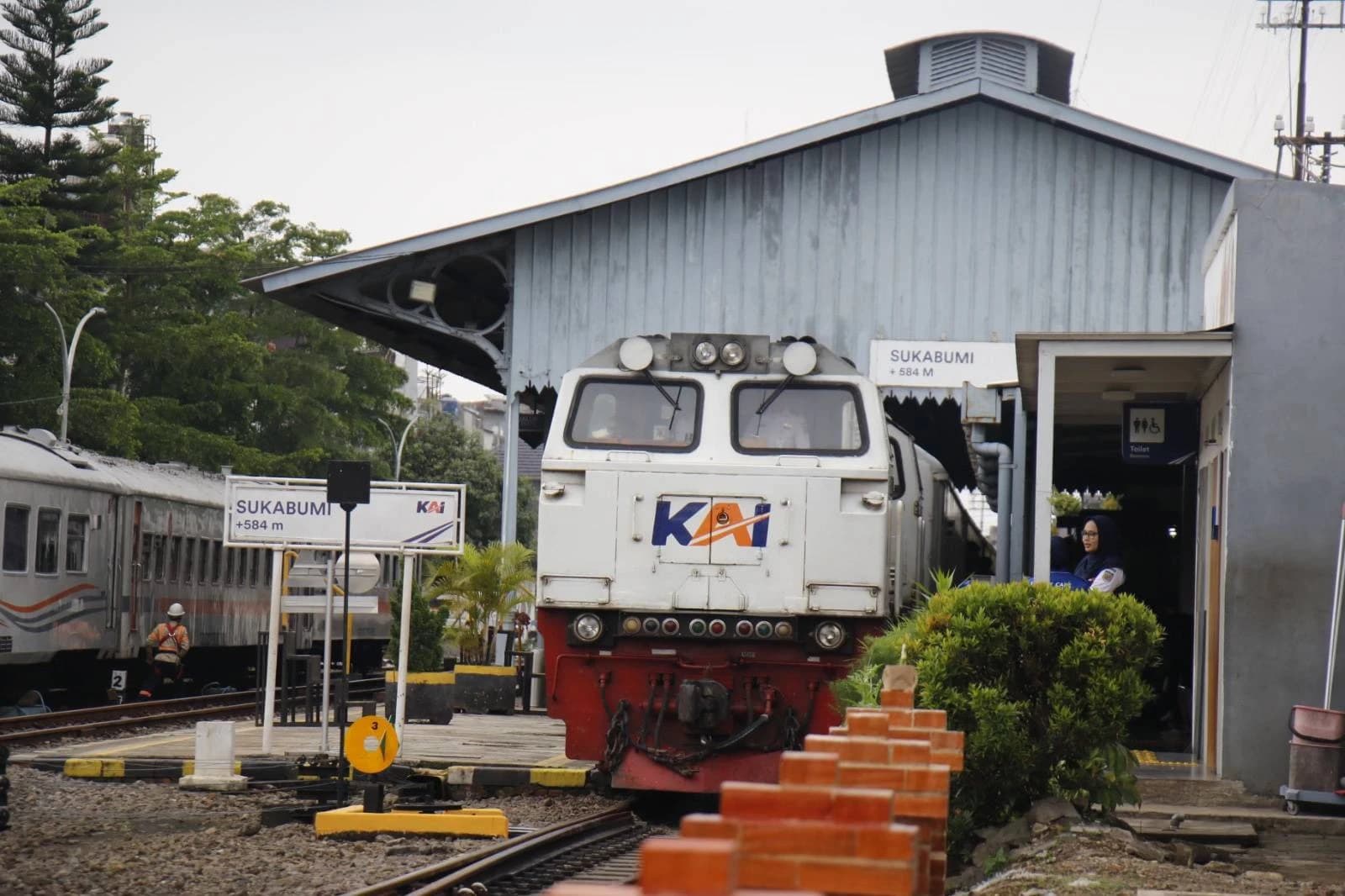
Siliwangi Train Becomes a Favorite, KAI’s Most Popular Local Train Service During Eid 2026 Transportation Period
Public movement during the 2026 Eid (Lebaran) Transport period recorded a significant increase on local train services managed by PT Kereta Api Indonesia (Persero). Among various services, the KA Siliwangi recorded the highest number of passengers, making it the primary choice for communities across West Java.
The dominance of KA Siliwangi is evidenced by high passenger volumes across several trips. KA 341 on the Cipatat–Sukabumi route recorded 24,123 bookings, followed by KA 344 on the Sukabumi–Cipatat route with 23,367 passengers, KA 343 with 23,065 passengers, and KA 346 with 19,506 passengers. These achievements position KA Siliwangi as the largest contributor to local train passenger movements during the Eid period.
Based on data from the 2026 Eid Transport period, here are the Top 10 Local Trains with the highest booking numbers:
1. KA 341 Siliwangi (Cipatat – Sukabumi): 24,123 passengers
2. KA 344 Siliwangi (Sukabumi – Cipatat): 23,367 passengers
3. KA 343 Siliwangi (Cipatat – Sukabumi): 23,065 passengers
4. KA 346 Siliwangi (Sukabumi – Cipatat): 19,506 passengers
5. KA 493 Pandanwangi (Jember – Ketapang): 18,254 passengers
6. KA 492 Pandanwangi (Ketapang – Jember): 17,671 passengers
7. KA 491 Pandanwangi (Jember – Ketapang): 16,452 passengers
8. KA 342 Siliwangi (Sukabumi – Cipatat): 16,155 passengers
9. KA 494 Pandanwangi (Ketapang – Jember): 15,766 passengers
10. KA 268 Banyubiru (Semarang Tawang – Solo Balapan): 14,050 passengers
Vice President of Corporate Communication at KAI, Anne Purba, stated that high interest in local train services reflects the public's demand for efficient and affordable transportation modes.
"Local train services play a crucial role in supporting community mobility across regions. The high passenger volume on KA Siliwangi demonstrates that intercity connectivity with affordable fares is a key factor when choosing transport," said Anne.
KA Siliwangi is a subsidized economy-class train service connecting Sukabumi, Cianjur, and Cipatat at a fare of IDR 5,000. This fare advantage becomes even more pronounced when compared to other road transport options along the same corridor. Journeys using buses, travel vans, or private vehicles typically require around 3 to 4 hours—and can reach 4–5 hours during peak periods like weekends and holiday seasons. In contrast, KA Siliwangi completes the journey in approximately 2 hours and 15 minutes with far greater schedule consistency.
This predictable travel time provides added value for travelers planning their journeys, particularly amid the heightened mobility of the Eid period. Railway tracks free from traffic congestion deliver a more predictable and comfortable travel experience.
The service also holds strategic significance in the development of West Java's railway network through line reactivation, reconnecting the regions of Sukabumi, Cianjur, and Cipatat. Along its route, KA Siliwangi serves areas with diverse economic profiles, ranging from regional commercial centers to agricultural and residential zones.
Passengers travel from Sukabumi as a regional hub, passing through Gandasoli, Cireungas, and Lampegan—known for its historic tunnel. The train then traverses Cibeber and Cianjur as economically active midpoint stops, before continuing through Ciranjang and Cipeuyeum, arriving at Cipatat.
From Cipatat, passengers can easily transfer toward Padalarang and Bandung via connecting services, unlocking wider access to the metropolitan area.
Beyond supporting daily commuting, the route offers scenic views characteristic of West Java, featuring sprawling rice paddies and rolling hills along the track. This access continues to stimulate local economic activity, including labor mobility, local trade, education-related travel, and other essential daily needs.
KAI remains committed to ensuring local train services remain reliable and integrated to meet increasingly dynamic community mobility needs.
"Local train services will continue to be developed to provide efficient, safe, and affordable transport access for communities across regions," Anne concluded.
VP Corporate Communication KAI