
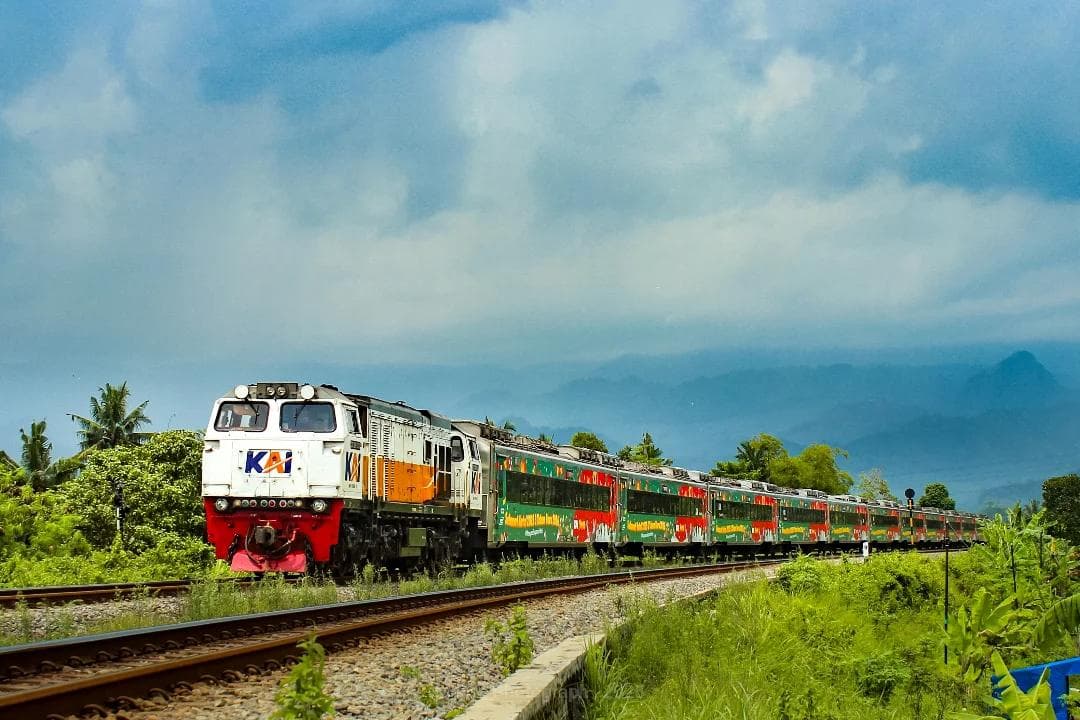
Comfortable Homecoming, Environment Preserved: KAI’s Sustainability Efforts Protect the Transportation Ecosystem Amid the Lebaran Surge
The 2026 Lebaran atmosphere has brought very high levels of public movement across all regions. Behind every journey home to hometowns, PT Kereta Api Indonesia (Persero) ensures that increased mobility continues to align with environmental sustainability principles.
The momentum of World Water Day on March 22, 2026, served as a reminder that resource management, particularly water, plays an important role in maintaining the balance of the transportation ecosystem. Amid the surge in Lebaran travel, water efficiency is part of KAI’s strategy to provide responsible services.
As of March 23, 2026, at 09:00 a.m. Western Indonesia Time (WIB), Lebaran Transportation ticket sales had reached 4,028,839 tickets, or 89.6 percent of the total capacity of 4,498,696 seats. For Long-Distance Train services, sales had reached 3,507,988 tickets, or 98.2 percent of the available capacity.
The peak of passenger movement occurred on March 22, 2026, with a volume of 242,773 customers in a single day and occupancy reaching 150.7 percent. Cumulatively, from March 11–22, 2026, KAI had served 2,519,508 customers, consisting of 2,131,656 Long-Distance Train customers and 387,852 Local Train customers.
KAI Vice President of Corporate Communication Anne Purba said that the increase in customer volume is a strong indicator that mass transportation is increasingly trusted by the public, while also requiring efficient and sustainable operational management.
“The high volume of customer movement during the Lebaran period shows that trains have become the public’s preferred mode of transportation. On the other hand, this encourages us to ensure that every operational process runs efficiently, including the use of resources such as water,” said Anne.
In terms of the environment, trains have lower emissions characteristics compared with other modes of transportation. Throughout 2025, total emissions from Long-Distance Trains were recorded at approximately 127,315,192 kg CO₂e, with an emission level around three times lower than intercity buses and dozens of times lower than private vehicles.
Water management is an important part of KAI’s operations, which serve millions of customers every day. Water is used for customer needs at stations, such as toilets and prayer facilities, as well as for operational activities such as rolling stock washing.
Throughout 2024, KAI’s total water consumption reached 920.23 megaliters, consisting of 114.41 megaliters of surface water, 626.25 megaliters of groundwater, and 179.57 megaliters of water supplied by PDAM. This scale of consumption illustrates the importance of measurable water management within a mass transportation system.
Anne explained that KAI continues to pursue efficiency through technological innovation and operational management.
“KAI encourages the wise use of water across all operational lines. Through the implementation of technologies such as automatic train washing systems equipped with water treatment, water consumption can be reduced and water can be optimally reused,” explained Anne.
Automatic Train Wash Plant (ATWP) technology allows water used to wash trains to be treated through a filtration process so that it can be reused. This system supports the reduction of new water consumption while maintaining environmental quality.
On the customer service side, KAI has also provided 81 Water Station units at 23 stations, offering customers direct access to drinking water. This initiative also encourages the reduction of single-use plastic consumption.
Environmental efforts are also strengthened through cooperation with Perumda Paljaya in managing domestic wastewater. This collaboration focuses on managing wastewater at stations and operational facilities to meet quality standards and integrate with the urban sanitation system.
Anne added that wastewater management is an important part of maintaining environmental quality around operational areas.
“Standardized wastewater management ensures that operational activities continue to maintain environmental quality. This is part of KAI’s commitment to supporting sustainable transportation,” added Anne.
The water efficiency measures also have an economic impact through reduced operational costs, both from the use of PDAM water and the energy required to pump groundwater.
Amid the continued increase in the Lebaran return flow, every efficiency measure contributes to the sustainability of the transportation system. Proper resource management helps maintain a balance between service and the environment.
“Through these various efforts, KAI continues to ensure that mass transportation can operate efficiently, in an environmentally friendly manner, and provide long-term benefits for the community,” concluded Anne.
VP Corporate Communication KAI
