
KAI Supports the 3 Million Housing Program through Transit-Oriented Development Around Railway Stations
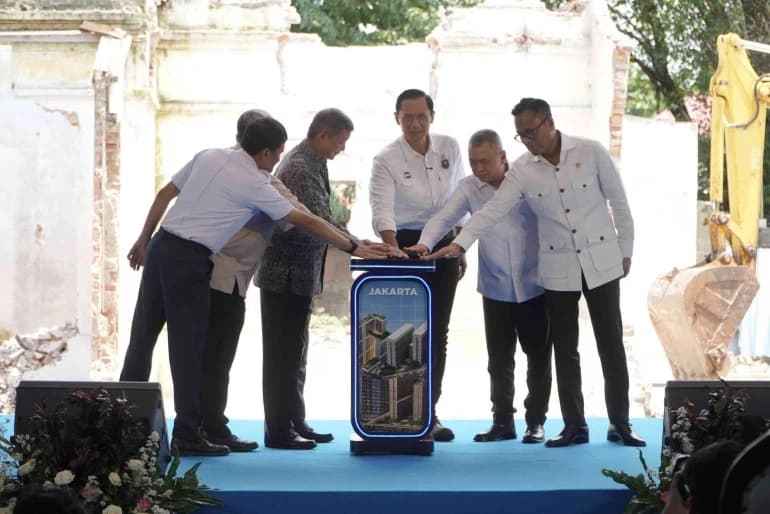
PT Kereta Api Indonesia (Persero) supports the national development program through the development of integrated housing in station areas based on the Transit Oriented Development (TOD) concept. The launching of this housing development took place on Monday, March 16, 2026, at Manggarai Station, Jakarta, as well as simultaneously in Bandung (Kiaracondong Station), Semarang (Dr. Kariadi/Gergaji Street area), and Surabaya (Mendut Field).
This housing development is part of the utilization of railway assets to present residential areas directly connected to public transportation, allowing the public to live closer to activity centers and have more efficient mobility access.
PT Kereta Api Indonesia (Persero) is also part of the Danantara Indonesia ecosystem, a state-owned enterprise (SOE) investment and asset management institution formed to strengthen the management of state assets while supporting the national development agenda.
Minister of Coordinating for Infrastructure and Regional Development Agus Harimurti Yudhoyono stated that the three million housing construction program is an important part of the national development strategy to expand access to decent housing while driving economic growth. This program is directed to reduce the housing backlog, improve the living quality of low-income communities, and mobilize various industrial sectors related to housing construction.
He also emphasized the importance of utilizing strategic land owned by SOEs, including PT Kereta Api Indonesia (Persero), to present integrated housing areas based on Transit Oriented Development (TOD) that connect housing with public transportation and urban economic activity centers.
"The three million housing construction program is part of efforts to strengthen economic development while improving community welfare. The development of Transit Oriented Development-based housing in station areas presents integration between living quarters, public transportation, and economic activity centers. This approach is expected to increase mobility efficiency, open business opportunities, and create a more productive and sustainable urban environment," said Agus Harimurti Yudhoyono.
Head of the Housing Task Force Hashim Djojohadikusumo expressed appreciation for KAI's steps in presenting housing development in station areas simultaneously in several major cities. According to him, the utilization of state-owned strategic assets for housing construction provides opportunities to accelerate the national program for providing housing for the community, especially low-income communities. He assessed that housing development has a broad impact on the economy because it can mobilize various industrial sectors, ranging from construction and building materials to other supporting industries. Through this program, the government encourages the creation of healthier and more affordable housing access while strengthening economic growth and equitable welfare.
"Housing development in station areas as carried out by KAI is a strategic step to accelerate the provision of houses for the community. The housing program has a very broad economic impact because it involves many industrial sectors while opening jobs. By utilizing state-owned strategic land and presenting quality and affordable housing, we hope the public can obtain a living environment that is healthier, more productive, and supports increased welfare," said Hashim Djojohadikusumo.
KAI President Director Bobby Rasyidin explained that KAI manages more than 327 million square meters of railway land that has the potential to be developed through a transportation-based area approach.
"The utilization of Transit Oriented Development-based areas allows the development of housing, commercial facilities, and transportation connectivity within one integrated area. In the Jabodetabek area alone, the areas around stations have a development potential of about 131 thousand housing units directly connected to the public transportation network," Bobby said.
According to Bobby, housing development in station areas contributes to three main urban development agendas, namely expanding access to decent and affordable housing for the community, encouraging efficiency in land utilization through vertical housing in areas with high mobility, and strengthening integration between housing and public transportation. One example of such development is the Manggarai Low-Income Community (MBR) Flat located on North Manggarai Street I and North Manggarai Street II, Manggarai Sub-district, Tebet District, South Jakarta. This project is built on land of about 2.1 hectares (21,939 square meters) consisting of Block G covering approximately 6,925 square meters and Block F covering approximately 15,014 square meters.
The construction of this housing will be carried out by KAI Properti, KAI's subsidiary engaged in property development and transportation-based area management. The building is planned to have 12 floors, with the 1st and 2nd floors functioning as retail areas and kiosks supporting economic activities in the area. Housing units are available in two types, namely Type 45 and Type 52, with selling prices adjusting to the unit type and applicable regulations.
The construction of the Manggarai MBR Flat will be carried out in stages. Block G is scheduled to start construction in August 2026, while Block F is planned to start in October 2026, with an estimated construction duration of about 10 to 15 months. Unit handover is estimated to take place from May to August 2027 for Block G, and from December 2027 to February 2028 for Block F. This residential area is also equipped with various supporting facilities such as direct access to Manggarai Station and the Transjakarta Bus Stop, an integrated parking building, green open spaces, and sports areas for residents.
As a main transportation node in Jakarta, Manggarai Station serves very high mobility every day. More than 770 train journeys pass through this station, consisting of about 638 Jabodetabek KRL journeys, about 70 Soekarno-Hatta Airport Commuter Line journeys, as well as long-distance train services.
The high mobility is reflected in the number of Manggarai Station users reaching 5.14 million gate-ins in 2023, increasing to 5.57 million in 2024, and standing at 5.45 million in 2025. Manggarai Station also serves as a major transit station serving more than 200 thousand transit passengers every day. Meanwhile, the number of Soekarno-Hatta Airport Commuter Line users also showed an increase, from 1.97 million passengers in 2023 to 2.24 million in 2024, and increasing again to 2.34 million passengers in 2025.
This data shows that station areas have very high mobility activity, making housing development in these areas a relevant solution to support a more efficient urban lifestyle. Through this station-based area development, KAI wants to present an urban ecosystem that is more integrated between housing, transportation, and economic activity, so that public mobility becomes more efficient and the quality of life in urban areas can continue to increase.
VP Corporate Communication KAI