
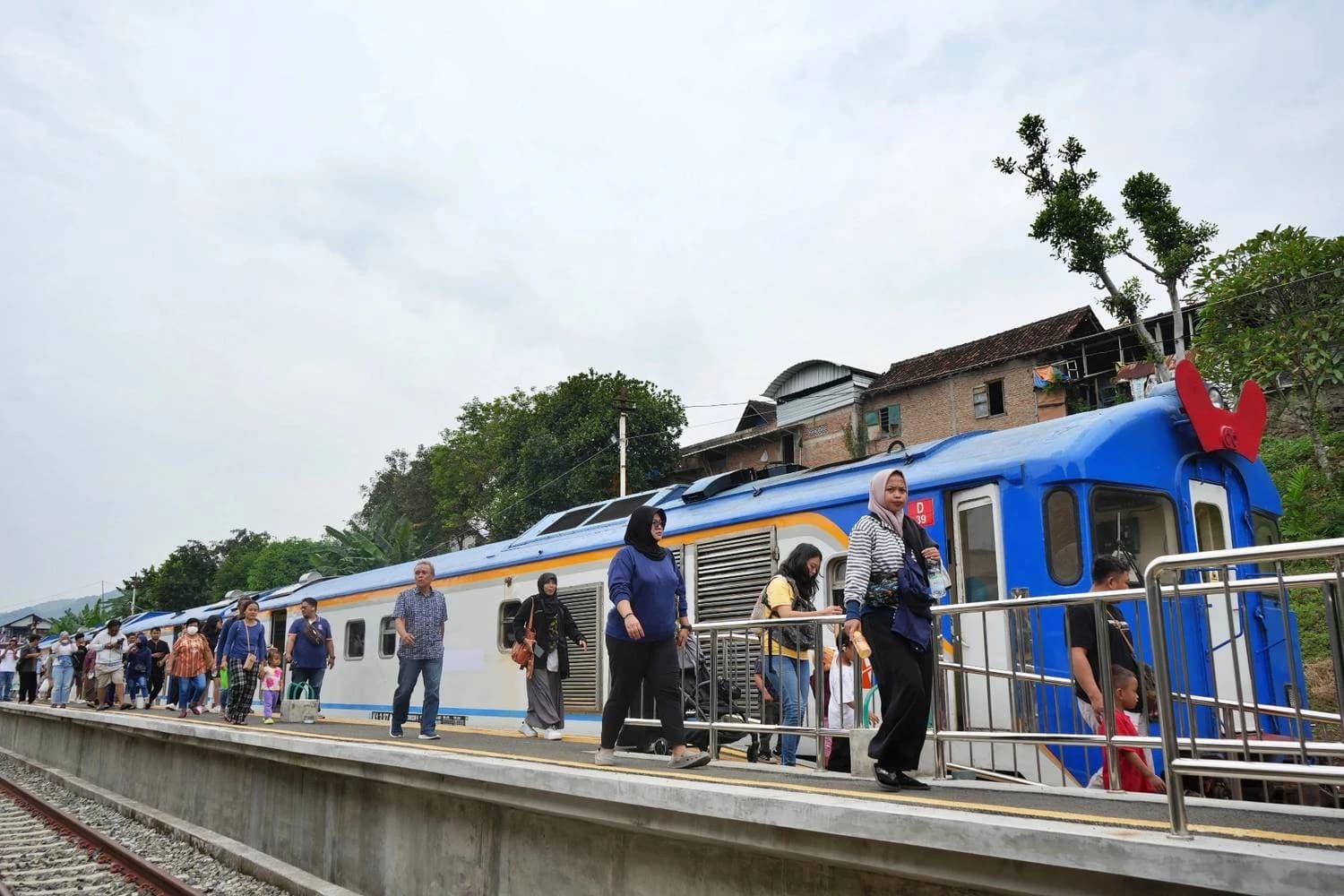
Batara Kresna Train Serves 28,000 Customers in Early 2026, Strengthening Tourism and Local SMEs Along the Solo–Wonogiri Route
PT Kereta Api Indonesia (Persero) recorded that the Batara Kresna Train service continues to be utilized by the public as a practical and affordable regional transportation mode. Throughout January–February 2026, the Batara Kresna Train served 28,202 passengers on the Purwosari–Wonogiri route. This service serves as a vital mobility link for communities in the Solo Raya area while expanding access to various tourist destinations and culinary hubs along the corridor.
On an annual basis, passenger numbers for the Batara Kresna Train show an upward trend. Throughout 2025, a total of 179,697 passengers were recorded, an increase compared to 126,188 passengers in 2024. This growth reflects rising public interest in using rail transport for efficient short-distance travel, while reinforcing the role of railways as a daily mobility solution for workers, students, and tourists alike.
Vice President of Corporate Communication at KAI, Anne Purba, stated that the Batara Kresna Train provides a comfortable travel option for people commuting along the Solo–Wonogiri route. Its highly affordable fare makes this service widely used for both routine trips and brief leisure excursions.
"The Batara Kresna Train facilitates mobility for communities in Solo Raya with a travel time of around one hour. At a fare of Rp4,000, people can travel comfortably without having to face road traffic congestion," said Anne.
The Batara Kresna Train currently operates using a Class 1 Railbus/Diesel Multiple Unit (KRD-1) trainset with a seating capacity of 96 seats that can accommodate up to 144 passengers. The train reaches operational speeds of up to 70 km per hour, completing the Purwosari–Wonogiri journey in approximately 60 minutes. Every day, two round trips connect Purwosari, Solo Kota, Sukoharjo, Pasar Nguter, and Wonogiri stations.
The Purwosari–Wonogiri corridor also offers rich tourism and culinary potential easily accessible via the Batara Kresna Train. In Solo, tourists can enjoy the Slamet Riyadi Corridor area, Klewer Market, and the Surakarta Palace. Meanwhile, in Sukoharjo and Wonogiri, visitors can explore various destinations such as the Gajah Mungkur Reservoir, Sendang Asri tourist area, and the Wonogiri hills, which are popular spots for nature tourism.
Traveling aboard the Batara Kresna Train also unlocks economic opportunities for local UMKM. The presence of stations along the route drives the growth of culinary businesses, handicrafts, and regional specialty products sought after by tourists. Wonogiri itself is famous for signature dishes such as *sego tiwul*, Wonogiri meatballs, cashew nut products, and traditional snacks that attract visitors.
Priced at Rp4,000 per trip, the Batara Kresna Train stands as one of the most affordable rail services in Indonesia. This fare forms part of government policy under the pioneer rail transport subsidy program, ensuring the public retains access to safe, comfortable, and economical transportation.
KAI observes that this service holds strong potential as an alternative option for short leisure trips, particularly ahead of the Eid holiday period when public mobility increases. Concise travel time, affordable tickets, and direct access to city centers and tourist spots render the Batara Kresna Train a relaxed travel choice for those wanting to experience the atmosphere of Solo and Wonogiri.
"The presence of the Batara Kresna Train benefits public mobility while supporting economic activity across the regions it passes through. Accessible transportation aids tourist movement, strengthens the culinary sector, and creates business opportunities for local communities," Anne concluded.
VP Corporate Communication KAI