
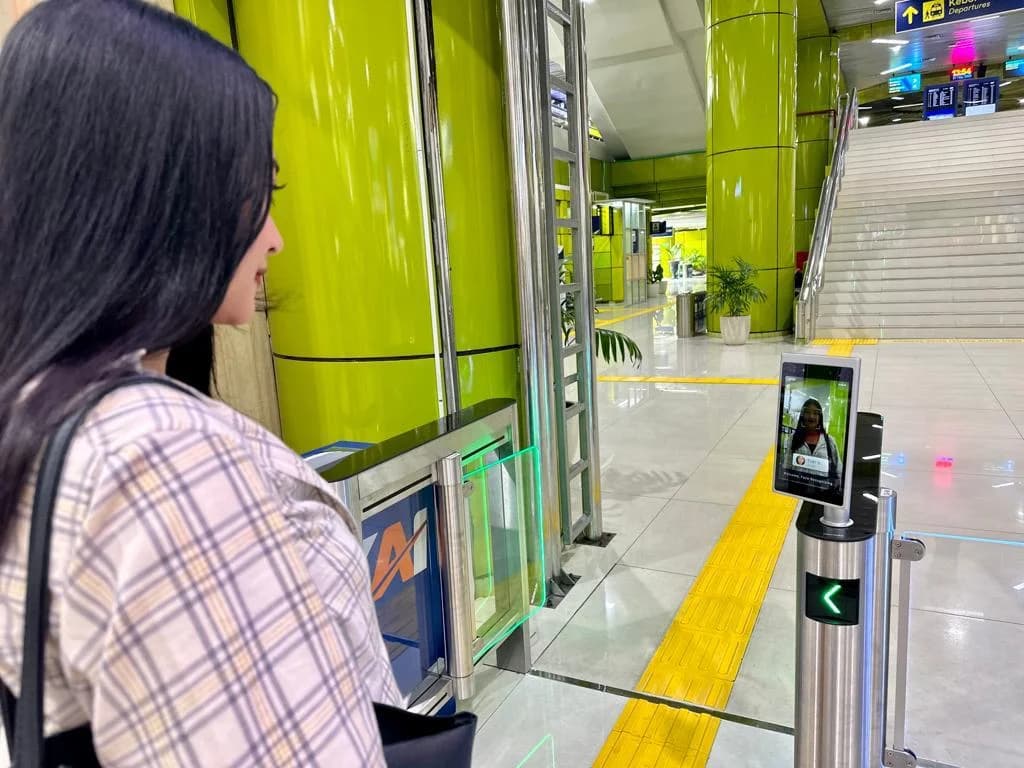
KAI Face Recognition Service Used by 1.7 Million Customers in Early 2026, Saving More Than IDR 63 Million and Reducing Paper Usage
PT Kereta Api Indonesia (Persero) continues to drive technology-based service transformation through the implementation of face recognition systems at stations. During the January–February 2026 period, 1,707,942 passengers utilized this feature during the boarding process. This figure represents an increase compared to the same period in 2025, which reached 1,637,612 passengers, demonstrating the growing adoption of digital technology in rail travel.
Vice President of Corporate Communication at KAI, Anne Purba, stated that the use of face recognition makes the departure process more practical while enhancing operational efficiency. Passengers no longer need to print physical boarding passes, as identity verification is conducted automatically through a system integrated with journey data.
In terms of cost efficiency, the use of face recognition in January–February 2026 replaced the need to print 1,707,942 physical tickets. Assuming one ticket paper roll measuring 72 meters yields approximately 400 tickets at a price of Rp14,765 per roll, this technology has saved roughly 4,270 ticket rolls—equivalent to more than Rp63 million in paper procurement costs within the first two months of the year.
This efficiency is also reflected in annual trends. Throughout 2025, face recognition services were used by 11,302,756 passengers, generating savings of approximately Rp417.2 million in ticket paper costs. In 2024, utilization by 7,170,939 passengers yielded savings of around Rp264.7 million, while in 2023, usage by 2,935,855 passengers produced savings of about Rp108.3 million. These figures highlight a significant year-over-year increase in digital technology adoption across railway services.
Beyond cost efficiency, face recognition delivers positive environmental sustainability impacts. With each ticket measuring approximately 18 cm in length, utilizing this technology in January–February 2026 reduced ticket paper demand by approximately 307 kilometers. Reducing paper usage is vital as paper raw materials originate from tree wood fiber; lower paper ticket consumption directly translates to reduced natural resource utilization for paper production.
Anne added that KAI's digital transformation aims to deliver faster, safer, and more efficient journeys while supporting better environmental management. The boarding process is rendered more seamless, as passengers only need to undergo a face scan without presenting physical tickets or additional identification documents.
Currently, face recognition services are available at 22 stations, including Gambir, Pasar Senen, Bekasi, Bandung, Kiaracondong, Cirebon, Semarang Tawang Bank Jateng, Semarang Poncol, Pekalongan, Tegal, Purwokerto, Kutoarjo, Yogyakarta (Tugu), Lempuyangan, Solo Balapan, Madiun, Surabaya Pasarturi, Surabaya Gubeng, Malang, Jember, Medan, and Kediri stations. The presence of these facilities enables passengers across major cities to experience a more practical travel process.
"The adoption of face recognition demonstrates how technology can elevate service quality while delivering operational efficiency and wiser resource utilization. KAI will continue to expand this technology so that train travel becomes increasingly easy, fast, and comfortable for the public," Anne concluded.
VP Corporate Communication KAI