
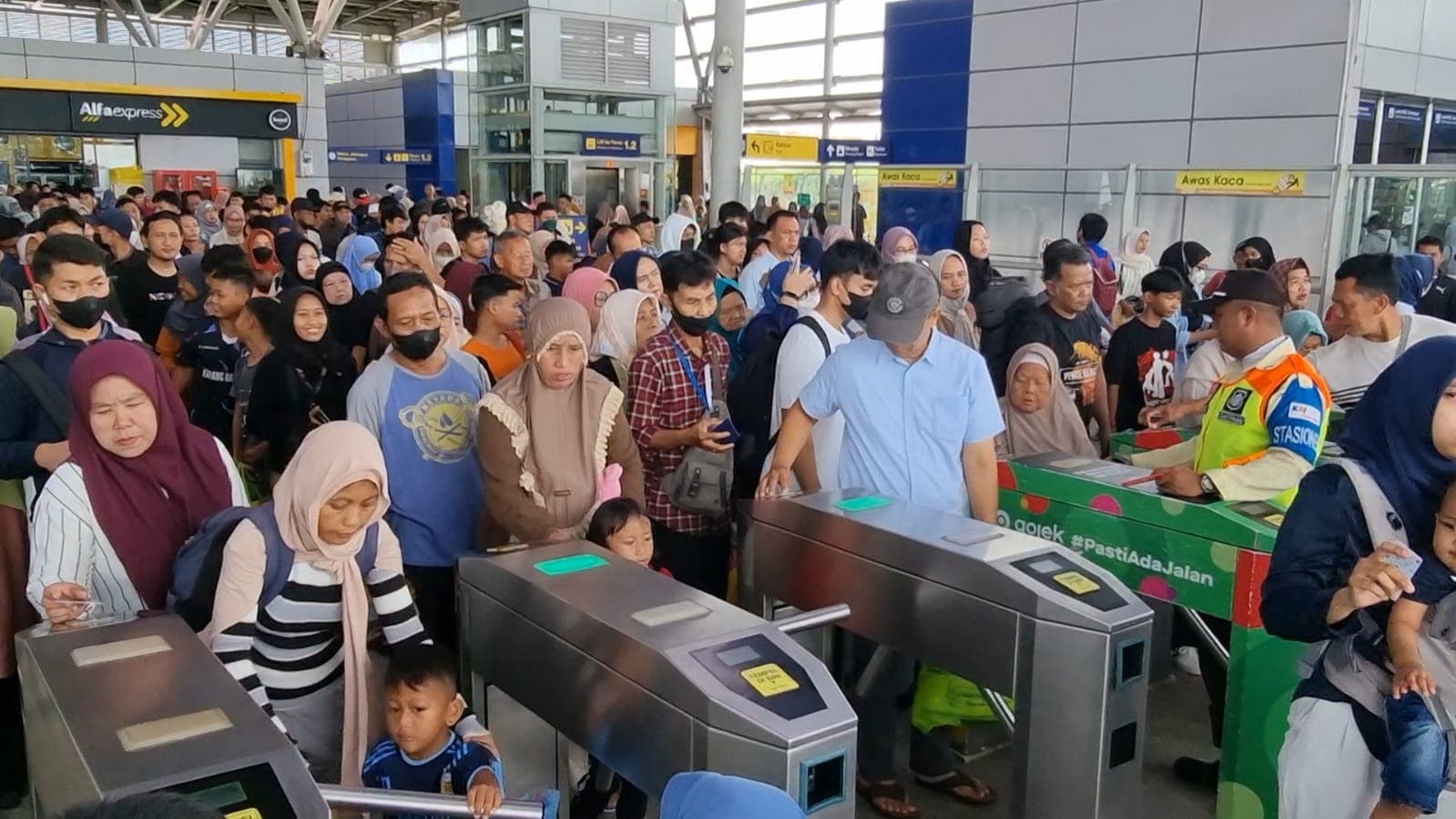
KAI Strengthens Modernization of Jabodetabek Commuter Train Facilities and Infrastructure to Support Urban Mobility and Agglomeration Growth
PT Kereta Api Indonesia (Persero) continues to strengthen the Jabodetabek Commuter Line service as the backbone of mobility in the Jakarta agglomeration area, which serves as the center of national economic activity. As the number of intercity commuters continues to grow consistently, strengthening facilities and infrastructure is a strategic step to ensure that service capacity and safety are maintained.
The Jabodetabek area is one of the largest urban regions in Indonesia, with millions of people traveling daily. Commuter trains are an efficient mass transportation mode with high passenger capacity to support the region’s productivity sustainably.
President Director of KAI Bobby Rasyidin emphasized that strengthening commuter train services is a structural necessity to support agglomeration growth.
“Every day, commuter trains serve more than one million people in Jabodetabek. They are not only a transportation service, but also infrastructure for urban productivity and a key driver of economic activity in the region,” said Bobby during a Hearing Meeting with the House of Representatives of the Republic of Indonesia (DPR RI).
During the hearing, KAI projected that the volume of Jabodetabek commuter train passengers would increase to 437 million passengers by 2030, from approximately 339 million passengers in 2025. With an average growth trend of around 4 percent per year, daily passenger volume is estimated to reach approximately 2 million passengers per day by 2030.
Strengthening Facilities through PMN and Non-PMN Schemes
To anticipate continuously increasing mobility, KAI is strengthening its fleet through a combination of government support and corporate investment.
Currently, 11 new KRL trainsets manufactured by CRRC and 4 trainsets manufactured by PT INKA (Persero) are already in operation. The presence of these new trainsets strengthens passenger capacity on busy Jabodetabek corridors while supporting improved operational reliability.
In addition, KAI has signed a procurement contract for 16 trainsets or 192 KRL units manufactured by PT INKA, valued at Rp3.85 trillion. Of this total, 11 trainsets are targeted to begin operating in 2026 as part of the accelerated fleet regeneration program.
“We ensure that the procurement of facilities is carried out through various funding approaches, both government support and corporate investment, so that service capacity continues to grow in line with urban mobility needs,” explained Bobby.
Overall, KAI currently operates 1,088 KRL units. Most of these units are more than 30 years old and will gradually enter the conservation period. Therefore, fleet regeneration is a strategic step to maintain the safety, comfort, and sustainability of services.
National Policy Support for Public Transportation
KAI appreciates the central government’s support in strengthening the Jabodetabek Commuter Line service. During the inauguration of the New Tanah Abang Station on November 4, 2025, President Prabowo Subianto stated the Government’s readiness to support the development of commuter train services with funding allocation of up to Rp5 trillion.
The support is directed toward adding trainsets, increasing service capacity, and strengthening operational systems on key routes.
“We see this support as a strong commitment from the state to strengthen public transportation. The targets are to increase capacity, reduce overcrowding, and provide the public with increasingly reliable services,” said Bobby.
Modernization of Supporting Facilities and Infrastructure
In addition to procuring rolling stock, KAI continues to promote infrastructure modernization to ensure that the transportation system is prepared for long-term passenger growth.
The measures include modernizing infrastructure toward the Rangkasbitung line, strengthening electrical capacity on busy routes such as Manggarai–Bogor and Manggarai–Bekasi, upgrading operating systems to improve punctuality and travel frequency, as well as strengthening service integration at major urban transportation hubs.
The electrification of the commuter train network itself has reached 474.942 km from 2017–2018, covering the Bogor Line, Bekasi Line, Serpong Line, Tangerang Line, and Tanjung Priok Line.
“New rolling stock must be supported by electrical, signaling, and station systems that are ready to accommodate passenger growth. Infrastructure modernization is the main foundation for maintaining service stability and quality,” explained Bobby.
VP Corporate Communication KAI


