
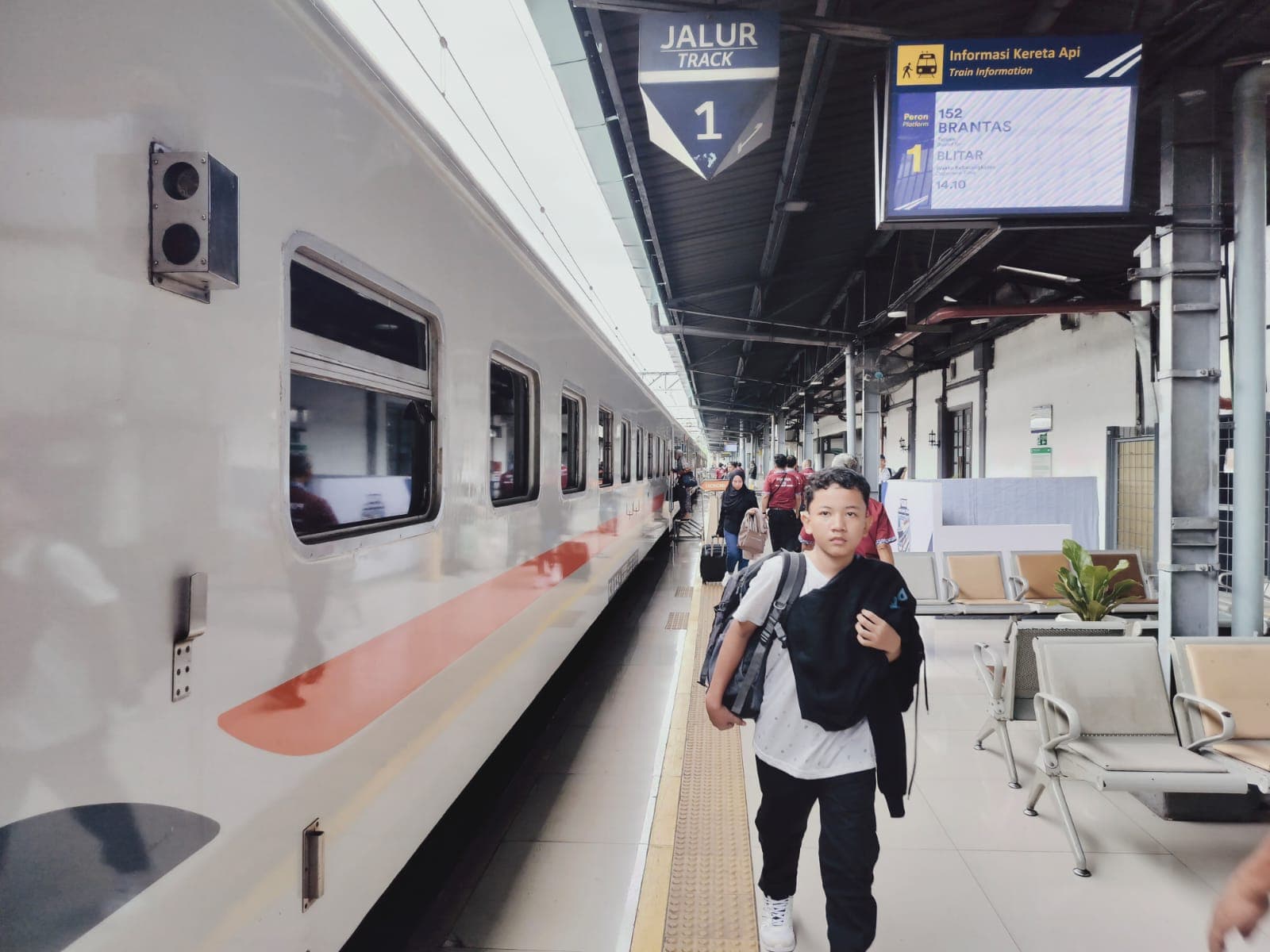
452.6 Million Customers Served, PSO Ensures Access to National Public Transportation
KAI Group carries out the Public Service Obligation (PSO) assignment as part of the Government’s policy through the Directorate General of Railways (DJKA) of the Ministry of Transportation to ensure affordable and equitable access to public transportation for the community. Through this program, railway services remain available across various regions and travel segments, ranging from daily and regional journeys to intercity travel.
Based on 2025 data from the Central Statistics Agency (BPS), the intensity of interregional mobility and commuter activities in urban areas continues to show a high trend. This condition reinforces the need for reliable, sustainable, rail-based mass transportation capable of consistently serving community mobility. In this context, PSO serves as a public policy instrument that maintains the continuity of transportation services amid the dynamics of community mobility.
For PSO Long-Distance Train services, the Government’s assignment through DJKA ensures that intercity connectivity remains maintained with fares that are affordable for the community. Throughout 2025, this service served 11,418,824 customers, an increase from 11,133,268 customers in 2024. PSO Long-Distance Trains support community travel for work, education, social activities, as well as routine interregional mobility.
Meanwhile, PSO Local Train services play an important role in maintaining regional and interprovincial mobility. Throughout 2025, this service served 6,225,944 customers, an increase from 5,375,104 customers in 2024. This increase reflects the role of PSO Local Trains in connecting residential areas, production centers, and regional economic activity hubs.
In urban areas, the PSO assignment also covers commuter services that support people’s daily mobility. Throughout 2025, PSO services managed by KAI Commuter served 400,737,915 customers through the Jabodetabek Commuter Line, Area I Jakarta, Area II Bandung, Area VI Yogyakarta (KRL and Prameks), Area VIII Surabaya, and the Basoetta Commuter Line. These services serve as the backbone of urban mobility and support the smooth flow of economic activities.
Government PSO support is also provided for the Jabodebek LRT service. Throughout 2025, this mass transportation mode served 28,816,787 customers, strengthening connectivity across the Greater Jakarta area through an integrated rail-based transportation system connected with other modes of transportation.
In the airport connectivity sector, PSO Airport Railway services managed by KAI Bandara served 5,456,033 customers throughout 2025, an increase from 4,668,091 customers in 2024. These services include the Srilelawangsa Airport Train in Medan and the Yogyakarta International Airport (YIA) Airport Train, supporting connectivity between airports and city activity centers as well as surrounding areas.
Overall, PSO railway services designated by the Government through the Directorate General of Railways of the Ministry of Transportation served 452,655,503 customers throughout 2025. This achievement reflects the role of PSO as a strategic public policy in maintaining community mobility while expanding equitable access to national transportation.
Vice President of Corporate Communication KAI Anne Purba stated that the implementation of PSO represents an ongoing synergy between the Government and railway operators.
“The PSO assignment ensures that railway services remain accessible to communities in various regions. The high number of customers reflects public trust in railways as a reliable mode of transportation in supporting daily, regional, and urban mobility,” said Anne.
Going forward, KAI Group will continue to carry out the PSO assignment by strengthening operational reliability, improving integration between services, and maintaining ongoing coordination with the Government so that the benefits of rail-based public transportation can be enjoyed more widely by the community.
VP Corporate Communication KAI
