
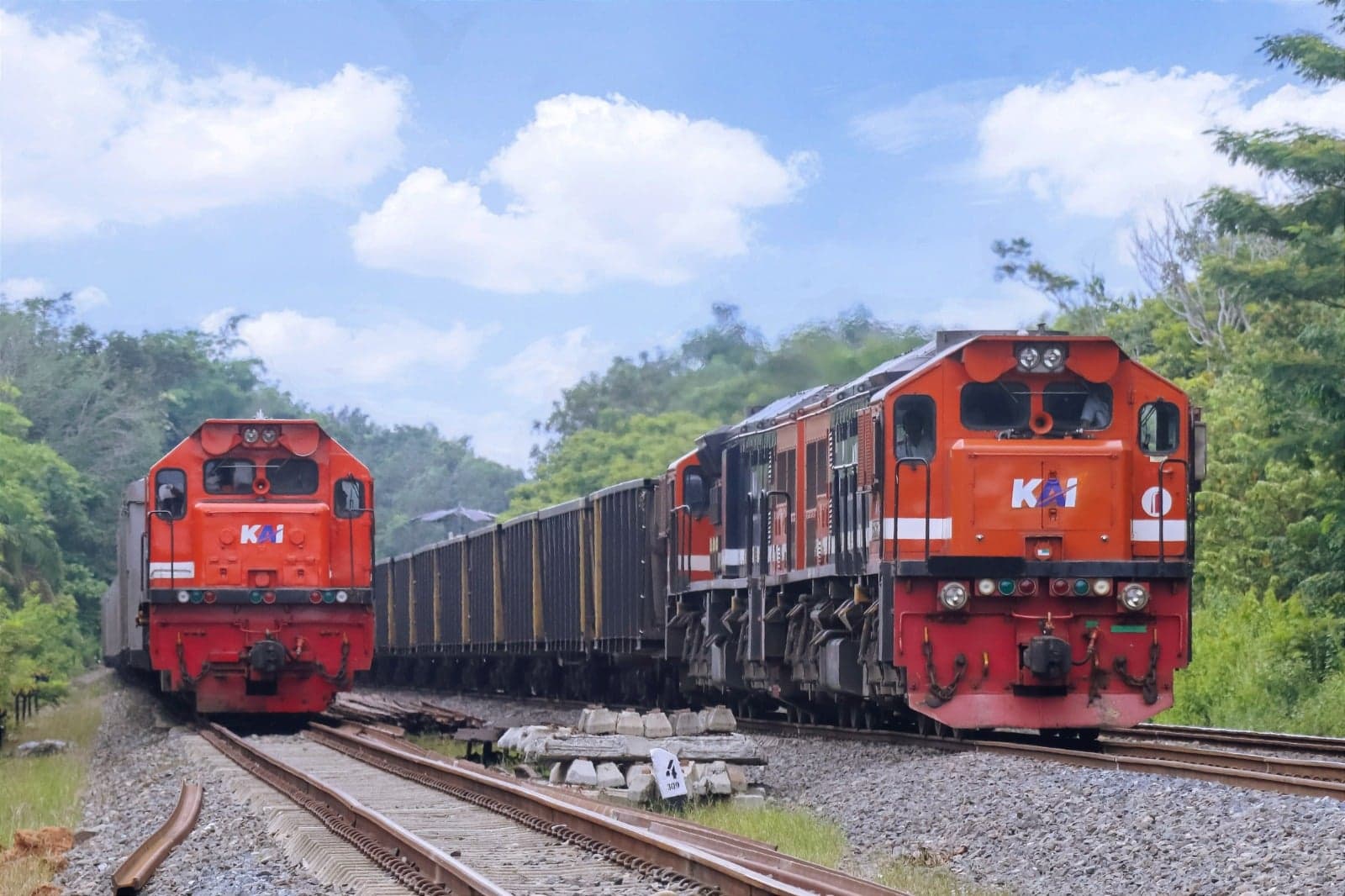
January 2026, KAI Transports 4.03 Million Tons of Coal, Ensuring the Continuity of the National Energy Supply
PT Kereta Api Indonesia (Persero) recorded coal transportation performance of 4,025,975 tons throughout January 2026. This achievement underscores the strategic role of railways in supporting the smooth distribution of energy, particularly in meeting the needs of power plants in various regions.
Vice President of Corporate Communication KAI Anne Purba stated that fluctuations in global coal prices present both challenges and momentum to strengthen the resilience of the national logistics system. KAI responds to these conditions by strengthening operational efficiency, utilizing technology, and optimizing service capacity to ensure the continuity of energy distribution.
Currently, KAI serves coal transportation through five main terminals, namely Kertapati, Sukacinta, Muaralawai, Merapi, and Banjarsari. Among these terminals, Kertapati serves as a logistics modernization hub through the implementation of a conveyor belt system integrated with a shiploader with a capacity of 1,500 tons per hour, enabling faster and more measurable loading and unloading processes.
This modernization encourages a shift from conventional dump truck-based methods toward a more efficient and environmentally friendly logistics system. In daily operations, KAI, through its subsidiary KAI Logistik, manages more than 59,000 tons of coal per day from various terminal points to ensure continuity of supply to end users.
In addition to strengthening infrastructure, KAI, through its subsidiary KAI Logistik, applies RFID technology to coal containers to improve monitoring accuracy and supply chain management efficiency. This initiative supports more precise distribution management and contributes to reducing emissions from logistics activities. This measure is in line with the KAI Group's commitment to supporting national energy security through efficient and sustainable transportation.
Anne added that most of the coal transported by KAI is used as fuel for steam power plants (PLTU) on the islands of Java and Bali. The reliability of railway freight services plays an important role in maintaining the stability of the national electricity supply, which supports the activities of hospitals, schools, offices, shopping centers, industries, as well as small and medium-sized enterprises in various regions.
Along with the increase in transportation volume, KAI is also strengthening its commitment to environmental sustainability. Since February 2025, all KAI locomotives and generator sets have been using B40 Biodiesel, a fuel containing a 40% blend of plant-based materials, as a continuation of a trial conducted with the Ministry of Energy and Mineral Resources that began in July 2024.
The use of B40 contributes to reducing the carbon footprint while supporting the national energy transition through the utilization of renewable energy. With lower emissions and a high level of biodegradability, rail freight transportation further strengthens its role as an environmentally friendly logistics solution.
“Through reliable, efficient, and sustainable services, KAI continues to provide logistics solutions aligned with the company's vision of advancing sustainable transportation and improving the quality of life of the community,” concluded Anne.
VP Corporate Communication KAI


