
Facing Extreme Rainfall, KAI Deploys AMUS to Maintain Railway Safety and Service Reliability
PT Kereta Api Indonesia (Persero) continues to strengthen its operational preparedness in anticipating the potential for extreme rainfall occurring in several regions in late January 2026. Various anticipatory measures are being implemented to ensure travel safety and maintain the reliability of rail-based transportation services amid changing weather conditions.
Vice President of Corporate Communication KAI, Anne Purba, stated that KAI has deployed human resources, equipment, and an integrated crisis management system through the Manajemen Alat Material Untuk Siaga (AMUS) scheme.
“KAI continues to take anticipatory measures in facing the potential for extreme weather, particularly conditions that may cause flooding along railway tracks. Travel safety is our top priority, and all personnel in the field have been placed on standby to respond to any potential disruption quickly and in a measured manner,” said Anne.
As part of strengthening preparedness, KAI has prepared 355 additional personnel, 861 additional Level Crossing Watch Officers (Petugas Jaga Lintasan/PJL), as well as additional personnel assigned to guard vulnerable areas, deployed at points with high levels of risk across various operational regions.
“These personnel work on a 24-hour standby system divided into three shifts, allowing continuous monitoring of railway track conditions both during the day and at night,” explained Anne.
In addition to strengthening human resources, KAI has also placed Alat Material untuk Siaga (AMUS) at several strategic locations. AMUS is a pre-positioning-based crisis management system, in which equipment, materials, and supporting facilities are placed in advance at vulnerable points to accelerate response efforts in the event of infrastructure disruptions.
In general, AMUS consists of four main pillars, namely:
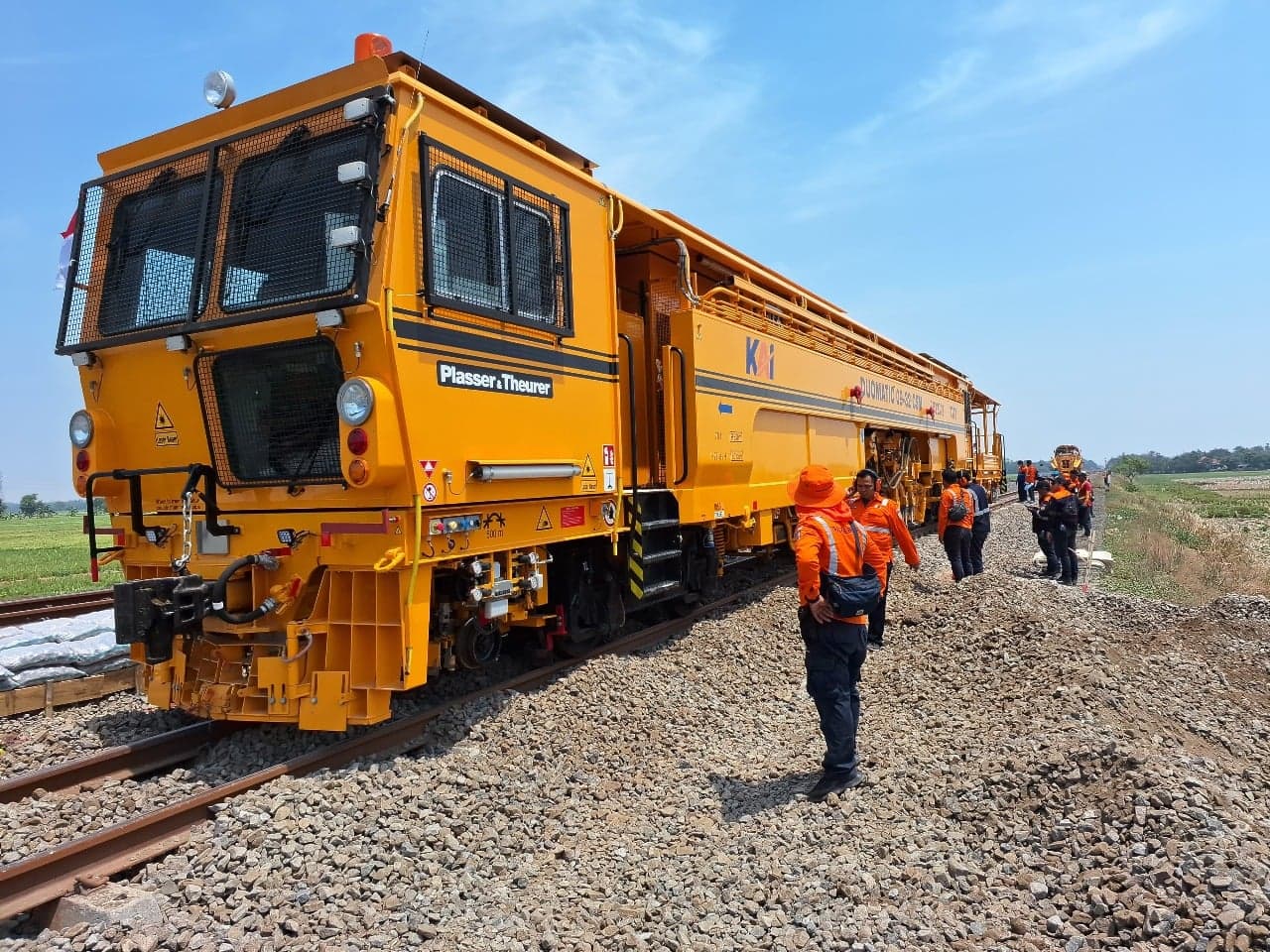
- Work Equipment Readiness, such as railway track bed tamping machines (MTT and PBR machines / special vehicles for railway track maintenance and track bed tamping), excavators, and generators.
- Material Availability, including sandbags, ballast, sleepers, rail sections, joint bars, and tarpaulins.
- Transportation Equipment Readiness, consisting of flat wagons, ballast wagons, as well as lori or dresin (special track maintenance vehicles for rapid mobilization along the railway line).
- 24-Hour Personnel Standby, with an integrated command system between central and regional levels.
According to Anne, the presence of AMUS enables KAI to be not only reactive but also proactive and preventive in managing extreme weather risks.
“Through AMUS, every potential disruption has been mapped out, complete with its response scenarios. This makes field responses faster, more coordinated, and safer for train journeys,” she added.
KAI also routinely monitors weather forecast data from relevant agencies and conducts intensive inspections at points vulnerable to flooding, water accumulation, and ground movement. This approach enables KAI to take early action before disruptions develop into operational crises.
Anne emphasized that all these measures are part of KAI’s commitment to maintaining the safety, security, and smoothness of train journeys, while ensuring that services to customers continue to operate optimally amid the challenges of climate change.
“We want people to be able to travel with peace of mind. Behind every smooth journey, there are hundreds of KAI personnel on standby 24 hours a day in the field. AMUS is proof that KAI is always ready, even when the weather is unfavorable,” concluded Anne.
With an increasingly integrated risk-management-based preparedness system, KAI is optimistic that it can continue to maintain service reliability and support sustainable national mobility, because the rain may be extreme, but KAI’s preparedness must always be at its maximum level.
VP Corporate Communication KAI

