
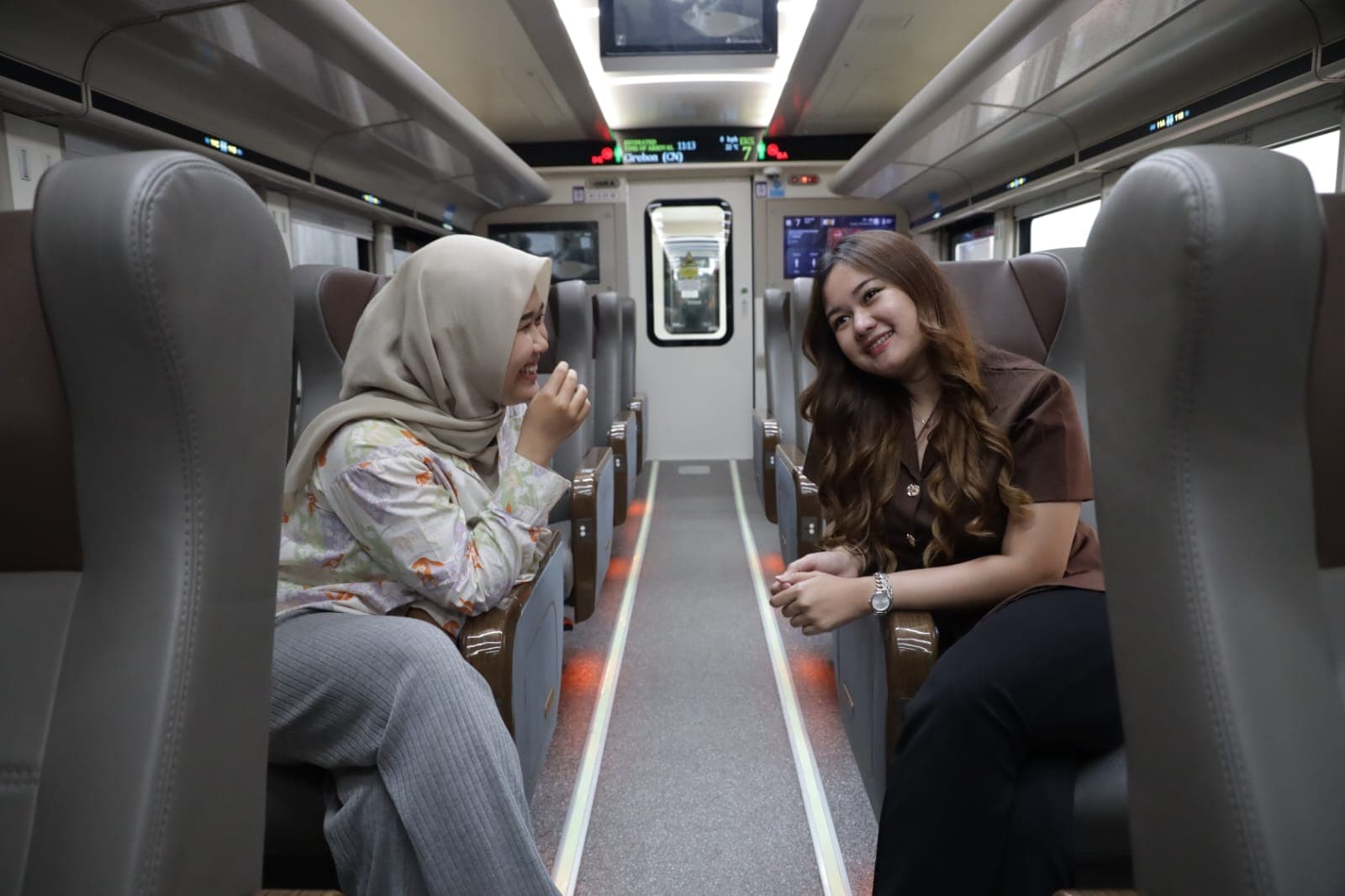
KA Gajayana Strengthens Malang–Jakarta Travel Services, Supporting Tourism and Economic Activities Across Java
PT Kereta Api Indonesia (Persero) continues to strengthen its long-distance train services through the operation of Gajayana Train, serving the Malang (ML)–Jakarta Gambir (GMR) round-trip route via the central route of Java Island. The train stops at several major cities, namely Malang, Blitar, Kediri, Madiun, Solo Balapan, Yogyakarta, Purwokerto, Cirebon, and Gambir, covering a distance of approximately 905 kilometers.
Throughout 2025, Gajayana Train served 380,715 customers, in line with the ongoing demand for intercity travel along the Malang–Jakarta route and the areas it serves. Starting in January 2026, Gajayana Train has been operated using Stainless Steel New Generation trainsets to improve the comfort and reliability of long-distance journeys.
Vice President of Corporate Communication KAI Anne Purba stated that Gajayana Train plays an important role in supporting smooth community travel and maintaining connectivity between regions across Java Island.
“Gajayana Train supports scheduled and efficient intercity travel, allowing people’s activities, whether for work, education, or family visits, to take place smoothly,” said Anne.
Gajayana Train services connect cities with diverse activity profiles. Malang is known as a center for education, services, and tourism in East Java, with a steady flow of students, families, and tourists. Data from Statistics Indonesia (BPS) for 2024–2025 shows that the trade and services sectors are the main drivers of the city’s economy, which is closely related to the need for intercity transportation.
In the areas of Blitar, Kediri, and Madiun, train travel supports the social and economic activities of the community, including family trips, business visits, and the mobility of businesspeople. The regional economic characteristics, which rely on trade and services, are in line with the need for scheduled long-distance train services.
Upon reaching Solo Balapan and Yogyakarta, Gajayana Train serves areas with strong cultural and educational activities. Based on a 2025 publication by BPS Statistics of the Special Region of Yogyakarta, domestic tourist movements were recorded at a high level, reflecting the role of railway transportation in supporting tourism and cross-regional social activities.
Meanwhile, Purwokerto serves as a travel hub for communities in the western part of Central Java. The structure of the Gross Regional Domestic Product (GRDP) of Banyumas Regency according to BPS data for 2024–2025 shows the dominant role of the trade and services sectors, which is in line with the need for intercity travel by train.
Gajayana Train’s journey also serves Cirebon as a connecting city to the West Java region and Jakarta. Travel activities are associated with the trade, services, and accommodation sectors. The hotel room occupancy rate indicator for Cirebon City in 2025 shows relatively stable travel demand throughout the year.
All of these journeys ultimately converge in Jakarta as the center of government and national business activities. Work-related travel, institutional agendas, and family mobility form a consistent round-trip travel pattern between the regions and the capital city.
In addition to supporting economic and tourism activities, Gajayana Train also plays a role in maintaining social connectivity among communities across regions. The train serves as a scheduled means of travel for families, students, workers, and communities, allowing social interactions between regions to continue.
Gajayana Train is an executive- and luxury-class passenger train service operated by KAI to serve the Malang–Gambir route via Cirebon–Purwokerto. The name Gajayana is derived from the title of the King of the Kanjuruhan Kingdom, Sang Liswa, who ruled from approximately 760 to 789, with the kingdom’s center located in the Dinoyo–Lowokwaru area of Malang City.
Gajayana Train first began operating on October 28, 1999, coinciding with the 71st Youth Pledge Day, and has continued to develop through facility upgrades and service improvements. Since May 26, 2019, Gajayana Train has offered a luxury class, and entering 2026, the use of Stainless Steel New Generation trainsets has become part of efforts to strengthen long-distance travel services.
“The improvement of Gajayana Train services is aimed at maintaining travel quality while supporting safe and comfortable intercity mobility,” concluded Anne.
VP Corporate Communication KAI