
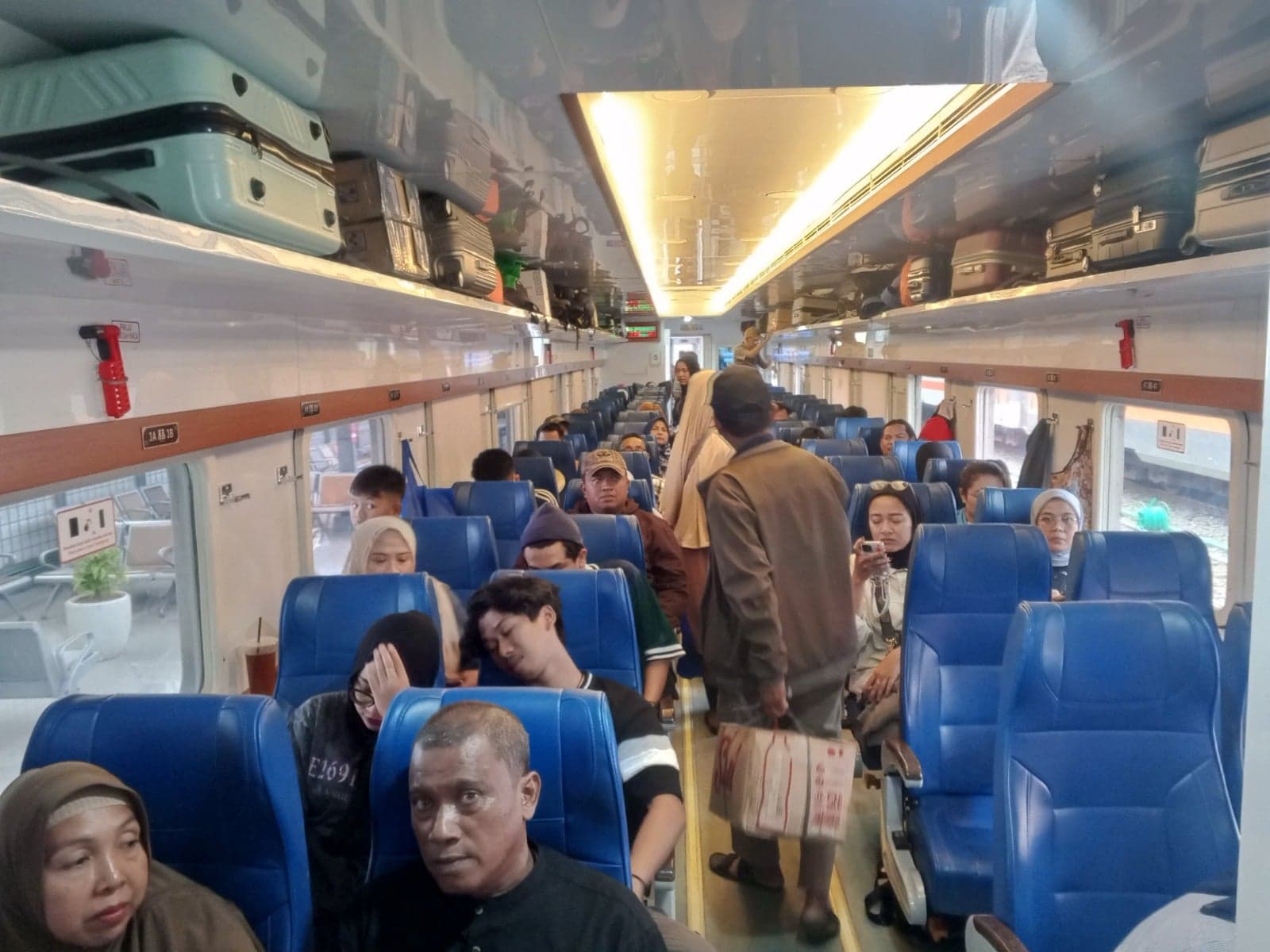
KA Brantas Serves 488,998 Passengers in 2025, Strengthening Connectivity for Tourism and Economic Activities Across Java
PT Kereta Api Indonesia (Persero) recorded 488,998 passengers using KA Brantas throughout 2025. This figure reflects consistent public demand for long-distance railway services connecting the western, central, and eastern regions of Java through the Pasar Senen–Semarang–Blitar (round-trip) route.
Vice President of Corporate Communication of KAI, Anne Purba, said that the performance of KA Brantas reflects the public’s need for scheduled and affordable mass transportation that provides access to regional economic and tourism activity centers.
“KA Brantas serves a long-distance route with diverse passenger profiles. The upgrade of its rolling stock since October 2024 has further supported the comfort of consistent long-distance travel,” said Anne.
Since October 17, 2024, KA Brantas has operated Modified New Generation Economy Class coaches featuring a more ergonomic layout, improved lighting, and an interior designed to support interprovincial journeys. This upgrade is in line with the travel patterns of KA Brantas passengers, who travel through multiple cities in a single journey.
From a regional perspective, the KA Brantas route passes through areas with high population mobility. Statistics Indonesia (BPS), in its publication “Central Java Province in Figures 2024,” noted that areas along the northern coast of Central Java, such as Cirebon, Tegal, Pekalongan, and Semarang, serve as centers of trade, services, and manufacturing, generating active intercity population movements.
In East Java, cities served by KA Brantas, including Madiun, Kediri, Tulungagung, and Blitar, are recorded in the 2024 East Java Tourism Statistics as areas with strong domestic population movements and growing regional economic activity. Direct connectivity with Jakarta and Central Java facilitates people’s mobility for work, family, and social purposes.
The KA Brantas route is also connected to the development of the Batang Integrated Industrial Estate in Central Java. Based on BPS Central Java data for 2024, the area has developed as a new manufacturing hub that absorbs workers from various regions. Stations in the Pekalongan and Tegal areas are within reach of the industrial estate, allowing the KA Brantas route to support worker mobility and industrial-related activities along the northern coast corridor.
From a tourism perspective, the KA Brantas route provides access to various leading destinations. Semarang serves as a hub for historical and culinary tourism in Central Java, while Kediri and Blitar are known for their natural, religious, and historical tourism attractions in East Java. BPS, through its “Domestic Tourism Statistics 2024,” noted that domestic tourism remains dominated by interregional travel, making rail transportation a relevant mode for supporting land-based tourism mobility.
By serving nearly half a million passengers throughout 2025, KA Brantas contributed to facilitating population mobility, strengthening regional connectivity, and driving economic activity in the cities along its route.
“KAI continues to maintain railway services in line with public needs and regional dynamics by strengthening connectivity and travel comfort,” concluded Anne.
Vice President of Corporate Communication of KAI

