
Government KAI Synergy Strengthens Sukabumi–Bogor–West Bandung Connectivity to Support Regional Growth
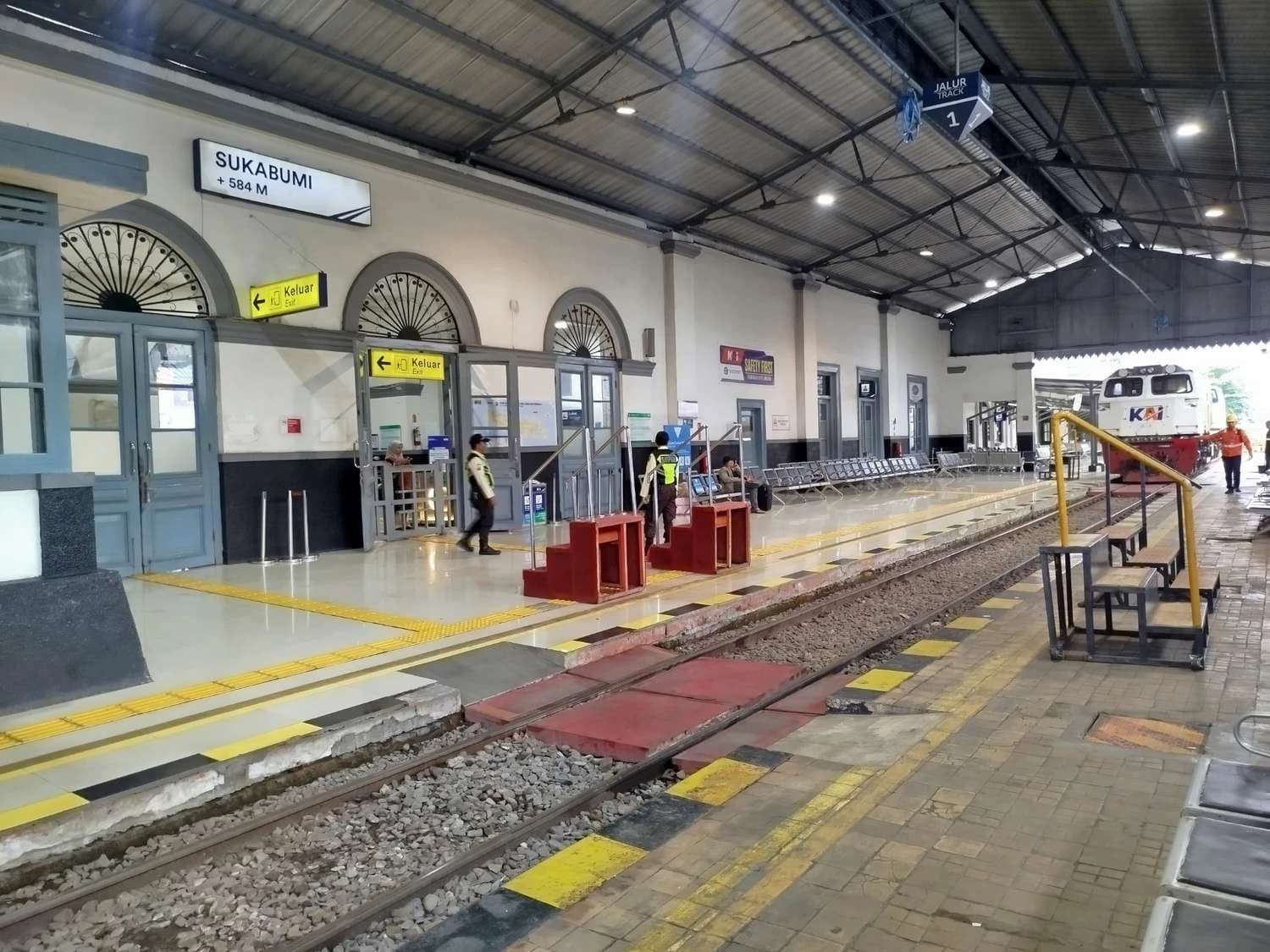
PT Kereta Api Indonesia (Persero) emphasizes that transport connectivity serves as a strategic foundation in driving inclusive and sustainable regional growth. Within the national railway system, connectivity is built through alignment between government-provided infrastructure and KAI-operated services, effectively linking center hubs of economic and social activity. This framework strengthens the role of Sukabumi Station as a strategic hub connecting the regions of Bogor, Cianjur, West Bandung, and Sukabumi.
As a national public transport operator, KAI ensures that train services run reliably, safely, and sustainably. At the same time, the government fulfills its role in providing railway infrastructure.
Vice President of Corporate Communication at KAI, Anne Purba, stated that this alignment of roles forms a single transport ecosystem capable of driving regional growth in a targeted and measurable manner.
"Railways operate within a single national ecosystem. The government, including through the Directorate General of Railways of the Ministry of Transportation, ensures infrastructure readiness, while KAI focuses on operational reliability and service quality. This synergy is key to ensuring connectivity delivers sustainable economic and social impacts for the regions," Anne said.
In this context, Sukabumi Station functions as a regional mobility hub connecting areas with evolving economic and social characteristics. Based on data from the Central Bureau of Statistics (BPS), in 2024 the economy of Sukabumi Regency recorded a growth of 5.15 percent with a Gross Regional Domestic Product (GRDP) at current prices of Rp88.14 trillion, while employment and social challenges still require broader mobility access. This condition underscores the importance of transport connectivity as a lever for access to employment and public services.
This function is reinforced by train services operating from Sukabumi Station. The Pangrango Train connects Sukabumi with Bogor and the Greater Jakarta Commuter Line network, while the Siliwangi Train serves the Sukabumi–Cipatat round trip, connecting West Bandung Regency, Cianjur, as well as Sukabumi City and Regency. Both services form a regional connectivity corridor that expands the scope of community economic and social activities.
The effectiveness of this connectivity is further strengthened by inter-hub integration in Bogor. Bogor Station and Bogor Paledang Station are connected via a skybridge spanning approximately 200 meters, allowing Commuter Line passengers to seamlessly transfer to the Pangrango Train toward Sukabumi. This integration positions Bogor as a primary feeder hub expanding Sukabumi's access to the metropolitan area.
The impact of this established connectivity is reflected in passenger volume growth. Sukabumi Station recorded 264,001 passengers in 2020, 144,780 in 2021, which then increased to 425,289 in 2022, 674,483 in 2023, 733,345 in 2024, and reached 768,461 passengers in 2025. This trend demonstrates growing public trust in train services as a primary mode of transportation.
In line with this, Commuter Line passenger volume at Bogor Station also grew significantly, from 7.74 million users in 2020 to 18.20 million users in 2025. This movement reinforces Bogor's role as a connectivity gateway to Sukabumi, while demonstrating the interplay between adequate infrastructure and integrated services within a single transportation system.
Anne emphasized that inter-regional connectivity via railways creates a multiplier effect for the region. Improved access drives workforce mobility, strengthens micro and small business activities, increases student movement, and develops regional tourism. All of these benefits can only be achieved when government-prepared infrastructure and KAI-operated services work in harmony.
"Well-connected regions develop faster. Government support for infrastructure and KAI's role as an operator make the railway a lever for sustainable regional development," Anne concluded.
VP Public Relations KAI