
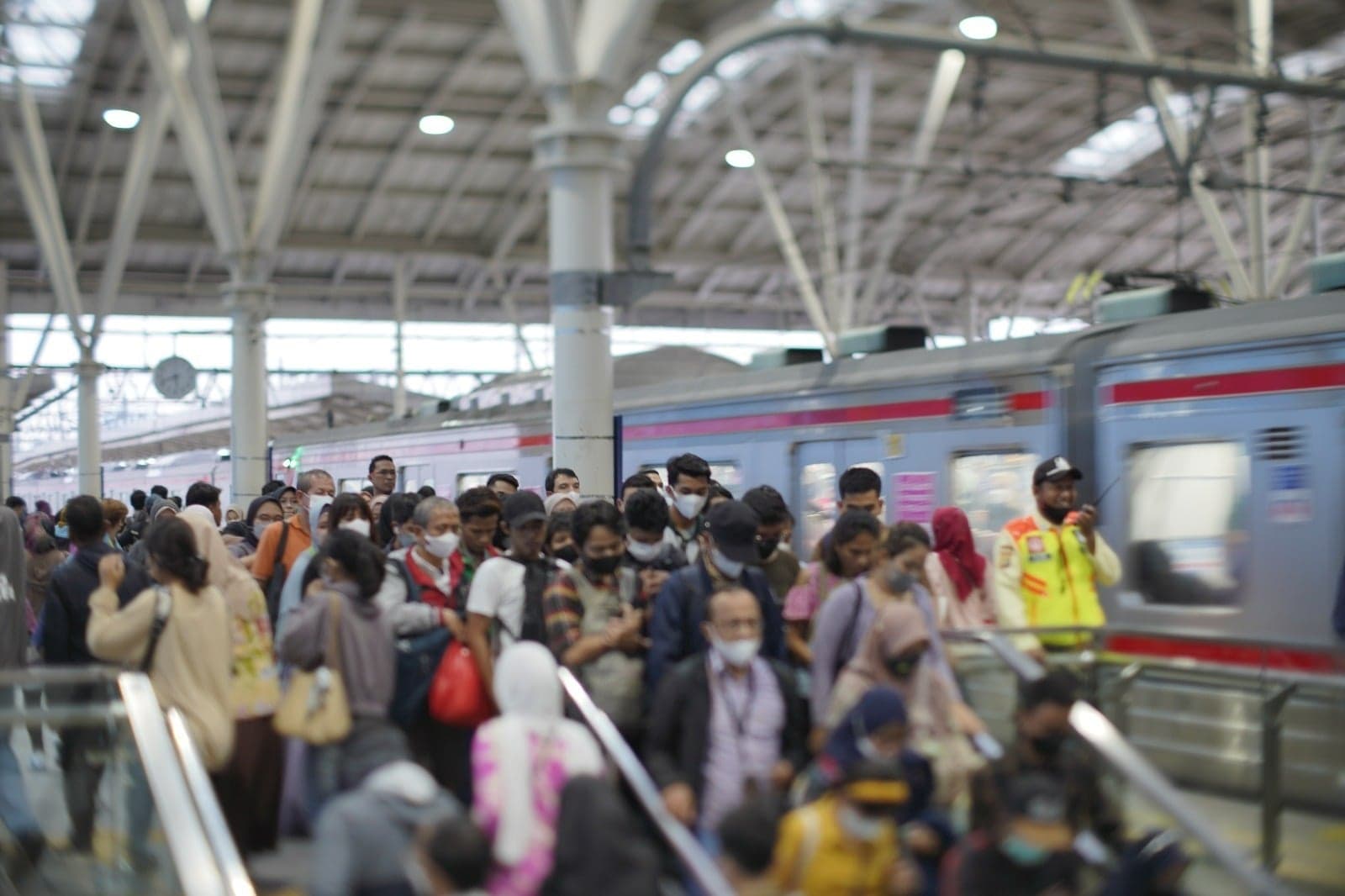
Integrated Rail Transportation Strengthens Access to Jobs and Housing, Bekasi Station Drives Development in Jakarta’s Buffer Area
Rail transportation serves as a key driver of mobility and economic activity in Jakarta’s buffer areas, particularly through the strategic role of Bekasi Station. In recent years, railway services at this station have shown growth that reflects tangible benefits for the community in supporting daily activities, intercity travel, and connectivity between residential areas and economic activity centers.
Internal data from PT Kereta Api Indonesia (Persero) shows that Long-Distance Train customers at Bekasi Station have experienced significant growth over the past five years. In 2020, the number of customers was recorded at 184,514 and declined in 2021 to 139,416 as public mobility restrictions were implemented. As activities recovered, the number increased sharply to 460,805 customers in 2022, rose to 854,811 customers in 2023, increased to 1,155,817 customers in 2024, and reached 1,329,456 customers in 2025. This trend reflects growing demand for intercity travel to and from the Bekasi area.
In line with this, the volume of Jabodetabek Commuter Line customers at Bekasi Station has also shown consistent growth. In 2020, the number of customers was recorded at 5,829,874 and declined in 2021 to 4,530,653. Entering the recovery period, the number of customers increased to 7,410,506 in 2022, rose to 9,837,985 in 2023, increased to 10,890,061 in 2024, and reached 11,413,926 in 2025. These figures reaffirm the role of Bekasi Station as a major hub for the daily mobility of people in Jakarta’s buffer areas.
From an operational perspective, the intensity of train traffic at Bekasi Station reflects the high level of service integration. In a single day, Bekasi Station serves a total of 323 Commuter Line trips, 24 freight train trips, and 138 passenger Long-Distance Train trips. Of the Long-Distance Train trips, 21 are direct services and 117 stop at Bekasi Station, demonstrating the station’s significant role in serving the travel needs of the community.
Vice President Corporate Communication of KAI Anne Purba stated that the integration of Commuter Line, Long-Distance Train, and freight train services at Bekasi Station provides tangible benefits to the community. This integration facilitates daily and intercity travel, supports time and cost efficiency, and strengthens connectivity between residential buffer areas and national economic activity centers.
Demographic and economic contexts further strengthen the role of this transportation system. Based on the 2024 and 2025 publications of Bekasi Municipality in Figures by the Bekasi Municipality Statistics Agency, the population of Bekasi Municipality was recorded at more than 2.5 million people, with a dominance of the productive-age population. This condition creates a high and sustainable level of mobility and demonstrates a direct connection between rail transportation services and the socio-economic activities of the urban community.
The role of the buffer area is also reflected in Bekasi Regency. The Bekasi Regency in Figures 2025 publication issued by the Bekasi Regency Statistics Agency shows that by 2024, the population of Bekasi Regency had exceeded 3.2 million people and continued to grow. This development positions Bekasi Regency as one of the main bases of workers and active consumers who utilize the rail transportation network to support daily mobility and long-distance travel.
The density of these services demonstrates that Bekasi Station has developed into an integrated travel hub supporting workforce mobility, logistics distribution, and regional economic activities. Integrated rail transportation encourages people to choose more affordable housing in buffer areas while remaining connected to economic activity centers in Jakarta and other cities.
Going forward, KAI remains committed to improving service quality and strengthening transportation mode integration at various strategic points, including Bekasi Station.
“These efforts are carried out so that railway transportation can increasingly serve as a productive, comfortable, and sustainable mobility solution for communities in Jakarta’s buffer areas and surrounding regions,” concluded Anne.
VP Corporate Communication KAI
